Summary
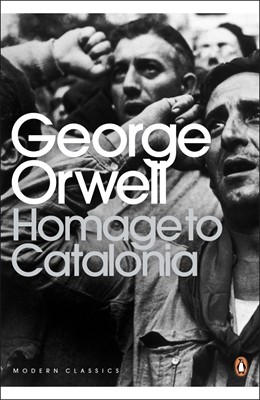
Homage to Catalonia is George Orwell's firsthand account of fighting in the Spanish Civil War, which he joined in late 1936 as a volunteer with the POUM militia — a Trotskyist revolutionary organization that was later suppressed by the Soviet-backed Stalinist wing of the Republican forces. Orwell arrived in Barcelona expecting a socialist revolution in progress and found something genuinely remarkable: a city where the working class appeared to run its own affairs, class distinctions had temporarily dissolved, and revolutionary egalitarianism was not propaganda but an observable social fact.
The memoir traces Orwell's experience from the training camps to the Aragón trenches — a war of stasis, boredom, and frostbite punctuated by occasional skirmishes — through his near-fatal wounding by a fascist sniper, and then to the May Days of 1937, when Communist-aligned forces attacked the POUM and its anarchist allies in Barcelona. The street fighting in the city that nominally formed a unified front against Franco shocked Orwell profoundly. He had come to fight fascism and found himself ducking Communist assassins on the Republican side.
The book's political chapters are sometimes separated in later editions, but in context they are inseparable from the personal narrative. Orwell documents the systematic falsification of news from Spain, tracing how the same events were reported in the Communist and liberal press versus what he witnessed directly. This experience of watching lies manufactured and distributed in real time is widely regarded as the seedbed of the ideas he would later develop in Animal Farm and Nineteen Eighty-Four.
Orwell writes in the plain, exact prose he had already made his own. The book is at once a war memoir, a political investigation, and an elegy for a revolutionary moment that was crushed from within. He does not sentimentalize the POUM or the anarchists, noting their military disorganization and ideological quarrels. But his conclusion is unambiguous: the defeat of the Spanish Republic was partly the work of the Soviet Union and the Communist parties that served its interests, and the Western liberal press was complicit in concealing that fact.
Talk to Homage to Catalonia like its author wrote you back.
Get the ideas that fit your life — not generic summaries.
- Chat with the book
- Audiobook-style main ideas
- Adapts to your life and goals
- Helps you take action
Key takeaways
- 1.
Revolutionary politics in practice are messier and more faction-ridden than ideology suggests; Orwell found as much danger from Communist purges as from fascist bullets.
- 2.
The suppression of the POUM by Soviet-backed Communists in 1937 is an early documented case of how authoritarian politics can subvert a movement from within while directing propaganda outward.
- 3.
The experience of watching events he witnessed firsthand reported falsely in the press radicalized Orwell's understanding of how political language works — and how it can be weaponized.
- 4.
Class distinctions can dissolve under revolutionary conditions, but the dissolution is fragile; by mid-1937 the hierarchies Orwell had initially found absent were being restored by the Communist party apparatus.
- 5.
Front-line military experience in the Spanish war was largely defined by boredom, cold, and material deprivation, not heroic combat — a corrective to the romantic narratives both sides constructed.
- 6.
Orwell's near-fatal throat wound, which permanently damaged his voice, affected him physically for the rest of his life and gave him a visceral understanding of what the war cost its participants.
- 7.
Witnessing ideological betrayal from people nominally on the same side produced Orwell's lasting suspicion of political parties and institutional loyalties over observable fact.
- 8.
Spain in 1936–37 is a case study in how great-power interests can determine the outcome of a civil conflict regardless of the ideals of the participants.
Discussion questions
Use these on your own, with a book club, or as chat starters in Superbook.
- 1.
Orwell describes Barcelona in 1936 as a place where revolutionary egalitarianism was an observable social reality. What made that moment possible, and why was it so short-lived?
- 2.
How does Orwell balance his role as a participant and a reporter? Does his direct involvement make his account more or less reliable?
- 3.
The Communist press and the liberal press both misreported events Orwell witnessed directly. What does that suggest about how we consume media accounts of conflicts we cannot observe firsthand?
- 4.
Orwell stayed on the Republican side even after the Communist crackdown on the POUM. What does that choice reveal about his politics?
- 5.
The book was largely ignored or dismissed on publication in Britain. Why do you think the political climate of 1938 made it difficult to receive?
- 6.
What is the relationship between this memoir and Orwell's later fiction? Can you identify specific experiences that seem to have migrated into Animal Farm or Nineteen Eighty-Four?
- 7.
Orwell is sharply critical of the Stalinist left, but he is also honest about the POUM's weaknesses. Does that balance hold, or does the criticism fall unevenly?
- 8.
How does Orwell describe fear in the trenches? What surprised you about his account of combat?
- 9.
The Spanish Civil War attracted volunteers from across Europe and the Americas. What does Orwell's account suggest about the limits of ideological solidarity as a basis for military alliance?
- 10.
If Orwell had not been shot and had stayed in Spain longer, do you think his conclusions would have been the same?
- 11.
What does the book suggest about the relationship between truth-telling and political commitment? Can someone hold strong political views and still report accurately?
- 12.
Orwell ends on a note of return to England and ordinary life that feels almost surreal given what he has just described. How do you read that ending?
Themes
Frequently asked questions
-
What is Homage to Catalonia about?
It is Orwell's firsthand account of fighting for the POUM militia in the Spanish Civil War in 1936–37, including his experience of revolutionary Barcelona, the Aragón trenches, a near-fatal sniper wound, and the Communist suppression of the POUM — which radicalized his understanding of ideology and political deception.
-
Is Homage to Catalonia worth reading?
Yes. Beyond its historical value as a primary source on the Spanish Civil War, the book is essential for understanding how Orwell developed the ideas behind Animal Farm and Nineteen Eighty-Four. It is also simply fine writing — exact, honest, and unmistakably his voice.
-
How does Homage to Catalonia relate to Orwell's other books?
It is the direct biographical source for the political observations Orwell would later fictionalize. The experience of watching the Communist press manufacture false narratives about events he witnessed is the origin of his preoccupation with doublethink, memory falsification, and the weaponization of language.
-
How long is Homage to Catalonia?
The main text is around 220 pages in most editions, taking roughly four to five hours to read. The appendices, which cover the factional politics of the Spanish left in more detail, add another hour and are worth reading for context.
-
Who should read Homage to Catalonia?
Readers interested in 20th-century political history, Orwell's development as a writer, or the dynamics of revolutionary politics. It is also a good book for anyone skeptical of how wars and political conflicts are narrated in real time by committed partisans on all sides.