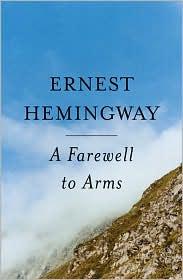
A Farewell to Arms by Ernest Hemingway is a 1929 literary fiction book about war and disillusionment, love and loss, masculinity and vulnerability. Hemingway's prose style — short sentences, repetition, understatement — is not minimalism for its own sake but a formal strategy for conveying what people feel when they cannot or will not speak directly.
Summary
A Farewell to Arms is set during the First World War in northern Italy and follows Frederic Henry, an American serving as a lieutenant in the Italian ambulance corps, who falls in love with Catherine Barkley, a British nurse. The novel is loosely autobiographical — Hemingway was himself wounded on the Italian front in 1918 — but it is not primarily a war memoir. It is a study of how two people use each other as shelter from a world that is actively trying to kill them.
The novel's first half is an immersion in the mechanics and absurdity of the Italian campaign: the retreat from Caporetto, the shelling, the chaos of the medical service, the mixture of heroism and incompetence on all sides. Hemingway's prose at its best here — short, declarative, weight-bearing — captures the combination of boredom and terror that defines combat experience. The relationship between Henry and Catherine develops alongside this, and the novel is honest about the self-serving quality of their love: they are both running from something, and each finds in the other a reason not to look at what they're running from.
The prose style — what Hemingway called the iceberg theory, where most of the meaning is below the surface of the simple sentences — is both the novel's greatest achievement and its most argued-about quality. What Hemingway says directly is almost nothing; what he implies through repetition, understatement, and the things characters do not say is enormous. This technique rewards attentive reading and punishes impatient reading.
A Farewell to Arms is one of the defining American novels about the First World War, and it remains more honest about the cost of disillusionment than most war fiction. But readers should be prepared for a protagonist who is passive, self-protective, and not particularly admirable, and for a love story that is more desperate than romantic. The ending is devastating. Hemingway wrote forty-seven different endings before arriving at the one in the published text, which says something about how hard the last page is to get right.
Talk to A Farewell to Arms like its author wrote you back.
Get the ideas that fit your life — not generic summaries.
- Chat with the book
- Audiobook-style main ideas
- Adapts to your life and goals
- Helps you take action
Key takeaways
- 1.
Hemingway's prose style — short sentences, repetition, understatement — is not minimalism for its own sake but a formal strategy for conveying what people feel when they cannot or will not speak directly.
- 2.
The novel presents love not as transcendence but as refuge: Henry and Catherine find in each other a way to avoid looking at the world that surrounds them. That makes their relationship both real and unstable.
- 3.
The retreat from Caporetto is one of the most powerful depictions of military disintegration in fiction — the breakdown of order, the arbitrary executions, the complete dissolution of the idea that there is a plan.
- 4.
Catherine's characterization is the novel's most serious ongoing critical debate: she is either one of the great embodiments of love under pressure or a male projection of ideal feminine compliance. Hemingway's text supports both readings.
- 5.
Henry's famous 'separate peace' — his decision to detach himself emotionally from the war and the cause — is the novel's central moral act, and Hemingway treats it without judgment.
- 6.
The novel connects love and death from its first pages — the retreat, the shelling, the wounds, the hospital — and the ending makes explicit what the structure has been implying throughout.
- 7.
Hemingway's use of rain as an atmospheric and symbolic element is almost too insistent, but it works: the rain never lets you forget that something is about to be lost.
- 8.
The forty-seven endings Hemingway drafted, all of them different from the others, suggest that the novel's conclusion is not inevitable but chosen — which makes it feel more agonizing, not less.
Discussion questions
Use these on your own, with a book club, or as chat starters in Superbook. Book club version, ready to copy or print →
- 1.
Frederic Henry is a passive protagonist who reacts more than he acts. Does that feel like a realistic portrayal of someone in his situation, or an evasion on Hemingway's part?
- 2.
The novel has been criticized for presenting Catherine as a fantasy of ideal femininity — compliant, nurturing, existing primarily to serve Henry's needs. Does that criticism feel fair to you?
- 3.
Henry declares a 'separate peace' and deserts the army. Is that a moral act, a cowardly one, or something the novel refuses to judge?
- 4.
The retreat from Caporetto is the novel's most sustained piece of military writing. What does Hemingway show about the relationship between military order and individual survival?
- 5.
Hemingway's prose works by implication — characters rarely say directly what they feel. Did that technique draw you in or keep you at a distance?
- 6.
The priest is the novel's most stable character — he has faith, clarity, and a consistency that none of the other characters manage. What function does he serve in the novel's moral landscape?
- 7.
The Rinaldi character — Henry's friend, a surgeon — is one of the most vivid supporting characters. How does his arc (he ends the novel sick and exhausted) comment on the cost of the war?
- 8.
Rain appears throughout the novel in connection with loss and death. Is Hemingway's use of weather too obvious, or does repetition give it a different kind of power?
- 9.
The ending has been described as one of the most devastating in American fiction. Did it land that way for you, and what technique did Hemingway use to make it hit?
- 10.
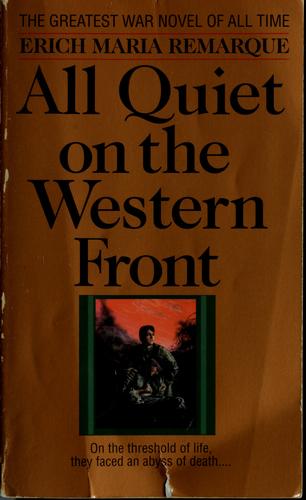
Compare A Farewell to Arms to All Quiet on the Western Front, which was published the same year. Both are about disillusionment with the First World War — what is different about what they argue?
- 11.
Hemingway was wounded on the Italian front at nineteen. How much does it matter that this novel is partly autobiographical? Does that make it more or less interesting?
- 12.
What would you say the novel believes about love — as a force, as a shelter, as a compensation for what the world takes away?
Themes
Frequently asked questions
-
Is A Farewell to Arms worth reading?
Yes, especially if you're interested in how prose style can carry emotional weight. The war sections are among the most technically accomplished writing about combat in English. The love story is complicated by the gender dynamics of the period, but the novel's honesty about the relationship between love and loss is remarkable.
-
Is A Farewell to Arms hard to read?
The prose is deceptively simple but rewards attention. Hemingway's technique depends on what's left unsaid, which means impatient readers often feel that nothing is happening when a great deal is happening below the surface. Slow down for the dialogue; the meaning is usually in what isn't said.
-
Is A Farewell to Arms a love story?
Partly. It is also a war novel, a study in disillusionment, and an investigation of what people do when they cannot bear the world they are living in. The love story is central, but it is not optimistic — both characters use the relationship as shelter more than celebration.
-
Who shouldn't read A Farewell to Arms?
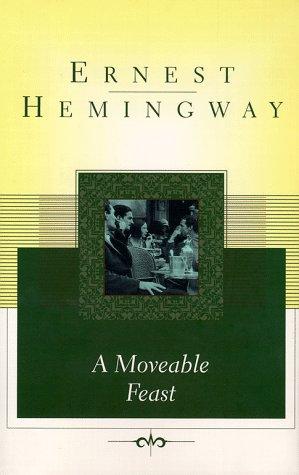
Readers who want active protagonists, clear moral stakes, or romantic catharsis will find it unsatisfying. Henry is passive and self-protective, the war is rendered as meaningless chaos, and the ending refuses consolation. If you want Hemingway with more warmth, try A Moveable Feast.
-
Is there a film adaptation?
There have been two major adaptations: a 1932 film starring Gary Cooper and Helen Hayes, and a 1957 version with Rock Hudson and Jennifer Jones. Neither is considered definitive, and both soften the novel's bleakness. The 1932 version is historically interesting; neither is required viewing.