The Things They Carried by Tim O'Brien is a 1990 memoir book about vietnam war, truth and storytelling, memory and trauma. O'Brien distinguishes between 'happening-truth' — what literally occurred — and 'story-truth' — what a story captures about the emotional and moral reality of an experience. He argues story-truth can be more true than fact.
Summary
Tim O'Brien served as a foot soldier in Vietnam in 1969 and 1970. The Things They Carried, published in 1990, is his most celebrated work — a collection of linked stories about a platoon of soldiers that blurs the line between fiction and memoir so deliberately that readers are still arguing about which category it belongs in. O'Brien is explicit about this ambiguity: the book includes a character named Tim O'Brien, and it contains a chapter arguing that the "story-truth" of fiction can be truer than literal fact. Whether any specific event happened exactly as written is, by design, unanswerable.
The opening title story catalogs the physical and emotional weight the soldiers carry — weapons, photographs, good-luck charms, letters from girlfriends, the weight of fear, the weight of memory — in a prose inventory that is also a meditation on what it means to carry something. This method of concrete accumulation as emotional meaning persists throughout the book. O'Brien consistently finds the moral truth of an experience in physical detail rather than in abstract reflection.
The stories cover the full range of what soldiers experience in combat: the accidental killing of a young Vietnamese man, the death of a comrade who drowns in a sewage field, the execution of a fellow soldier who goes mad, the confusion and terror of ambushes in the dark. But they also cover what happens after: the return home, the attempt to explain the war to a daughter who cannot understand it, the decades of guilt over specific acts. The book is as much about the afterlife of war as about war itself.
O'Brien's central argument — that telling stories is a way of keeping the dead alive and processing what cannot otherwise be processed — gives The Things They Carried a moral seriousness beyond its formal inventiveness. It is one of the most important works of American literature about war, and one of the most philosophically sophisticated treatments of the relationship between truth, memory, and fiction. Its influence on the literature of the post-9/11 wars has been substantial and direct.
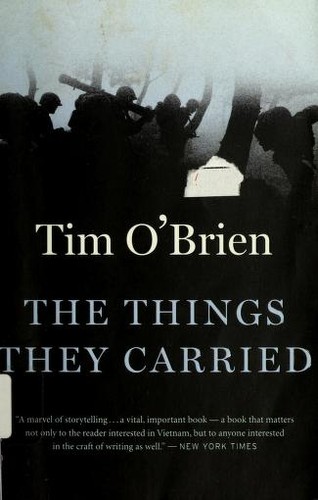
Talk to The Things They Carried like its author wrote you back.
Get the ideas that fit your life — not generic summaries.
- Chat with the book
- Audiobook-style main ideas
- Adapts to your life and goals
- Helps you take action
Key takeaways
- 1.
O'Brien distinguishes between 'happening-truth' — what literally occurred — and 'story-truth' — what a story captures about the emotional and moral reality of an experience. He argues story-truth can be more true than fact.
- 2.
The physical inventory of what soldiers carry — including emotional weight, fear, and the memory of people they love — is a method for making the internal life of soldiers visible in concrete, specific terms.
- 3.
Moral injury in war often comes not from what was done to soldiers but from what soldiers did or failed to prevent. Several stories turn on acts of commission and omission that leave permanent psychological marks.
- 4.
The act of storytelling is presented as a survival mechanism — a way of carrying the dead forward and processing experiences that have no other available form.
- 5.
O'Brien's blurring of autobiographical and fictional elements is not a trick but a structural argument: the book maintains that truth in war literature is a more complicated category than documentary accuracy.
- 6.
Fear and cowardice are treated with unusual honesty. O'Brien describes nearly deserting before his tour began, driven home by the social pressure of what others would think rather than by any conviction about the war's justice.
- 7.
The war's effects on the soldiers do not end at the book's end. Stories set decades later show characters still carrying their Vietnam experiences, still attempting to make sense of specific moments.
- 8.
The gap between civilian understanding of war and the actual experience of combat is a persistent theme. O'Brien writes about the impossibility of explaining the war to people who were not there.
Discussion questions
Use these on your own, with a book club, or as chat starters in Superbook. Book club version, ready to copy or print →
- 1.
O'Brien claims that a story can be 'true' even if the events it describes never happened. Do you find that argument convincing? What are its limits?
- 2.
The opening inventory of what soldiers carry moves from physical objects to emotional and psychological weight. What does that formal choice accomplish?
- 3.
O'Brien writes that he stayed in Vietnam partly because he was afraid of what people back home would think if he deserted. How does social pressure function differently from moral conviction as a motivation for military service?
- 4.
Several stories center on a specific act of killing — the young Vietnamese man, the execution of Kiowa's killer. How does O'Brien approach the moral weight of killing without reaching simple verdicts?
- 5.
The book includes a chapter in which O'Brien tells his daughter about the war and she responds with incomprehension. What does that failure of communication say about the transmission of war experience across generations?
- 6.
How does the book's treatment of truth and fiction compare to other works of creative nonfiction you've read? Where does O'Brien's approach feel honest and where does it feel like evasion?
- 7.
Kiowa's death is returned to multiple times in different stories. What does the repetition accomplish that a single account would not?
- 8.
O'Brien's Vietnam platoon is a cross-section of American society in 1969. How does the book use that cross-section to represent something larger about the war's social costs?
- 9.
The book was published in 1990, fifteen years after the fall of Saigon. How does that temporal distance shape what O'Brien can see that a contemporary account might not?
- 10.
The Things They Carried is often taught in high schools. What does assigning it to young readers who have no direct experience of war accomplish? What risks does it carry?
- 11.
O'Brien describes the experience of killing — even inadvertently — as leaving a mark that does not fade. Does his treatment of that experience feel honest to you, and why?
- 12.
How does the relationship between imagination and memory in the book compare to how you experience your own memories of significant events?
Themes
Frequently asked questions
-
Is The Things They Carried fiction or memoir?
Both and neither. O'Brien includes a character named Tim O'Brien and draws extensively on his actual Vietnam service, but many events are invented and he is explicit that the book's truth is 'story-truth' rather than literal fact. The publisher originally classified it as fiction; it is now commonly shelved as both.
-
Is it worth reading if you've already read Dispatches?
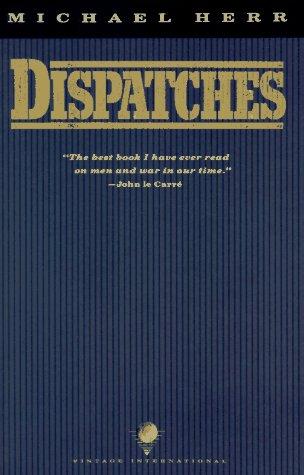
Yes. The books cover similar ground — Vietnam ground-level experience — but they are very different in form and sensibility. Dispatches is journalism pushed toward literature; The Things They Carried is fiction pushed toward testimony. They complement rather than duplicate each other.
-
How long does it take to read?
Around 250 pages, roughly four to five hours at average pace. The linked-story structure means it can also be read in pieces, though the full architecture of the book rewards reading it through.
-
What is the most important story in the book?
Most readers point to 'How to Tell a True War Story' as the book's philosophical center — it is where O'Brien most directly addresses the relationship between truth and storytelling. But 'The Things They Carried' (the opening story) and 'In the Field' (on Kiowa's death) are equally essential.
-
Who should read this book?
Anyone interested in war literature, the ethics of storytelling, or the psychological aftermath of combat. It is also valuable for readers interested in the craft of fiction — the book is among the most technically sophisticated treatments of narrative voice and reliability in American literature.
Similar books
Dispatches
Michael Herr
The Forever War
Dexter Filkins
Unbroken: A World War II Story of Survival, Resilience, and Redemption
Laura Hillenbrand
Say Nothing: A True Story of Murder and Memory in Northern Ireland
Patrick Radden Keefe
