Historical fiction · Book club
A Gentleman in Moscow book club questions
Here are 12 book club questions for A Gentleman in Moscow by Amor Towles, ordered to open easily and end somewhere worth arguing about. Copy them, print them, or bring them up one at a time.
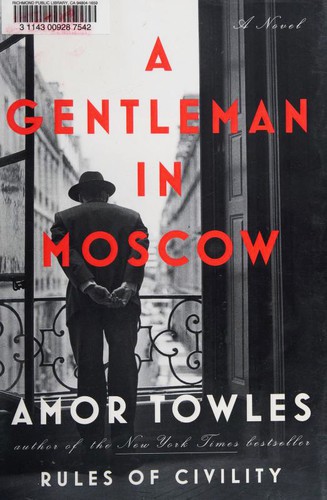
In 1922, Count Alexander Rostov is sentenced by a Bolshevik tribunal — not to death, but to permanent house arrest in Moscow's Metropol Hotel.
Amor Towles · 2016 · 7h 0m
Full summary and key takeaways →The 12 questions
- 1.
Rostov chooses to make the best of his confinement rather than raging against it. Is that wisdom or avoidance? Does the novel think there's a difference?
- 2.
The horrors of Stalinism are present in the novel's margins — denunciations, disappearances, famines — but they don't interrupt Rostov's essentially pleasant life. Is that an evasion or a choice that serves the novel's argument?
- 3.
What does Rostov lose by being confined? What, if anything, does he gain that he might not have gained otherwise?
- 4.
Sofia becomes the novel's engine in the second half. How does her arrival change the stakes of Rostov's story?
- 5.
Towles is an American writing about Soviet Russia from a position of emotional warmth toward his subject. Does that outsider perspective enrich the novel or flatten it?
- 6.
The ending is genuinely surprising and satisfying. Did it feel earned? Does the novel prepare for it, or does it arrive somewhat from nowhere?
- 7.
Compare Rostov to other characters confined by circumstance in fiction — the Count of Monte Cristo, say, or a prisoner-of-war novel. What does this novel do differently?
- 8.
The Metropol's staff become Rostov's real family. What does the novel say about friendship and chosen community as substitutes for the world outside?
- 9.
Is A Gentleman in Moscow a political novel? Does it have a position on Bolshevism, on Soviet history, or is it essentially apolitical?
- 10.
Towles writes about pleasure — food, wine, clothes — with unusual specificity and without embarrassment. What does that attention to material elegance accomplish in the novel?
- 11.
The novel became enormously popular. What do you think readers were responding to — the escapism, the warmth, something in the historical setting, the protagonist's character?
- 12.
If Rostov had been imprisoned in a gulag rather than a luxury hotel, would the same story be possible? What does the specific venue of the Metropol do for the novel?
How to run the discussion
- Pick six to eight, not all of them. An hour of real discussion covers fewer questions than anyone expects, and racing the list is what makes a book club feel like homework.
- Open with what people noticed, not what they concluded. Asking for a verdict first hardens opinions before anyone has heard each other.
- Let the disagreement run. The questions below that split a room are the ones worth the time; the ones everyone answers the same way can be skipped.
- Ask the quiet person a specific question. A direct, narrow question is far easier to answer than an open invitation to contribute.
Themes worth steering toward
If the conversation stalls, these are the threads that usually restart it.
Common questions
What are good book club questions for A Gentleman in Moscow?
Here are 12 book club questions for A Gentleman in Moscow by Amor Towles, ordered to open easily and end somewhere worth arguing about. The strongest openers ask what each reader noticed rather than what they concluded, and the discussion usually turns on confinement and freedom, elegance and survival, history and personal dignity.
How long should a book club discussion of A Gentleman in Moscow last?
Most groups run 60 to 90 minutes of actual discussion. That is roughly six to eight questions, not all of them, so pick the ones that suit your group rather than working down the list in order.
What are the main themes in A Gentleman in Moscow?
Confinement and freedom, Elegance and survival, History and personal dignity, Friendship and loyalty, Change and constancy. Those are the threads most likely to divide a room, which makes them the useful places to steer a discussion that has gone quiet.
Picking the next one? See books like A Gentleman in Moscow or questions for other book club picks.
