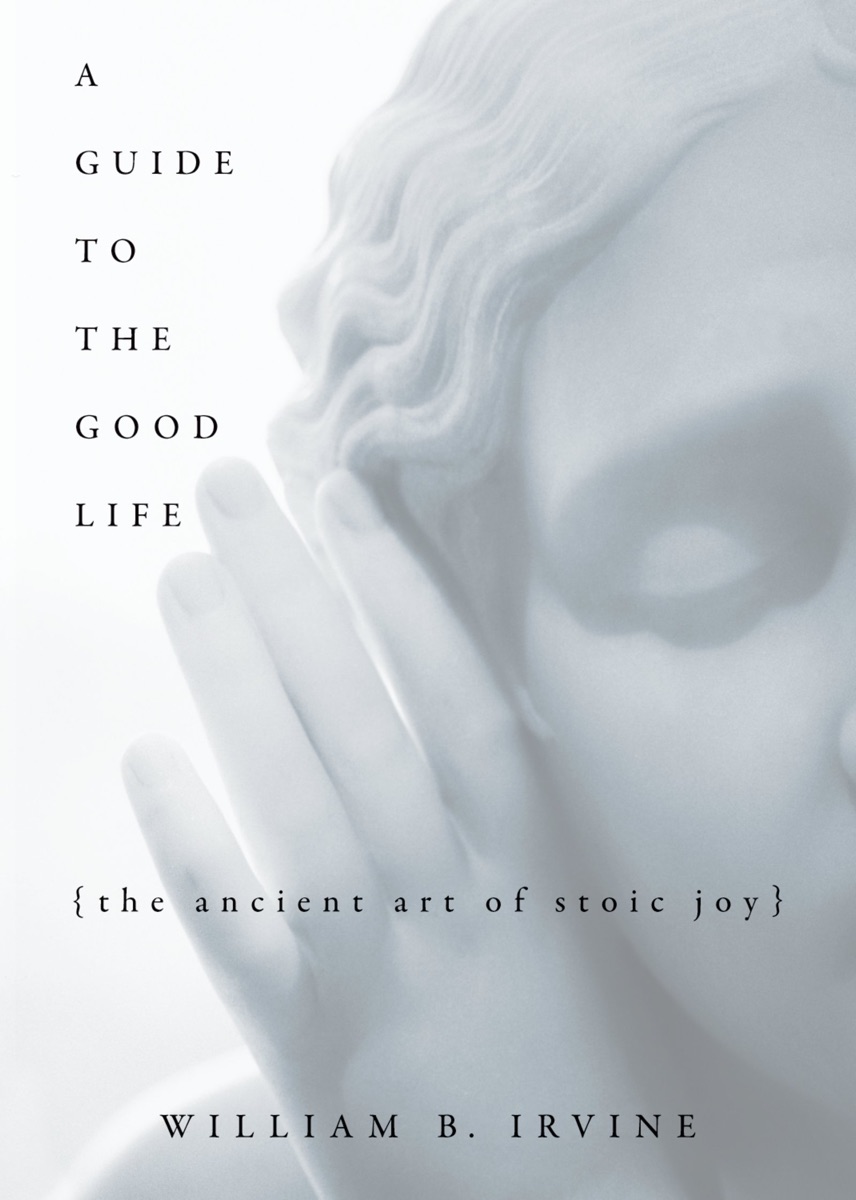
Talk to A Guide to the Good Life like its author wrote you back.
Get the ideas that fit your life — not generic summaries.
- Chat with the book
- Audiobook-style main ideas
- Adapts to your life and goals
- Helps you take action
What it argues
William Irvine's book is a modern case for reviving Stoic philosophy as a practical guide to living well. Irvine, a philosophy professor, argues that most people drift through life without a coherent philosophy — without any clear answer to the question of what they actually want and how to pursue it. Stoicism, he contends, offers exactly this: a complete framework for identifying what matters and training yourself to want what you already have.
The book traces the history of Stoicism from Zeno of Citium through Epictetus, Marcus Aurelius, and Seneca, but Irvine's primary interest is not historical. He wants to extract practical techniques. The most central is the dichotomy of control: some things are up to us, some are not, and confusing the two is the primary source of unhappiness. Irvine extends this into what he calls the trichotomy of control — things fully in our control, things partly in our control, and things not at all in our control — and argues that most anxiety comes from obsessing over the wrong category.
What it gets right
- 1.
The dichotomy of control is Stoicism's core insight: focus energy on what you can influence, and practice indifference toward what you cannot.
- 2.
Negative visualization — imagining the loss of things you value — counteracts hedonic adaptation and restores appreciation for ordinary life.
- 3.
Voluntary discomfort, like skipping a meal or taking cold walks, builds the resilience to confirm you can handle genuine hardship.
What it covers
Who wrote it
William B. Irvine is a professor of philosophy at Wright State University in Dayton, Ohio. He has written several books applying philosophical ideas to everyday life, including On Desire: Why We Want What We Want and A Slap in the Face: Why Insults Hurt and Why They Shouldn't. A Guide to the Good Life, published in 2008, became one of the most widely read popular introductions to Stoicism and sparked considerable renewed interest in the ancient tradition. Irvine has described his own Stoic practice as something he arrived at through academic study and found genuinely useful before it became fashionable.
