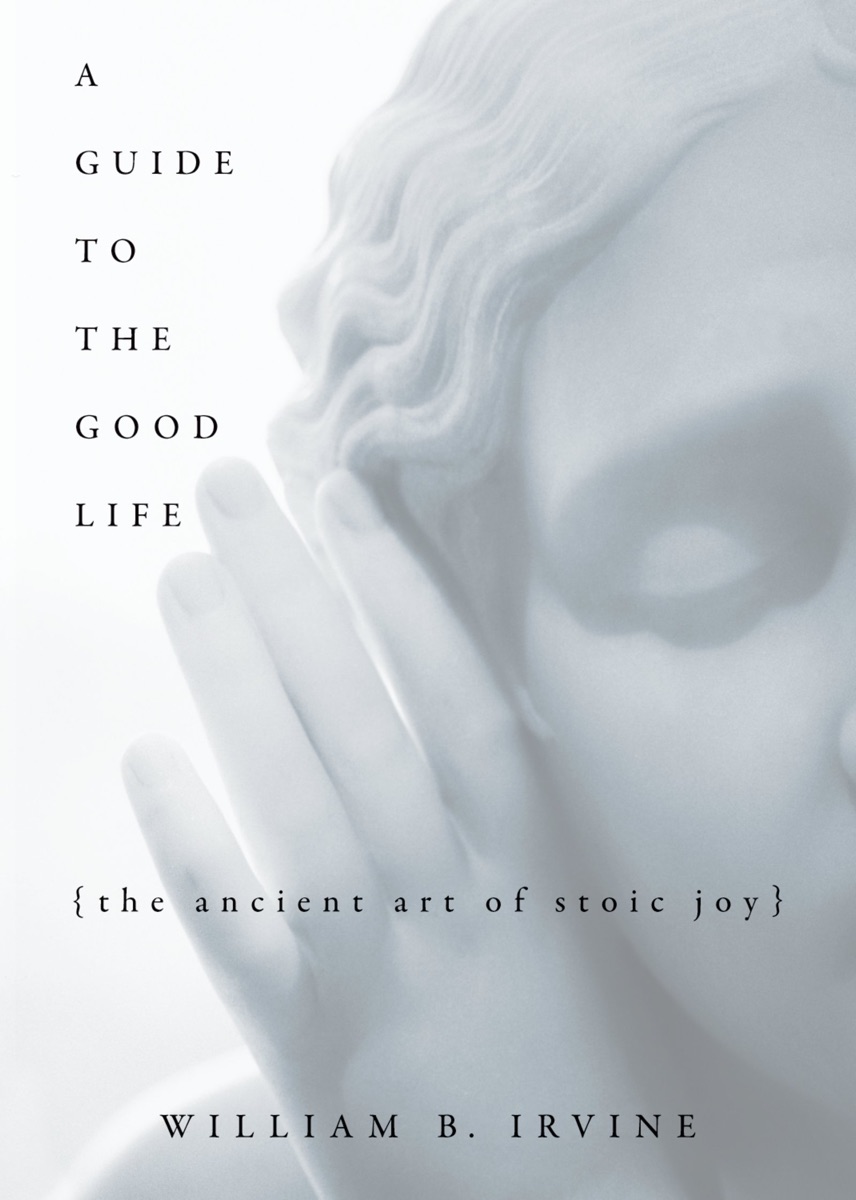
A Guide to the Good Life by William Irvine is a 2008 philosophy book about stoicism, happiness, self-discipline. The dichotomy of control is Stoicism's core insight: focus energy on what you can influence, and practice indifference toward what you cannot.
Summary
William Irvine's book is a modern case for reviving Stoic philosophy as a practical guide to living well. Irvine, a philosophy professor, argues that most people drift through life without a coherent philosophy — without any clear answer to the question of what they actually want and how to pursue it. Stoicism, he contends, offers exactly this: a complete framework for identifying what matters and training yourself to want what you already have.
The book traces the history of Stoicism from Zeno of Citium through Epictetus, Marcus Aurelius, and Seneca, but Irvine's primary interest is not historical. He wants to extract practical techniques. The most central is the dichotomy of control: some things are up to us, some are not, and confusing the two is the primary source of unhappiness. Irvine extends this into what he calls the trichotomy of control — things fully in our control, things partly in our control, and things not at all in our control — and argues that most anxiety comes from obsessing over the wrong category.
The technique Irvine returns to most often is negative visualization: deliberately imagining losing the things you value. The practice sounds morbid but functions as an antidote to hedonic adaptation, the psychological tendency to take good things for granted. A Stoic who occasionally imagines losing their health, relationships, or freedom will appreciate those things more than someone who never considers the possibility. Voluntary discomfort — occasionally skipping a meal, taking a cold walk, tolerating physical hardship — serves a related purpose: building resilience and confirming that you can handle adversity.
Irvine is honest that modern Stoicism requires some adaptation. He strips away the more cosmological and theological elements of ancient Stoic thought and keeps what is psychologically actionable. Some philosophers find this approach superficial; Irvine would say it makes the ideas available to people who would otherwise have no framework at all. The book is less intellectually demanding than primary sources like Epictetus's Discourses and much more applied. Readers who want a rigorous philosophical treatment will need to go further, but as an entry point to Stoic practice, it remains unusually clear.
Talk to A Guide to the Good Life like its author wrote you back.
Get the ideas that fit your life — not generic summaries.
- Chat with the book
- Audiobook-style main ideas
- Adapts to your life and goals
- Helps you take action
Key takeaways
- 1.
The dichotomy of control is Stoicism's core insight: focus energy on what you can influence, and practice indifference toward what you cannot.
- 2.
Negative visualization — imagining the loss of things you value — counteracts hedonic adaptation and restores appreciation for ordinary life.
- 3.
Voluntary discomfort, like skipping a meal or taking cold walks, builds the resilience to confirm you can handle genuine hardship.
- 4.
Internalize your goals: instead of winning the match, aim to play as well as possible. The internal goal stays fully under your control.
- 5.
The trichotomy of control separates things fully in our power, partly in our power, and not at all — most anxiety attaches to the wrong category.
- 6.
Fame and wealth are preferred indifferents for Stoics: worth pursuing if they come without corrupting character, but not worth sacrificing tranquility for.
- 7.
Stoic self-denial is not asceticism for its own sake but a calibration exercise — proving to yourself that the absence of comfort doesn't ruin you.
- 8.
Social Stoicism: treat others with care and generosity, recognizing that we are all members of a larger community, while maintaining equanimity about the outcome.
Discussion questions
Use these on your own, with a book club, or as chat starters in Superbook. Book club version, ready to copy or print →
- 1.
Irvine argues most people live without a coherent philosophy. What guiding principle, if any, have you been operating by — and did you consciously choose it?
- 2.
The dichotomy of control sounds simple but is hard in practice. Where in your life do you expend the most energy on things outside your control?
- 3.
Negative visualization asks you to picture losing what you love. Does that feel helpful or morbid to you? Have you ever practiced something like it naturally?
- 4.
Irvine recommends voluntary discomfort. What small hardship could you introduce this week, and what would you be testing in yourself?
- 5.
The Stoics distinguish between value that corrupts character and value that doesn't. Which pursuits in your life might be trading long-term equanimity for short-term gains?
- 6.
Hedonic adaptation means good things become invisible over time. What in your life have you almost certainly stopped noticing that would devastate you to lose?
- 7.
Internalizing goals shifts focus from outcomes to effort. Which outcome-focused goal of yours might be better reframed as a process goal?
- 8.
Irvine strips out the metaphysical parts of Stoicism. Does that make it more useful or does something important get lost in the translation?
- 9.
Seneca, Epictetus, and Marcus Aurelius each practiced Stoicism in radically different circumstances. Whose situation most resembles yours, and does their version of the philosophy translate?
- 10.
The Stoics counsel indifference to insult and social disapproval. Where in your life would this be most liberating, and where would it be a genuine loss?
- 11.
Irvine argues that tranquility, not happiness, is the proper goal of a Stoic life. What's the difference, and which do you actually want?
- 12.
How much of what you currently call ambition is about genuine achievement versus fear of what others will think if you fall short?
Themes
Frequently asked questions
-
Is A Guide to the Good Life worth reading?
Yes, particularly if you want a practical entry point to Stoic philosophy without wading through primary ancient texts. Irvine is a clear writer who explains the techniques in modern terms. Readers already familiar with Epictetus or Marcus Aurelius may find some sections thin, but as a primer it is well constructed.
-
What is the main idea of A Guide to the Good Life?
That Stoicism offers a complete, practical philosophy for living well. Its central tools — focusing on what you control, practicing negative visualization, and embracing voluntary discomfort — can substantially increase tranquility and reduce needless anxiety.
-
How does this compare to reading Marcus Aurelius directly?
Irvine is easier to read and more explicitly applied to modern life. Meditations is more intimate and literary but requires more interpretive work. Most readers benefit from both: Irvine for context and technique, Aurelius for the original voice. The Discourses of Epictetus are the most demanding but most rigorous.
-
Who should read A Guide to the Good Life?
People curious about Stoicism who want to understand how it applies to career, relationships, and everyday decisions, not just ancient history. Also useful for anyone who has found themselves chronically anxious about outcomes they don't fully control.
-
Does the book require any background in philosophy?
None. Irvine writes for a general audience and explains all the core concepts from scratch. The historical sections are brief and self-contained.