Religion & Spirituality · Book club
A History of God book club questions
Here are 12 book club questions for A History of God by Karen Armstrong, ordered to open easily and end somewhere worth arguing about. Copy them, print them, or bring them up one at a time.
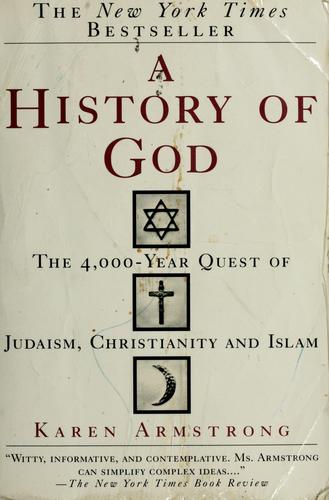
A History of God is Karen Armstrong's account of how the idea of God has changed over four thousand years across Judaism, Christianity, and Islam, with excursions into Hinduism and Buddhism.
Karen Armstrong · 1993 · 11h 45m
Full summary and key takeaways →The 12 questions
- 1.
Armstrong argues the idea of God changes in response to historical circumstances. Does this evolutionary account strengthen or weaken the claim that there is something real that religion is tracking?
- 2.
The God of Abraham acts in history — parting seas, dictating commands. The God of Plotinus is beyond time and history. Can both be versions of the same God, or are they different concepts?
- 3.
Armstrong shows that monotheism emerged gradually from polytheism. Does the origin of an idea tell you anything about its truth?
- 4.
The mystical traditions all converge on silence and unsayability. Does that convergence seem like evidence for a genuine reality, or like a common psychological experience with many explanations?
- 5.
Fundamentalism, in Armstrong's account, is a modern phenomenon rather than a continuity with ancient religion. Does this framing seem accurate when you look at movements you know?
- 6.
Each Abrahamic tradition has a mystical strand that most practitioners never encounter. Who do you think the typical believer in each tradition is closer to — the philosopher-theologians or the popular folk religion?
- 7.
Armstrong traces the influence of Greek philosophy on Christian theology. Does it change your view of Christianity to see how thoroughly it absorbed Platonic categories?
- 8.
The God of the mystics is so abstract it can barely be called personal. Does a God that is 'ground of being' rather than a person seem like a meaningful object of worship?
- 9.
All three traditions have developed their God-concept partly in response to philosophical objections and historical catastrophes. What current pressures do you think are reshaping religious ideas right now?
- 10.
Armstrong writes as a sympathetic outsider — not a believer, but not hostile either. Does that position give her account credibility or does it limit it?
- 11.
If God is constructed differently in each era, what stays constant? Is there a minimal core that makes the comparison across four thousand years meaningful?
- 12.
Which strand of the tradition — the philosopher's God, the prophet's God, or the mystic's God — seems most compelling or most honest to you? Why?
How to run the discussion
- Pick six to eight, not all of them. An hour of real discussion covers fewer questions than anyone expects, and racing the list is what makes a book club feel like homework.
- Open with what people noticed, not what they concluded. Asking for a verdict first hardens opinions before anyone has heard each other.
- Let the disagreement run. The questions below that split a room are the ones worth the time; the ones everyone answers the same way can be skipped.
- Ask the quiet person a specific question. A direct, narrow question is far easier to answer than an open invitation to contribute.
Themes worth steering toward
If the conversation stalls, these are the threads that usually restart it.
Common questions
What are good book club questions for A History of God?
Here are 12 book club questions for A History of God by Karen Armstrong, ordered to open easily and end somewhere worth arguing about. The strongest openers ask what each reader noticed rather than what they concluded, and the discussion usually turns on monotheism, theology, religious history.
How long should a book club discussion of A History of God last?
Most groups run 60 to 90 minutes of actual discussion. That is roughly six to eight questions, not all of them, so pick the ones that suit your group rather than working down the list in order.
What are the main themes in A History of God?
Monotheism, Theology, Religious history, Mysticism, Judaism, Christianity, Islam. Those are the threads most likely to divide a room, which makes them the useful places to steer a discussion that has gone quiet.
Picking the next one? See books like A History of God or questions for other book club picks.
