Talk to A Memory Called Empire like its author wrote you back.
Get the ideas that fit your life — not generic summaries.
- Chat with the book
- Audiobook-style main ideas
- Adapts to your life and goals
- Helps you take action
A Memory Called Empire, in detail
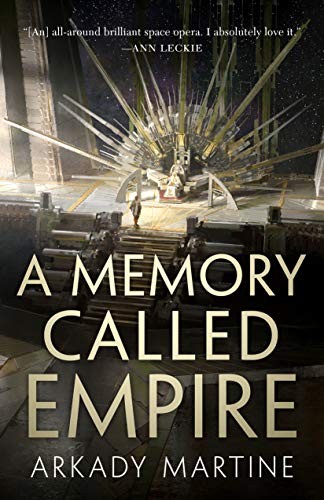
Mahit Dzmare, ambassador from a small, semi-independent mining station to the vast Teixcalaanli Empire, arrives at the capital to find her predecessor has died under suspicious circumstances and the neural implant that was supposed to give her access to his memories and knowledge is three years out of date. She is alone in an empire she has adored from a distance her entire life — its literature, its aesthetics, its politics — and the story of how she navigates that contradiction is A Memory Called Empire's real subject, more than the murder mystery that drives the plot.
Arkady Martine is a historian of the Byzantine Empire by academic training, and that background shows in the texture of Teixcalaan. The empire is not a metaphor for Rome or the British empire; it is a distinct civilization with its own logic, aesthetics, and assumptions, and it is genuinely compelling to inhabit. The problem of imperialism is never posed as a simple moral: Teixcalaan is beautiful, and Mahit's love for it is sincere, and that love is itself a form of colonial capture. The novel is unsparing about this without making Mahit a symbol of it.
The pacing is unusual for space opera — slower, more attentive to social and political texture, more interested in what rooms feel like and what conversations mean than in action sequences. The mystery is competent, but the real pleasures are the relationship between Mahit and her cultural liaison Three Seagrass (bright, well-meaning, unreliable, oblivious to her own condescension), and the meditation on what it means to love a culture that doesn't love you back, that sees you as a provincial at best and raw material at worst.
The book won the Hugo Award for Best Novel in 2020 and its sequel, A Desolation Called Peace, also won the following year. Some readers will find the pacing too slow and the mystery too slight for a thick science fiction novel. Readers who want their genre fiction to do the work literary fiction does — to think carefully about its world and what it implies — will find A Memory Called Empire one of the most rewarding SF debuts of the decade.
The big ideas
- 1.
The novel's central argument is that loving an empire's culture does not protect you from what the empire does with you — admiration and colonization can be simultaneous experiences.
- 2.
Mahit's neural implant technology — carrying the memories of her predecessors — serves as both plot mechanism and metaphor for the question of continuous identity across different versions of a self.
- 3.
Teixcalaan is fully realized as a distinct civilization; Martine's historical scholarship shapes a culture with genuine internal coherence rather than a mapped-on Earth analog.
