Science · Book club
A Pattern Language book club questions
Here are 12 book club questions for A Pattern Language by Christopher Alexander, ordered to open easily and end somewhere worth arguing about. Copy them, print them, or bring them up one at a time.
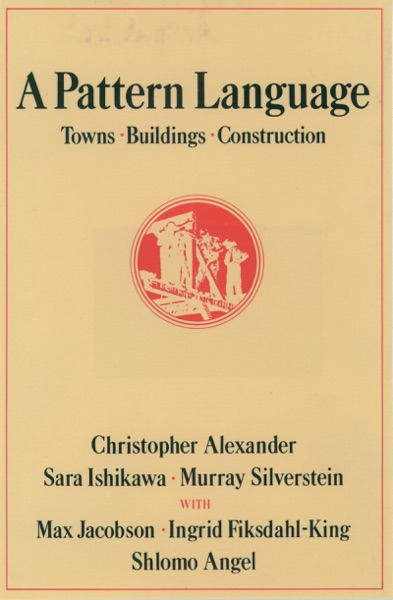
A Pattern Language is an extraordinary attempt to describe, in systematic form, the conditions that make human habitats feel alive.
Christopher Alexander · 1977 · 73h 20m
Full summary and key takeaways →The 12 questions
- 1.
Alexander argues that modernist architecture has been systematically wrong about human needs. Do you find this persuasive? What examples from your own environment support or challenge it?
- 2.
The book claims patterns can be discovered rather than invented. What would it mean for a design principle to be objectively true across cultures?
- 3.
Pick a space you find deeply comfortable — a room, a café, a street — and try to identify which patterns from the book it instantiates. What does that exercise reveal?
- 4.
Alexander says the quality he is describing cannot be named directly. Do you think that is a conceptual gap or a genuine feature of the thing being described?
- 5.
The book was designed to be used by non-architects to shape their own environments. Has professional design expertise made buildings better or worse for the people who inhabit them?
- 6.
Software design patterns borrowed Alexander's concept. Do you think the transfer works? What is preserved and what is lost when the idea moves from physical space to code?
- 7.
Which of the 253 patterns do you find most surprising or counterintuitive? Which feels most obviously right?
- 8.
The book implies that certain environments are better for human beings independent of cultural preference. Is that claim defensible, or is 'what makes a space good' entirely relative?
- 9.
Alexander's patterns describe what has worked historically. Does that make the book conservative? Can it accommodate genuinely new types of living and working?
- 10.
If you could apply three patterns from the book to a space you currently inhabit — home, office, neighborhood — which would you choose and why?
- 11.
The book runs to over 1,000 pages. Does its size and density make it more or less useful than a shorter, more prescriptive design guide?
- 12.
How does the idea of a 'language' of patterns change your understanding of what design is? What does the metaphor get right and what does it get wrong?
How to run the discussion
- Pick six to eight, not all of them. An hour of real discussion covers fewer questions than anyone expects, and racing the list is what makes a book club feel like homework.
- Open with what people noticed, not what they concluded. Asking for a verdict first hardens opinions before anyone has heard each other.
- Let the disagreement run. The questions below that split a room are the ones worth the time; the ones everyone answers the same way can be skipped.
- Ask the quiet person a specific question. A direct, narrow question is far easier to answer than an open invitation to contribute.
Themes worth steering toward
If the conversation stalls, these are the threads that usually restart it.
Common questions
What are good book club questions for A Pattern Language?
Here are 12 book club questions for A Pattern Language by Christopher Alexander, ordered to open easily and end somewhere worth arguing about. The strongest openers ask what each reader noticed rather than what they concluded, and the discussion usually turns on architecture, urban design, human-centered design.
How long should a book club discussion of A Pattern Language last?
Most groups run 60 to 90 minutes of actual discussion. That is roughly six to eight questions, not all of them, so pick the ones that suit your group rather than working down the list in order.
What are the main themes in A Pattern Language?
Architecture, Urban design, Human-centered design, Community, Space and place. Those are the threads most likely to divide a room, which makes them the useful places to steer a discussion that has gone quiet.
Picking the next one? See books like A Pattern Language or questions for other book club picks.
