History · Book club
A People's History of the United States book club questions
Here are 12 book club questions for A People's History of the United States by Howard Zinn, ordered to open easily and end somewhere worth arguing about. Copy them, print them, or bring them up one at a time.
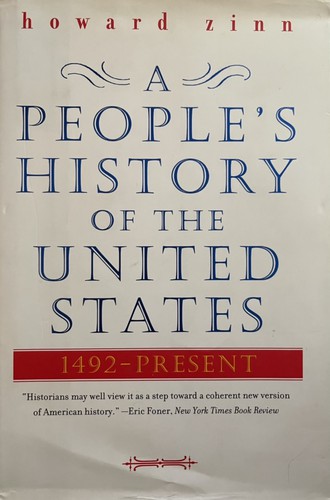
Howard Zinn's A People's History of the United States, first published in 1980, retells American history from the perspective of those who rarely appear in conventional textbooks: Native Americans, enslaved people, industrial workers, women, immigrants, and dissidents of various kinds.
Howard Zinn · 1980 · 15h 30m
Full summary and key takeaways →The 12 questions
- 1.
Zinn openly states he is telling a partial story. Does acknowledging bias make a historical account more or less trustworthy than one that claims neutrality?
- 2.
Which chapter in the book most changed how you thought about an event or period you thought you already understood?
- 3.
Zinn gives the labor movement far more attention than it receives in most American history curricula. What does that rebalancing reveal, and what does it obscure?
- 4.
How do you assess the book's treatment of the Founding Fathers? Is the critique that they were property-protecting elites compatible with the genuine importance of the constitutional framework they created?
- 5.
Zinn's method relies heavily on the concept of class interest as an explanatory tool. When does that framework illuminate historical causation, and when does it simplify it?
- 6.
The book was written in 1980. Which parts feel most dated, and which remain directly relevant to current political debates?
- 7.
Zinn argues that meaningful change in American history has come primarily from organized movements rather than from enlightened leadership. Does the historical evidence support that claim?
- 8.
What does it mean to write history 'from below'? What sources does that approach rely on, and what are its methodological limits?
- 9.
The book has been both celebrated and criticized for its use in American classrooms. What do you think is gained and lost when students read it as an introduction to American history rather than as a corrective to it?
- 10.
How does Zinn's account of American foreign policy — particularly in Latin America and Southeast Asia — compare to what you knew before reading it?
- 11.
Which group's story did you find most effectively told in the book? Which felt most incomplete?
- 12.
If you were assigning this book alongside one other history of the United States, which book would you choose to put in conversation with it?
How to run the discussion
- Pick six to eight, not all of them. An hour of real discussion covers fewer questions than anyone expects, and racing the list is what makes a book club feel like homework.
- Open with what people noticed, not what they concluded. Asking for a verdict first hardens opinions before anyone has heard each other.
- Let the disagreement run. The questions below that split a room are the ones worth the time; the ones everyone answers the same way can be skipped.
- Ask the quiet person a specific question. A direct, narrow question is far easier to answer than an open invitation to contribute.
Themes worth steering toward
If the conversation stalls, these are the threads that usually restart it.
Common questions
What are good book club questions for A People's History of the United States?
Here are 12 book club questions for A People's History of the United States by Howard Zinn, ordered to open easily and end somewhere worth arguing about. The strongest openers ask what each reader noticed rather than what they concluded, and the discussion usually turns on american history, class conflict, social movements.
How long should a book club discussion of A People's History of the United States last?
Most groups run 60 to 90 minutes of actual discussion. That is roughly six to eight questions, not all of them, so pick the ones that suit your group rather than working down the list in order.
What are the main themes in A People's History of the United States?
American history, Class conflict, Social movements, Power, Resistance. Those are the threads most likely to divide a room, which makes them the useful places to steer a discussion that has gone quiet.
Picking the next one? See books like A People's History of the United States or questions for other book club picks.
