Economics · Book club
A Random Walk Down Wall Street book club questions
Here are 12 book club questions for A Random Walk Down Wall Street by Burton G. Malkiel, ordered to open easily and end somewhere worth arguing about. Copy them, print them, or bring them up one at a time.
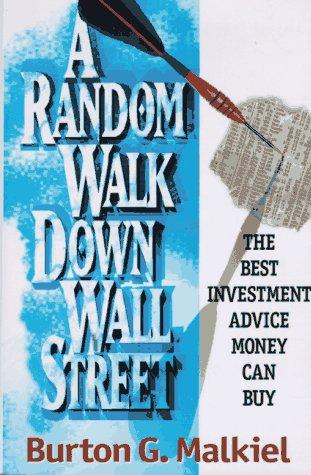
A Random Walk Down Wall Street is Burton Malkiel's argument that stock prices move in a way that is effectively unpredictable, that professional fund managers cannot consistently beat the market, and that the rational response for most investors is to buy and hold a diversified index fund.
Burton G. Malkiel · 1973 · 6h 15m
Full summary and key takeaways →The 12 questions
- 1.
Malkiel's random walk argument implies that your stock picks are essentially guesses. Have you ever made a stock pick that worked? Looking back, how much of it was skill and how much was luck?
- 2.
The book has been updated many times since 1973 without changing its core message. What would have to be true about markets for Malkiel's advice to stop being correct?
- 3.
If you already hold index funds, what convinced you to do so? If you don't, what's your argument against the strategy?
- 4.
Active fund managers are intelligent, hardworking, and have access to enormous resources. Malkiel's case is that this doesn't help them beat the market. What does that say about the nature of competition in financial markets?
- 5.
Malkiel acknowledges behavioral finance but argues it doesn't change his recommendation to index. Do you think the existence of irrational investors creates exploitable opportunities, or does competition eliminate those opportunities too quickly?
- 6.
The book recommends rebalancing your portfolio periodically. How do you actually feel when you rebalance — when you sell what's done well and buy what hasn't? What does that feeling tell you about your investing psychology?
- 7.
Malkiel distinguishes between risk tolerance and risk capacity — what you can emotionally handle versus what your financial situation actually requires. How do those two things differ in your own life right now?
- 8.
What percentage of your investments are in actively managed funds versus index funds? If you're heavily in active funds, what would you have to believe for that to be the right choice?
- 9.
The book argues that past fund performance doesn't predict future performance. Have you ever chosen an investment because of its recent track record? How did that work out?
- 10.
Malkiel covers real estate as part of a diversified portfolio. How do you think about your home — as an investment, as consumption, or as something in between?
- 11.
The life-cycle investing framework says young people should hold mostly stocks and shift toward bonds as they age. Is your current allocation consistent with where you are in that framework?
- 12.
What is the hardest part of index investing, psychologically, during a market crash? Have you actually held through a significant downturn, or did you make changes?
How to run the discussion
- Pick six to eight, not all of them. An hour of real discussion covers fewer questions than anyone expects, and racing the list is what makes a book club feel like homework.
- Open with what people noticed, not what they concluded. Asking for a verdict first hardens opinions before anyone has heard each other.
- Let the disagreement run. The questions below that split a room are the ones worth the time; the ones everyone answers the same way can be skipped.
- Ask the quiet person a specific question. A direct, narrow question is far easier to answer than an open invitation to contribute.
Themes worth steering toward
If the conversation stalls, these are the threads that usually restart it.
Common questions
What are good book club questions for A Random Walk Down Wall Street?
Here are 12 book club questions for A Random Walk Down Wall Street by Burton G. Malkiel, ordered to open easily and end somewhere worth arguing about. The strongest openers ask what each reader noticed rather than what they concluded, and the discussion usually turns on index investing, market efficiency, behavioral finance.
How long should a book club discussion of A Random Walk Down Wall Street last?
Most groups run 60 to 90 minutes of actual discussion. That is roughly six to eight questions, not all of them, so pick the ones that suit your group rather than working down the list in order.
What are the main themes in A Random Walk Down Wall Street?
Index investing, Market efficiency, Behavioral finance, Long-term investing, Portfolio strategy. Those are the threads most likely to divide a room, which makes them the useful places to steer a discussion that has gone quiet.
Picking the next one? See books like A Random Walk Down Wall Street or questions for other book club picks.
