Philosophy · Book club
A Theory of Justice book club questions
Here are 12 book club questions for A Theory of Justice by John Rawls, ordered to open easily and end somewhere worth arguing about. Copy them, print them, or bring them up one at a time.
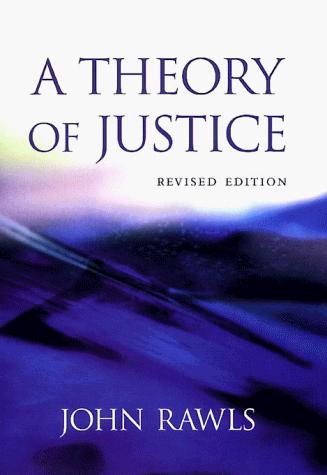
A Theory of Justice, published in 1971, is John Rawls's attempt to construct a systematic alternative to utilitarianism in political philosophy.
John Rawls · 1971 · 13h 15m
Full summary and key takeaways →The 12 questions
- 1.
Behind the veil of ignorance, Rawls argues you would choose the difference principle. Would you? Is maximin — protecting the worst case — the rational strategy, or is it too risk-averse?
- 2.
The difference principle says inequalities are just only if they benefit the least advantaged. Can you think of actual institutional arrangements that satisfy this criterion? Which ones fail it?
- 3.
Rawls insists that basic liberties take priority over economic equality. Is that priority ordering intuitively right, or can you construct cases where trading off some liberty for greater equality seems justified?
- 4.
Utilitarianism might in principle sacrifice one person for the greater good. Rawls says this fails to take seriously the separateness of persons. Is the separateness of persons argument convincing?
- 5.
The original position is designed to model impartiality. Does it actually achieve that, or does it smuggle in particular assumptions about what matters under the guise of neutrality?
- 6.
How does Rawls's theory apply to global justice? The original position was designed for a single closed society. Does it extend to international inequality?
- 7.
The difference principle requires institutions, not just individual decisions, to be shaped around the interests of the least advantaged. What would that actually look like in practice in a contemporary democracy?
- 8.
Rawls distinguishes between the concept of justice and particular conceptions of it. Is that distinction useful, or does it allow the theory to be so abstract it can't be applied?
- 9.
Robert Nozick argued that Rawls's framework ignores how holdings arise through voluntary exchange. Does the process by which inequalities arise matter, independent of their pattern?
- 10.
Rawls requires a sense of justice that is stable across generations. Is that kind of civic culture producible, or does it rely on conditions that are rarely met?
- 11.
The original position assumes rational self-interest behind the veil of ignorance. Does that make the theory fundamentally individualist in a way that sits uneasily with communitarian values?
- 12.
Which of Rawls's arguments do you find most persuasive, and which feels like the weakest link in the chain?
How to run the discussion
- Pick six to eight, not all of them. An hour of real discussion covers fewer questions than anyone expects, and racing the list is what makes a book club feel like homework.
- Open with what people noticed, not what they concluded. Asking for a verdict first hardens opinions before anyone has heard each other.
- Let the disagreement run. The questions below that split a room are the ones worth the time; the ones everyone answers the same way can be skipped.
- Ask the quiet person a specific question. A direct, narrow question is far easier to answer than an open invitation to contribute.
Themes worth steering toward
If the conversation stalls, these are the threads that usually restart it.
Common questions
What are good book club questions for A Theory of Justice?
Here are 12 book club questions for A Theory of Justice by John Rawls, ordered to open easily and end somewhere worth arguing about. The strongest openers ask what each reader noticed rather than what they concluded, and the discussion usually turns on justice, fairness, political philosophy.
How long should a book club discussion of A Theory of Justice last?
Most groups run 60 to 90 minutes of actual discussion. That is roughly six to eight questions, not all of them, so pick the ones that suit your group rather than working down the list in order.
What are the main themes in A Theory of Justice?
Justice, Fairness, Political philosophy, Equality, Social contract. Those are the threads most likely to divide a room, which makes them the useful places to steer a discussion that has gone quiet.
Picking the next one? See books like A Theory of Justice or questions for other book club picks.
