Fantasy · Book club
A Wrinkle in Time book club questions
Here are 12 book club questions for A Wrinkle in Time by Madeleine L'Engle, ordered to open easily and end somewhere worth arguing about. Copy them, print them, or bring them up one at a time.
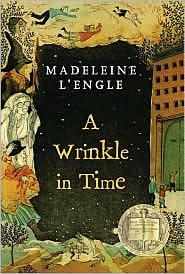
A Wrinkle in Time follows Meg Murry, a prickly, self-doubting teenager whose father — a physicist working on a classified government project — has been missing for years.
Madeleine L'Engle · 1962 · 3h 20m
Full summary and key takeaways →The 12 questions
- 1.
IT offers the people of Camazotz freedom from pain, uncertainty, and failure. What exactly is wrong with that offer, and does the book answer the question satisfyingly?
- 2.
Meg's defining flaw — her anger — ends up being the key to rescuing Charles Wallace. Does the novel earn that turn, or does it feel convenient?
- 3.
Charles Wallace is extraordinarily gifted and completely confident he can outsmart IT. What does his capture suggest about the relationship between intelligence and vulnerability?
- 4.
Mrs. Whatsit, Mrs. Who, and Mrs. Which are presented as forces of good, but they give Meg incomplete information and leave her in danger repeatedly. Are they trustworthy?
- 5.
The book was rejected by 26 publishers, reportedly because it was too strange to categorize. Reading it now, what is it actually? Fantasy, science fiction, spiritual allegory?
- 6.
L'Engle openly draws on Christian imagery but also on quantum physics and non-Western traditions. Does the mixture feel coherent, or does it fall apart under scrutiny?
- 7.
Calvin chooses the Murrys over his own family. The novel treats this as natural and right. Is that a healthy message about chosen family, or does it skip over something complicated?
- 8.
The climax is explicitly that IT cannot understand love, and love defeats it. Is that a satisfying resolution to the conflict, or does it feel like a cheat?
- 9.
Meg spends most of the book hating herself. How does L'Engle use that self-hatred — is it simply overcome by the end, or does something more interesting happen to it?
- 10.
Camazotz is clearly meant to evoke both Nazi Germany and Soviet Communism. Does that historical context make it more powerful, or does it limit the metaphor?
- 11.
The Mrs. W figures have fought darkness across the universe for millennia. The fact that they can be defeated but keep going anyway — what does the book make of that?
- 12.
How does A Wrinkle in Time handle the problem of a good, all-powerful force coexisting with real evil? Does it offer any answer, or does it just accept the paradox?
How to run the discussion
- Pick six to eight, not all of them. An hour of real discussion covers fewer questions than anyone expects, and racing the list is what makes a book club feel like homework.
- Open with what people noticed, not what they concluded. Asking for a verdict first hardens opinions before anyone has heard each other.
- Let the disagreement run. The questions below that split a room are the ones worth the time; the ones everyone answers the same way can be skipped.
- Ask the quiet person a specific question. A direct, narrow question is far easier to answer than an open invitation to contribute.
Themes worth steering toward
If the conversation stalls, these are the threads that usually restart it.
Common questions
What are good book club questions for A Wrinkle in Time?
Here are 12 book club questions for A Wrinkle in Time by Madeleine L'Engle, ordered to open easily and end somewhere worth arguing about. The strongest openers ask what each reader noticed rather than what they concluded, and the discussion usually turns on good versus evil, love as resistance, conformity and individuality.
How long should a book club discussion of A Wrinkle in Time last?
Most groups run 60 to 90 minutes of actual discussion. That is roughly six to eight questions, not all of them, so pick the ones that suit your group rather than working down the list in order.
What are the main themes in A Wrinkle in Time?
Good versus evil, Love as resistance, Conformity and individuality, Scientific imagination, Family bonds. Those are the threads most likely to divide a room, which makes them the useful places to steer a discussion that has gone quiet.
Picking the next one? See books like A Wrinkle in Time or questions for other book club picks.
