Science · Book club
About Face: The Essentials of Interaction Design book club questions
Here are 11 book club questions for About Face: The Essentials of Interaction Design by Alan Cooper, ordered to open easily and end somewhere worth arguing about. Copy them, print them, or bring them up one at a time.
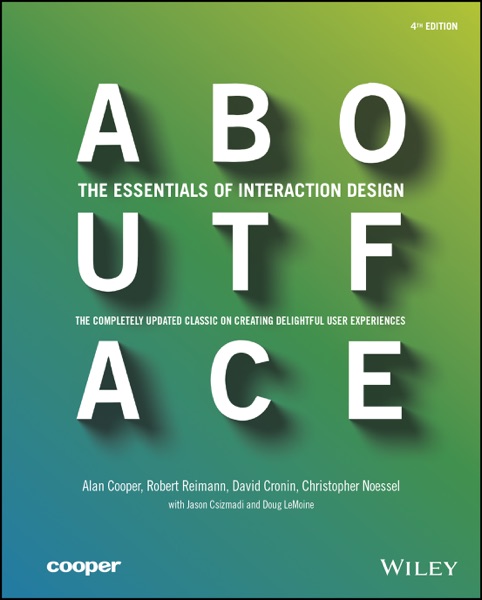
Alan Cooper's About Face, first published in 1995 and revised through multiple editions, is the foundational text of interaction design as a professional discipline.
Alan Cooper · 1995 · 12h 45m
Full summary and key takeaways →The 11 questions
- 1.
Cooper argues that most software is designed from the engineer's implementation model rather than the user's mental model. Can you think of a piece of software that clearly falls into each category?
- 2.
Personas have become a standard UX tool, but they've also been criticized as reductive or fictional. What are the strongest arguments for and against using them in design practice?
- 3.
He distinguishes between user goals (what someone is trying to accomplish in life) and tasks (the steps the system requires). How often does software mistake tasks for goals? What does that mistake produce?
- 4.
The concept of 'perpetual intermediates' — users who never become experts and never stay beginners — argues against designing for the extremes. Does your experience as a user support that observation?
- 5.
Cooper is critical of feature accumulation — the tendency for software to add capabilities in response to user requests rather than user needs. Is that criticism fair? Who should decide what a product includes?
- 6.
About Face was first published in 1995. How much of the core argument needs updating for contemporary design challenges: mobile-first, voice interfaces, AI-generated UI? What remains stable?
- 7.
Error prevention versus error recovery: Cooper argues that a well-designed system should prevent errors rather than handle them. Is that always possible? When should recovery rather than prevention be the priority?
- 8.
He argues that software should behave like a 'knowledgeable friend' — anticipating needs, providing appropriate defaults, not requiring users to understand the underlying system. What are the privacy and autonomy implications of that ideal?
- 9.
The book is long and comprehensive. What does that format suggest about the intended audience and how they were expected to use the book?
- 10.
Interaction design as Cooper defined it is now a large professional field. Has the field fulfilled his vision? Where has it succeeded and where has it drifted from the original goals?
- 11.
Cooper was also the creator of Visual Basic, which made programming accessible to non-engineers. How does his background as a practitioner shape the arguments he makes in About Face?
How to run the discussion
- Pick six to eight, not all of them. An hour of real discussion covers fewer questions than anyone expects, and racing the list is what makes a book club feel like homework.
- Open with what people noticed, not what they concluded. Asking for a verdict first hardens opinions before anyone has heard each other.
- Let the disagreement run. The questions below that split a room are the ones worth the time; the ones everyone answers the same way can be skipped.
- Ask the quiet person a specific question. A direct, narrow question is far easier to answer than an open invitation to contribute.
Themes worth steering toward
If the conversation stalls, these are the threads that usually restart it.
Common questions
What are good book club questions for About Face: The Essentials of Interaction Design?
Here are 11 book club questions for About Face: The Essentials of Interaction Design by Alan Cooper, ordered to open easily and end somewhere worth arguing about. The strongest openers ask what each reader noticed rather than what they concluded, and the discussion usually turns on interaction design, user-centered design, mental models.
How long should a book club discussion of About Face: The Essentials of Interaction Design last?
Most groups run 60 to 90 minutes of actual discussion. That is roughly six to eight questions, not all of them, so pick the ones that suit your group rather than working down the list in order.
What are the main themes in About Face: The Essentials of Interaction Design?
Interaction design, User-centered design, Mental models, Software usability, Design process. Those are the threads most likely to divide a room, which makes them the useful places to steer a discussion that has gone quiet.
Picking the next one? See books like About Face: The Essentials of Interaction Design or questions for other book club picks.
