Memoir · Book club
Adventures in the Screen Trade book club questions
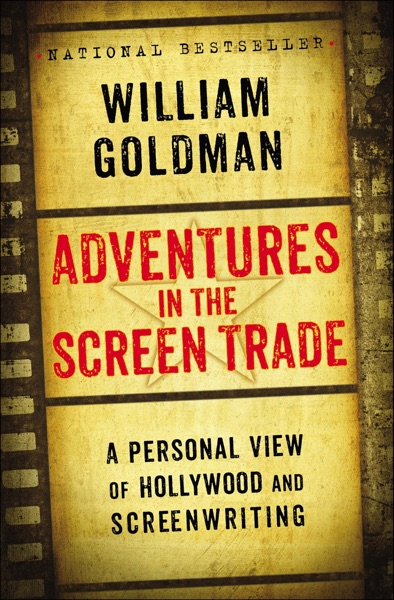
Here are 11 book club questions for Adventures in the Screen Trade by William Goldman, ordered to open easily and end somewhere worth arguing about. Copy them, print them, or bring them up one at a time.
William Goldman wrote Butch Cassidy and the Sundance Kid, All the President's Men, Marathon Man, and The Princess Bride, among many others.
William Goldman · 1983 · 7h 45m
Full summary and key takeaways →The 11 questions
- 1.
Goldman's 'nobody knows anything' claim has become a cliché in the industry. Is it still a useful observation, or has data-driven development changed the underlying reality?
- 2.
He argues that the writer is structurally powerless in Hollywood. Is that unique to film, or does the dynamic operate in other creative industries where many people's money is at stake?
- 3.
Goldman is candid about specific people by name, including Dustin Hoffman and various studio executives. Does that candor make the book more trustworthy or less?
- 4.
His extended screenplay development example is one of the book's most useful sections. What does the process reveal about the difference between writing prose fiction and writing for film?
- 5.
The book was published in 1983. The industry has changed dramatically — streaming, superhero franchises, international box office, independent film. Which of Goldman's observations feel timeless and which feel dated?
- 6.
Goldman says stars are cast primarily for financing reasons, not creative ones. What effect does that have on the quality of films, in your observation as an audience member?
- 7.
'Enter late, leave early' is his scene construction principle. Can you think of films that do this well, or scenes where you've noticed a director failing to apply it?
- 8.
He describes the development process as reliably producing mediocrity. Is that a systemic problem that can be fixed, or is it inherent to the economics of commercial filmmaking?
- 9.
Goldman is both cynical about the industry and clearly devoted to it. How do those two things coexist in the book, and do they coexist in people you know who work in similar industries?
- 10.
The book opens with 'nobody knows anything.' What's the professional equivalent in your own field — the thing that everyone in the industry knows but rarely admits out loud?
- 11.
Goldman says the screenwriter's job is to make the director look good. Is that a healthy professional attitude or a rationalization for subordination?
How to run the discussion
- Pick six to eight, not all of them. An hour of real discussion covers fewer questions than anyone expects, and racing the list is what makes a book club feel like homework.
- Open with what people noticed, not what they concluded. Asking for a verdict first hardens opinions before anyone has heard each other.
- Let the disagreement run. The questions below that split a room are the ones worth the time; the ones everyone answers the same way can be skipped.
- Ask the quiet person a specific question. A direct, narrow question is far easier to answer than an open invitation to contribute.
Themes worth steering toward
If the conversation stalls, these are the threads that usually restart it.
Common questions
What are good book club questions for Adventures in the Screen Trade?
Here are 11 book club questions for Adventures in the Screen Trade by William Goldman, ordered to open easily and end somewhere worth arguing about. The strongest openers ask what each reader noticed rather than what they concluded, and the discussion usually turns on screenwriting, hollywood, creative process.
How long should a book club discussion of Adventures in the Screen Trade last?
Most groups run 60 to 90 minutes of actual discussion. That is roughly six to eight questions, not all of them, so pick the ones that suit your group rather than working down the list in order.
What are the main themes in Adventures in the Screen Trade?
Screenwriting, Hollywood, Creative process, Storytelling, Film industry. Those are the threads most likely to divide a room, which makes them the useful places to steer a discussion that has gone quiet.
Picking the next one? See books like Adventures in the Screen Trade or questions for other book club picks.
