Agent Zigzag: A True Story of Nazi Espionage, Love, and Betrayal by Ben Macintyre is a 2007 history book about espionage, world war ii, double agents. Eddie Chapman's value as a double agent came precisely from his criminal background: he was genuinely trusted by the Abwehr because he was demonstrably self-interested rather than ideologically motivated.
Summary
Eddie Chapman was a safecracker, con man, and professional criminal who became Britain's most remarkable double agent during World War II. Agent Zigzag is Ben Macintyre's account of Chapman's extraordinary career: trained by German intelligence as a saboteur, parachuted into Britain to blow up a de Havilland aircraft factory, and immediately turned by MI5 to feed false intelligence back to the Abwehr. The Germans thought they had an asset; the British had a double agent codenamed Zigzag.
What makes Chapman's story unusual even among wartime espionage is his character. He was not an ideological convert, not a patriot, not a professional soldier. He was a criminal who charmed his way into the confidence of both sides while remaining loyal to nothing and no one except the moment. Macintyre traces this with careful enjoyment — Chapman was magnetic, unreliable, genuinely brave, and incapable of staying still. He also genuinely seems to have found the war the most satisfying period of his life.
The technical core of the book is the faked sabotage of the de Havilland factory. MI5 staged a convincing explosion with concealed camouflage netting and theatrical bomb damage while the factory continued to operate at full capacity. German aerial reconnaissance confirmed the damage. The Abwehr awarded Chapman the Iron Cross — the only British subject to receive it — and the deception held.
Macintyre draws on previously classified MI5 files to give the story documentary depth. The result is both a history of an operation and a character study of a man who existed most fully when playing multiple roles simultaneously. Chapman survived the war, returned to crime, and died in 1997. The files that tell his real story remained sealed until after his death.
Talk to Agent Zigzag: A True Story of Nazi Espionage, Love, and Betrayal like its author wrote you back.
Get the ideas that fit your life — not generic summaries.
- Chat with the book
- Audiobook-style main ideas
- Adapts to your life and goals
- Helps you take action
Key takeaways
- 1.
Eddie Chapman's value as a double agent came precisely from his criminal background: he was genuinely trusted by the Abwehr because he was demonstrably self-interested rather than ideologically motivated.
- 2.
The faked sabotage of the de Havilland factory was a major MI5 operation requiring theatrical skill, engineering knowledge, and the successful manipulation of German aerial reconnaissance.
- 3.
The Abwehr's eagerness to believe Chapman's reports reflected a systematic problem in German intelligence: they saw what they wanted to see rather than verifying through independent sources.
- 4.
Chapman received the Iron Cross from Nazi Germany and an official commendation from MI5 — simultaneously. The war produced moral categories that had no peacetime equivalent.
- 5.
Double agents require handlers who can manage the tension between operational use and personal attachment. Chapman's MI5 officers were drawn to him as much as they distrusted him.
- 6.
Chapman's multiple identities — criminal, spy, double agent, lover — were not masks over a real self but layers of a genuinely fragmented personality that the war both exploited and rewarded.
- 7.
MI5's declassified files on Chapman reveal disagreements between officers about how far to trust him. The debate was never fully resolved, and the answer, in retrospect, was: just enough.
- 8.
The war created institutional spaces — intelligence services, resistance networks, occupied territories — where people with unconventional histories could operate at elite levels.
Discussion questions
Use these on your own, with a book club, or as chat starters in Superbook. Book club version, ready to copy or print →
- 1.
Chapman's criminal background was an asset rather than a liability for MI5. What does that say about how institutions sometimes find value in people they would otherwise exclude?
- 2.
Chapman was loyal to neither the British nor the Germans in any deep sense. How did Macintyre handle that morally, and how did you respond to it?
- 3.
The faked factory sabotage required an enormous team effort to deceive a single German aerial photograph. What does that say about the resources devoted to strategic deception in wartime?
- 4.
Chapman seems to have found the war genuinely fulfilling. What does it mean when someone's character is best suited to conditions of extreme danger and moral ambiguity?
- 5.
Macintyre draws on MI5 files that remained sealed until after Chapman's death. Does the availability of those files change how you think about the writing of intelligence history?
- 6.
The Abwehr believed Chapman's reports partly because they matched what they wanted to believe. Where else in wartime decision-making do you see similar confirmation bias at work?
- 7.
Chapman managed to maintain the trust of both MI5 and the Abwehr over years of active operation. What does that suggest about the particular skills required for sustained deception?
- 8.
Chapman was given the Iron Cross by Nazi Germany. What do you make of him accepting it, and what do you make of the way MI5 regarded that fact?
- 9.
How does Chapman's story compare to what you expected before reading it about the nature of wartime loyalty?
- 10.
Macintyre makes Chapman sympathetic despite his obvious flaws. How did he achieve that, and did it work for you as a reader?
- 11.
Chapman returned to crime after the war. Does his postwar trajectory change how you read his wartime choices?
- 12.
What does Agent Zigzag suggest about the relationship between character and circumstance in producing extraordinary lives?
Themes
Frequently asked questions
-
Is Agent Zigzag based on a true story?
Yes. Eddie Chapman was a real person and a genuine MI5 double agent during World War II. Macintyre gained access to previously classified MI5 files on Chapman, which form the documentary backbone of the book.
-
How long does it take to read Agent Zigzag?
About five to six hours at average reading pace. The book is tightly written with short chapters and a pace that builds toward the faked factory sabotage and Chapman's return to Germany.
-
What makes Eddie Chapman unusual among WWII spies?
His criminal background and the fact that he was not ideologically motivated. Most double agents were turned through coercion or conviction; Chapman seemed to enjoy the double life on its own terms. The Germans awarded him the Iron Cross while he was actively working for the British.
-
Who should read Agent Zigzag?
Readers interested in World War II intelligence, espionage history, or unusual biography. Chapman's character is compelling enough to sustain the book independently of the historical context.
-
How does Agent Zigzag compare to Operation Mincemeat?
Mincemeat is a more complex ensemble story about a single operation; Agent Zigzag is a character-driven biography of one extraordinary man. Mincemeat is more theatrical; Zigzag is more psychologically interesting. Both are among Macintyre's most entertaining books.
Similar books
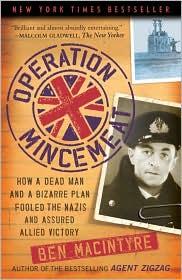
Operation Mincemeat: How a Dead Man and a Bizarre Plan Fooled the Nazis and Assured an Allied Victory
Ben Macintyre
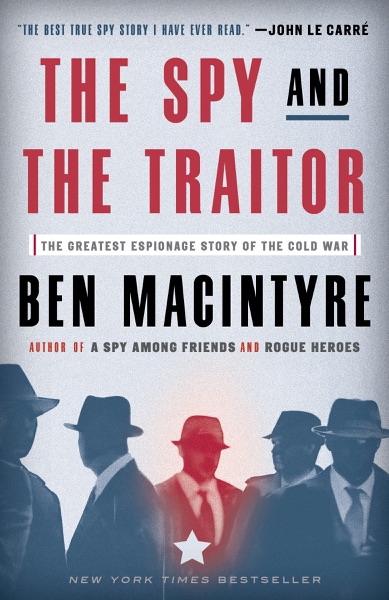
The Spy and the Traitor: The Greatest Espionage Story of the Cold War
Ben Macintyre
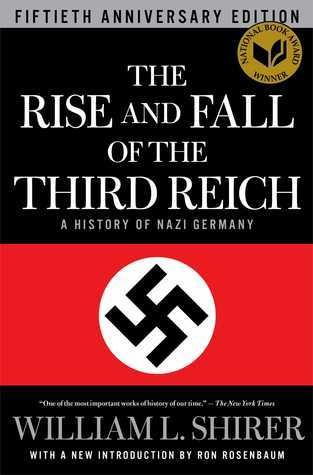
The Rise and Fall of the Third Reich
William L. Shirer
American Prometheus
Kai Bird and Martin J. Sherwin
