Operation Mincemeat: How a Dead Man and a Bizarre Plan Fooled the Nazis and Assured an Allied Victory by Ben Macintyre is a 2010 history book about deception, world war ii, intelligence. Successful deception requires deep knowledge of the target's psychology, not just the ability to fabricate evidence. The Germans accepted the documents partly because they fit what they already wanted to believe.
Summary
In 1943, British intelligence planted a dead man on a Spanish beach carrying fabricated documents designed to convince the Germans that the Allied invasion of southern Europe would target Greece and Sardinia rather than Sicily. The plan worked. Operation Mincemeat is one of the most audacious and consequential intelligence deceptions in military history, and Ben Macintyre's account of it is both meticulously researched and compulsively readable.
The dead man was a homeless Welshman named Glyndwr Michael whose body was dressed as a Royal Marines officer named Major William Martin and given a fully fabricated life: identity papers, love letters, overdue bills, a photograph of a fiancée. The architects were a small group of eccentrics and obsessives in British intelligence, including the novelist Ian Fleming, who contributed to the initial brainstorming, and Ewen Montagu and Charles Cholmondeley, who drove the operation. Macintyre gives each of them a vivid character study.
The deception succeeded because of how thoroughly the fabricated identity held up. German intelligence passed the documents up their chain of command. Hitler himself believed them and redirected reinforcements away from Sicily. When the Allied invasion of Sicily launched in July 1943, the defenses were weaker than they would have been, and the operation succeeded with far fewer casualties than a frontal assault on a fully prepared defense would have produced.
Macintyre is careful to avoid overclaiming. The deception shortened the Sicilian campaign but did not single-handedly win the war. The book's broader argument is about how deception works as a tool: it requires deep understanding of how the target thinks, consistency of detail across the entire fabrication, and a degree of luck. The story is also a character study of the people willing to put enormous effort into building an identity for a dead man no one would remember.
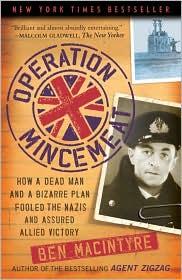
Talk to Operation Mincemeat: How a Dead Man and a Bizarre Plan Fooled the Nazis and Assured an Allied Victory like its author wrote you back.
Get the ideas that fit your life — not generic summaries.
- Chat with the book
- Audiobook-style main ideas
- Adapts to your life and goals
- Helps you take action
Key takeaways
- 1.
Successful deception requires deep knowledge of the target's psychology, not just the ability to fabricate evidence. The Germans accepted the documents partly because they fit what they already wanted to believe.
- 2.
The fabricated identity of Major William Martin was built from dozens of consistent, mundane details — overdue bills, love letters, club membership cards — that together created an illusion more convincing than any single grand gesture.
- 3.
Hitler's personal decision to redirect reinforcements based on Mincemeat intelligence directly weakened the defenses the Allies faced in Sicily, demonstrating how deception can shape strategy at the highest level.
- 4.
Operation Mincemeat was conceived partly as a classified brainstorm following a wartime proposal to float bodies with false papers. Fleming and others were given license to think without bureaucratic constraint.
- 5.
The operation required a real body. The use of Glyndwr Michael's corpse raises questions about consent, dignity, and the ethics of wartime necessity that the book explores without resolving.
- 6.
Intelligence services are shaped by the personalities of their officers. The eccentricity of the Mincemeat team — their theatrical imagination and obsessive attention to detail — was not incidental but necessary.
- 7.
The success of Mincemeat was only confirmed after the war, when captured German documents verified that the deception had reached Hitler and been believed. Real-time confirmation was never available.
- 8.
Deception operations are inherently fragile. Any single detail that doesn't hold up — a flaw in the documents, a suspicious officer, a timing mistake — collapses the whole.
Discussion questions
Use these on your own, with a book club, or as chat starters in Superbook. Book club version, ready to copy or print →
- 1.
The success of Operation Mincemeat depended partly on German confirmation bias — they wanted to believe the documents. What does that suggest about how intelligence failures happen even with sophisticated analysis?
- 2.
Macintyre spends considerable time on Glyndwr Michael — the unknown man whose body was used. How did you respond to the ethics of that choice?
- 3.
The team that designed Mincemeat included novelists, eccentric officers, and lateral thinkers. Does that mix seem unusual for a military operation? Why do you think it produced better results than a conventional planning process might have?
- 4.
The fabricated identity was built from hundreds of mundane details. What does that level of commitment to consistency tell us about what makes deception convincing?
- 5.
Ian Fleming later drew on wartime intelligence for his James Bond novels. After reading this book, do you see the fictional spy differently?
- 6.
The Allies couldn't verify in real time that Mincemeat had worked. How do you think the operation's designers lived with that uncertainty during the months before the Sicily invasion?
- 7.
Mincemeat shortened the Sicilian campaign but didn't win the war by itself. Macintyre resists overclaiming. How does that intellectual honesty affect how you read the story?
- 8.
The Germans had sophisticated analysts who examined the documents carefully. Where exactly did their analysis fail, in Macintyre's account?
- 9.
What does Operation Mincemeat suggest about the role of improvisation and unorthodox thinking in high-stakes operations, military or otherwise?
- 10.
The full story wasn't public for decades. What do you think changed — in intelligence culture, in the law, in society — that made declassification possible?
- 11.
How does reading a story of successful strategic deception affect your sense of how honest you expect states to be with each other, or with their own citizens?
- 12.
Macintyre ends with the fate of those involved. Who did you find most compelling, and why?
Themes
Frequently asked questions
-
Is Operation Mincemeat a true story?
Yes. The operation took place in 1943, and Macintyre worked from declassified British intelligence archives, German documents, and extensive interviews with surviving participants and their descendants. A Netflix adaptation was released in 2022.
-
How long does it take to read Operation Mincemeat?
Roughly six hours at average reading pace. The 390-page book is written to move quickly, with short chapters and a narrative built around escalating suspense toward the Sicily invasion.
-
What actually happened in Operation Mincemeat?
British intelligence dropped a corpse dressed as a Royal Marines officer into the sea near Spain, carrying fabricated documents suggesting the Allied invasion of southern Europe would target Greece and Sardinia. German intelligence passed the documents to Hitler, who redirected forces. The invasion of Sicily in July 1943 faced weaker defenses as a result.
-
Who should read this book?
Readers interested in World War II, intelligence history, or narrative nonfiction. It reads as much as a thriller as a history book. Prior knowledge of WWII helps with context but is not required.
-
How does Operation Mincemeat compare to The Spy and the Traitor?
Mincemeat is a tighter, more self-contained story set during a single operation; The Spy and the Traitor follows a longer arc through the Cold War. Mincemeat has more theatrical flair and period detail; The Spy and the Traitor carries higher geopolitical stakes. Both are among Macintyre's strongest books.
Similar books
The Spy and the Traitor: The Greatest Espionage Story of the Cold War
Ben Macintyre
Agent Zigzag: A True Story of Nazi Espionage, Love, and Betrayal
Ben Macintyre

The Rise and Fall of the Third Reich
William L. Shirer

American Prometheus
Kai Bird and Martin J. Sherwin
