Historical fiction · Book club
Alias Grace book club questions
Here are 12 book club questions for Alias Grace by Margaret Atwood, ordered to open easily and end somewhere worth arguing about. Copy them, print them, or bring them up one at a time.
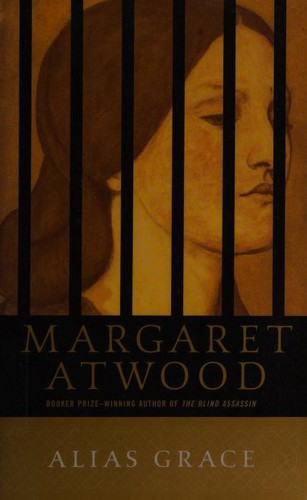
Alias Grace is based on the historical case of Grace Marks, a young Irish immigrant servant who was convicted in 1843, along with stable hand James McDermott, of the murders of her employer Thomas Kinnear and his housekeeper Nancy Montgomery in Upper Canada.
Margaret Atwood · 1996 · 8h 45m
Full summary and key takeaways →The 12 questions
- 1.
By the end of the novel, do you think Grace is guilty? Does the novel want you to reach a conclusion, or does it want you to sit with not knowing?
- 2.
Grace narrates her story in a way that is clearly shaped by her awareness of what Simon Jordan wants to hear. Is she manipulating him, protecting herself, or doing something more complicated?
- 3.
Simon Jordan is the novel's secondary protagonist, and he fails in his project of understanding Grace. What does his failure say about the limits of psychological expertise — then and now?
- 4.
The hypnosis scene is one of the most unsettling in the novel. What do you think happens during it? Does Atwood give you enough to form a view?
- 5.
Grace draws explicit parallels between her situation and the patterns of the quilts she sews. Which patterns feel most resonant to you as a description of the novel's structure?
- 6.
The novel includes real historical documents — court records, newspaper accounts — alongside Atwood's invention. Does mixing fact and fiction in this way feel appropriate for a novel about a real crime?
- 7.
Nancy Montgomery, the murdered housekeeper, is rendered as a morally ambiguous figure — neither entirely sympathetic nor entirely culpable. Does the novel treat her fairly?
- 8.
Grace has survived thirty years in prison and an asylum by the time the novel begins. How has that survival shaped her? Is she someone you trust?
- 9.
The men in the novel — Kinnear, Jordan, the chaplain, McDermott — all project different versions of Grace onto her. What do those projections have in common? What does that say about how the period understood female criminality?
- 10.
The novel's ending is deliberately open. Did you find that satisfying or frustrating, and why?
- 11.
The 2017 Netflix miniseries was widely praised. If you've seen it, how does the adaptation handle the novel's central ambiguity? Does it make any choices the novel refuses to make?
- 12.
Atwood has said Grace represents all women who have been judged by men without adequate access to their actual inner lives. Is that claim supported by what the novel actually does with Grace, or does it flatten her?
How to run the discussion
- Pick six to eight, not all of them. An hour of real discussion covers fewer questions than anyone expects, and racing the list is what makes a book club feel like homework.
- Open with what people noticed, not what they concluded. Asking for a verdict first hardens opinions before anyone has heard each other.
- Let the disagreement run. The questions below that split a room are the ones worth the time; the ones everyone answers the same way can be skipped.
- Ask the quiet person a specific question. A direct, narrow question is far easier to answer than an open invitation to contribute.
Themes worth steering toward
If the conversation stalls, these are the threads that usually restart it.
Common questions
What are good book club questions for Alias Grace?
Here are 12 book club questions for Alias Grace by Margaret Atwood, ordered to open easily and end somewhere worth arguing about. The strongest openers ask what each reader noticed rather than what they concluded, and the discussion usually turns on memory and unreliable testimony, gender and power, class in victorian society.
How long should a book club discussion of Alias Grace last?
Most groups run 60 to 90 minutes of actual discussion. That is roughly six to eight questions, not all of them, so pick the ones that suit your group rather than working down the list in order.
What are the main themes in Alias Grace?
Memory and unreliable testimony, Gender and power, Class in Victorian society, Guilt and innocence, The construction of narrative. Those are the threads most likely to divide a room, which makes them the useful places to steer a discussion that has gone quiet.
Picking the next one? See books like Alias Grace or questions for other book club picks.
