Historical fiction · Book club
All the Light We Cannot See book club questions
Here are 12 book club questions for All the Light We Cannot See by Anthony Doerr, ordered to open easily and end somewhere worth arguing about. Copy them, print them, or bring them up one at a time.
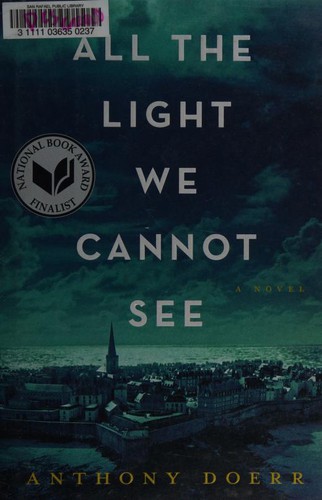
All the Light We Cannot See follows two children through the Second World War on a collision course neither can see coming.
Anthony Doerr · 2014 · 11h 45m
Full summary and key takeaways →The 12 questions
- 1.
Werner knows what the regime is doing and chooses to participate anyway. At what point in his story did you feel he passed the point of no return?
- 2.
Marie-Laure's father believes that 'open your eyes and see what you can with them before they close forever.' How does the novel test that philosophy?
- 3.
The Sea of Flames diamond is treated as cursed but the novel never confirms this. Did you read the curse as real, as superstition, or as something more ambiguous? Does it matter for the story?
- 4.
Doerr uses very short chapters — sometimes less than a page — and jumps between timelines and perspectives. Did that structure pull you in or push you out? What does it do for the story?
- 5.
Von Rumpel, the Sergeant Major hunting the diamond, is one of the novel's few genuinely evil characters. Most others are complicit. Is that moral distinction important to how the book works?
- 6.
Jutta, Werner's sister, functions almost as his conscience throughout. What do her later chapters — set decades after the war — add to the novel's argument?
- 7.
The novel is interested in radio as a technology of both connection and control. What contemporary technology does radio most remind you of in that dual role?
- 8.
Marie-Laure and Werner meet only briefly. Given how much of the novel builds toward that meeting, did it deliver? What would have been lost or gained with more time together?
- 9.
Compared to Night by Elie Wiesel, which focuses tightly on one survivor's direct experience, All the Light We Cannot See ranges widely across perpetrators, bystanders, and victims. Which approach do you find more truthful to WWII?
- 10.
The novel won the Pulitzer in 2015 but also sold tens of millions of copies. It's rare for literary and commercial success to overlap that completely. What do you think explains the crossover?
- 11.
How does the novel handle the Allied bombing of Saint-Malo — the historical fact that the Allies destroyed a French city? Does it present that moral complexity fairly?
- 12.
By the novel's end, what does 'light' actually mean? Is it hope, is it radio waves, is it consciousness itself, or something else entirely?
How to run the discussion
- Pick six to eight, not all of them. An hour of real discussion covers fewer questions than anyone expects, and racing the list is what makes a book club feel like homework.
- Open with what people noticed, not what they concluded. Asking for a verdict first hardens opinions before anyone has heard each other.
- Let the disagreement run. The questions below that split a room are the ones worth the time; the ones everyone answers the same way can be skipped.
- Ask the quiet person a specific question. A direct, narrow question is far easier to answer than an open invitation to contribute.
Themes worth steering toward
If the conversation stalls, these are the threads that usually restart it.
Common questions
What are good book club questions for All the Light We Cannot See?
Here are 12 book club questions for All the Light We Cannot See by Anthony Doerr, ordered to open easily and end somewhere worth arguing about. The strongest openers ask what each reader noticed rather than what they concluded, and the discussion usually turns on war and innocence, fate and convergence, science and wonder.
How long should a book club discussion of All the Light We Cannot See last?
Most groups run 60 to 90 minutes of actual discussion. That is roughly six to eight questions, not all of them, so pick the ones that suit your group rather than working down the list in order.
What are the main themes in All the Light We Cannot See?
War and innocence, Fate and convergence, Science and wonder, Moral complicity, Survival. Those are the threads most likely to divide a room, which makes them the useful places to steer a discussion that has gone quiet.
Picking the next one? See books like All the Light We Cannot See or questions for other book club picks.
