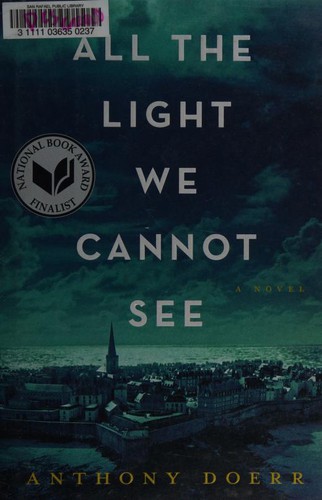
All the Light We Cannot See by Anthony Doerr is a 2014 historical fiction book about war and innocence, fate and convergence, science and wonder. Doerr's central argument is that beauty and atrocity coexist in the same moment — the same radio frequency that broadcasts Nazi propaganda also carries music and human connection.
Summary
All the Light We Cannot See follows two children through the Second World War on a collision course neither can see coming. Marie-Laure LeBlanc is a blind French girl whose father, a locksmith at the Paris Natural History Museum, flees occupied Paris carrying what may be a cursed diamond. Werner Pfennig is an orphan from a German mining town whose genius with radio technology earns him a place in the Hitler Youth — and eventually in the Wehrmacht. The novel moves back and forth in time, building toward the night Allied bombers level the walled city of Saint-Malo, where both children's stories will finally intersect.
At its core, the book is about the question of moral survival under totalitarianism: what it costs to comply, what it requires to resist, and how much agency anyone really has in the machinery of history. Marie-Laure's arc is essentially one of endurance — she is protected, guided, and finally left to protect herself. Werner's arc is darker and more interesting: a boy who knows what is being done in his name and who chooses, piece by piece, to look away. Doerr is unsparing about the cost of that looking away, and the novel earns its emotional weight through Werner's complicity more than through any single act of violence.
The prose is gorgeous and the structure is demanding. Short chapters — many less than a page — alternate between timelines and characters, building a mosaic that asks you to hold many threads simultaneously. Doerr won the Pulitzer Prize for Fiction in 2015, and the award reflects the book's ambition: it is trying to be both a propulsive story and a meditation on beauty, light, and the uses of science. The radio is the novel's central symbol — it connects, it broadcasts propaganda, it saves lives and ends them — and Doerr uses it with real precision.
Readers who love immersive historical fiction with lyrical prose will be absorbed. Readers who want tighter plotting and less ornamentation may feel the novel's length (530 pages) is not quite justified by its revelations. The 2023 Netflix adaptation stripped the story to its bones; the novel's value is precisely in the bones it leaves in.
Talk to All the Light We Cannot See like its author wrote you back.
Get the ideas that fit your life — not generic summaries.
- Chat with the book
- Audiobook-style main ideas
- Adapts to your life and goals
- Helps you take action
Key takeaways
- 1.
Doerr's central argument is that beauty and atrocity coexist in the same moment — the same radio frequency that broadcasts Nazi propaganda also carries music and human connection.
- 2.
Werner's arc is a study in incremental moral erosion: each small compromise makes the next one easier, until the person he's become is unrecognizable to his younger self.
- 3.
The diamond curse is handled with deliberate ambiguity — the novel never commits to whether the supernatural is real, using it instead to ask whether believing in fate absolves people of choice.
- 4.
Doerr structures the novel around convergence, with two timelines collapsing toward a single night, giving the book its propulsive tension despite a pace that is often ruminative.
- 5.
Marie-Laure's blindness is not metaphorical shorthand — it shapes her entire experience of the world and gives the novel's sensory prose a specific grounding and purpose.
- 6.
The novel treats scientific curiosity as a form of moral innocence that the war corrupts and that the survivors try to recover; Werner's love of radio is inseparable from his complicity in its misuse.
- 7.
Children in war are shown not as passive victims but as agents making real choices — Werner, Jutta, and Marie-Laure all choose, and the novel holds them to those choices.
- 8.
The fragmented, mosaic structure mirrors how memory and trauma work: non-linear, incomplete, assembled from small shards rather than continuous narrative.
Discussion questions
Use these on your own, with a book club, or as chat starters in Superbook. Book club version, ready to copy or print →
- 1.
Werner knows what the regime is doing and chooses to participate anyway. At what point in his story did you feel he passed the point of no return?
- 2.
Marie-Laure's father believes that 'open your eyes and see what you can with them before they close forever.' How does the novel test that philosophy?
- 3.
The Sea of Flames diamond is treated as cursed but the novel never confirms this. Did you read the curse as real, as superstition, or as something more ambiguous? Does it matter for the story?
- 4.
Doerr uses very short chapters — sometimes less than a page — and jumps between timelines and perspectives. Did that structure pull you in or push you out? What does it do for the story?
- 5.
Von Rumpel, the Sergeant Major hunting the diamond, is one of the novel's few genuinely evil characters. Most others are complicit. Is that moral distinction important to how the book works?
- 6.
Jutta, Werner's sister, functions almost as his conscience throughout. What do her later chapters — set decades after the war — add to the novel's argument?
- 7.
The novel is interested in radio as a technology of both connection and control. What contemporary technology does radio most remind you of in that dual role?
- 8.
Marie-Laure and Werner meet only briefly. Given how much of the novel builds toward that meeting, did it deliver? What would have been lost or gained with more time together?
- 9.
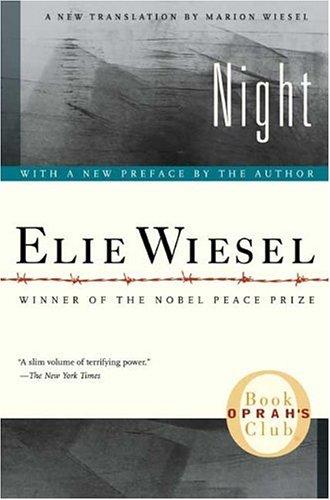
Compared to Night by Elie Wiesel, which focuses tightly on one survivor's direct experience, All the Light We Cannot See ranges widely across perpetrators, bystanders, and victims. Which approach do you find more truthful to WWII?
- 10.
The novel won the Pulitzer in 2015 but also sold tens of millions of copies. It's rare for literary and commercial success to overlap that completely. What do you think explains the crossover?
- 11.
How does the novel handle the Allied bombing of Saint-Malo — the historical fact that the Allies destroyed a French city? Does it present that moral complexity fairly?
- 12.
By the novel's end, what does 'light' actually mean? Is it hope, is it radio waves, is it consciousness itself, or something else entirely?
Themes
Frequently asked questions
-
Is All the Light We Cannot See worth the length?
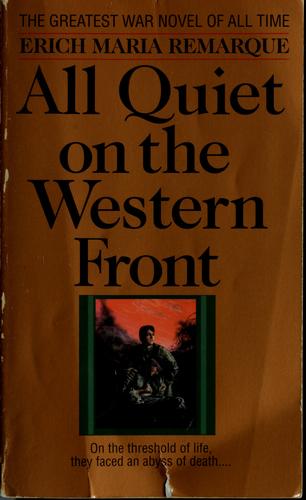
For readers who respond to lyrical prose and structural ambition, yes. The 530 pages are justified if you find the mosaic structure absorbing rather than exhausting. If you want a tighter WWII novel, All Quiet on the Western Front is half the length and just as devastating.
-
How difficult is All the Light We Cannot See to read?
It is not difficult in the way experimental fiction is difficult, but the fragmented timeline requires you to track many characters across multiple time periods simultaneously. Give it 50 pages to find its rhythm before judging.
-
What is All the Light We Cannot See actually about?
A blind French girl and a German soldier whose lives converge during the Allied bombing of Saint-Malo in 1944. More broadly, it's about moral complicity under totalitarianism and the coexistence of beauty and atrocity.
-
Is the Netflix adaptation worth watching?
The 2023 miniseries is competent and compresses the story effectively, but it strips out most of what makes the novel distinctive — the prose, the structural fragmentation, the moral ambiguity. Read the book first.
-
Who shouldn't read this book?
Readers who find ornate prose irritating, or who want tight, plot-driven WWII fiction, may bounce off Doerr's style. The novel rewards patience; it does not reward impatience.
Similar books
All Quiet on the Western Front
Erich Maria Remarque
Night
Elie Wiesel
The Hiding Place
Corrie ten Boom
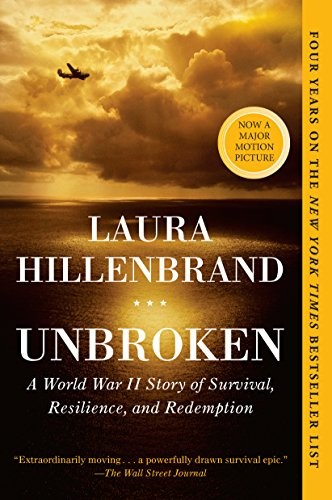
Unbroken: A World War II Story of Survival, Resilience, and Redemption
Laura Hillenbrand
