Fantasy · Book club
American Gods book club questions
Here are 12 book club questions for American Gods by Neil Gaiman, ordered to open easily and end somewhere worth arguing about. Copy them, print them, or bring them up one at a time.
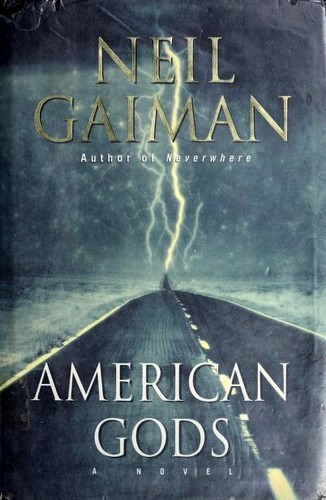
American Gods opens with Shadow Moon, a man released from prison days early because his wife has died in a car accident.
Neil Gaiman · 2001 · 14h 15m
Full summary and key takeaways →The 12 questions
- 1.
Wednesday tells Shadow that America is a 'bad land for gods.' Do you think Gaiman's argument extends to immigrant cultures more broadly, or is it specific to mythology?
- 2.
The old gods are diminished and largely pathetic. Does that make them sympathetic or does it expose the nostalgia in the conceit?
- 3.
Shadow is deliberately not a rounded character in the conventional sense. Does that choice serve the novel, or does it mean you can't invest in him?
- 4.
The new gods of media and internet are mostly contemptible in the novel. Is that a fair critique of technology culture or Gaiman being a romantic about old things?
- 5.
Which of the 'Coming to America' vignettes stayed with you longest, and why?
- 6.
The novel is set mostly in small towns and on roads. How does that Americana landscape function thematically — is it just atmosphere or is it doing structural work?
- 7.
Wednesday/Odin is a con man and a war god. The book treats those as the same thing. Do you agree with that equivalence?
- 8.
The ending reveals the whole conflict was a setup. Does that reframe what came before in an interesting way, or does it feel like a cheat?
- 9.
What does the novel say about memory — cultural, personal — and the cost of forgetting where you came from?
- 10.
How does American Gods compare to Gaiman's other work you've read, if any? Does knowing his range change how you read this?
- 11.
The book was published in 2001. Does the critique of the new gods of media feel different now that the internet has become what it became?
- 12.
Anansi, Czernobog, and Bilquis are all portrayed with genuine weight alongside Wednesday. Which god's American story interested you most?
How to run the discussion
- Pick six to eight, not all of them. An hour of real discussion covers fewer questions than anyone expects, and racing the list is what makes a book club feel like homework.
- Open with what people noticed, not what they concluded. Asking for a verdict first hardens opinions before anyone has heard each other.
- Let the disagreement run. The questions below that split a room are the ones worth the time; the ones everyone answers the same way can be skipped.
- Ask the quiet person a specific question. A direct, narrow question is far easier to answer than an open invitation to contribute.
Themes worth steering toward
If the conversation stalls, these are the threads that usually restart it.
Common questions
What are good book club questions for American Gods?
Here are 12 book club questions for American Gods by Neil Gaiman, ordered to open easily and end somewhere worth arguing about. The strongest openers ask what each reader noticed rather than what they concluded, and the discussion usually turns on immigration and belonging, belief and its power, old versus new.
How long should a book club discussion of American Gods last?
Most groups run 60 to 90 minutes of actual discussion. That is roughly six to eight questions, not all of them, so pick the ones that suit your group rather than working down the list in order.
What are the main themes in American Gods?
Immigration and belonging, Belief and its power, Old versus new, American mythology, Identity and reinvention. Those are the threads most likely to divide a room, which makes them the useful places to steer a discussion that has gone quiet.
Picking the next one? See books like American Gods or questions for other book club picks.
