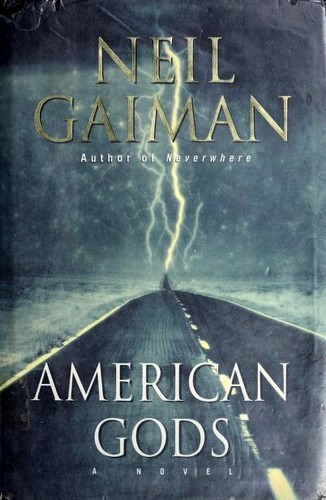
Talk to American Gods like its author wrote you back.
Get the ideas that fit your life — not generic summaries.
- Chat with the book
- Audiobook-style main ideas
- Adapts to your life and goals
- Helps you take action
What it argues
American Gods opens with Shadow Moon, a man released from prison days early because his wife has died in a car accident. He takes a job as bodyguard and driver for a man who calls himself Wednesday — a con artist who turns out to be the American manifestation of Odin — and is pulled into a gathering conflict between the old gods, brought to America by waves of immigrants who carried their beliefs with them, and the new gods of technology, media, and corporate power.
The novel is about what America does to the people and the ideas it imports. The old gods are diminished, exhausted, running scams and working small-town jobs because the immigrant communities that once sustained them have dissolved or been absorbed. They are not impressive figures — Anansi sells suits in a failing shop, Czernobog worked in a Chicago slaughterhouse, Vulcan runs a gun factory in a southern town. The gap between what they were and what America made them is the book's central image, and Gaiman uses it to say something real about assimilation, cultural memory, and the peculiarly American talent for grinding down what arrives here.
What it gets right
- 1.
America is a bad place for gods. Gaiman's central conceit — that immigrant belief carries gods across the ocean and American assimilation destroys them — is the most useful metaphor in the book.
- 2.
The new gods of media, internet, and technology are presented as no more or less worthy than the old ones. They're just better at attention capture. Gaiman doesn't romanticize the old.
- 3.
Wednesday/Odin is one of the great trickster characters in modern fiction — all the charm of a con man and all the coldness of a deity.
What it covers
Who wrote it
Neil Gaiman is a British author who has worked in comics, novels, film, and television. He is best known for the Sandman graphic novel series, the novel Stardust, and the children's books Coraline and The Graveyard Book. American Gods won the Hugo, Nebula, Bram Stoker, and Locus awards. He adapted it for a Starz television series, which ran for three seasons beginning in 2017. His work draws consistently on mythology and folklore from multiple traditions. He lives between the United Kingdom and the United States.
