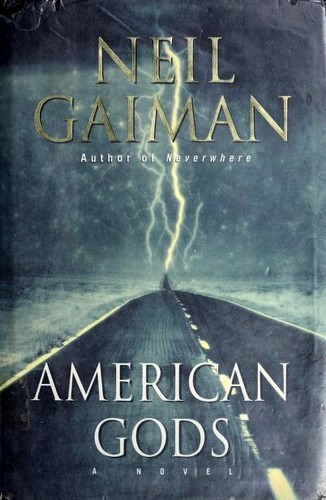
Talk to American Gods like its author wrote you back.
Get the ideas that fit your life — not generic summaries.
- Chat with the book
- Audiobook-style main ideas
- Adapts to your life and goals
- Helps you take action
American Gods, in detail
American Gods opens with Shadow Moon, a man released from prison days early because his wife has died in a car accident. He takes a job as bodyguard and driver for a man who calls himself Wednesday — a con artist who turns out to be the American manifestation of Odin — and is pulled into a gathering conflict between the old gods, brought to America by waves of immigrants who carried their beliefs with them, and the new gods of technology, media, and corporate power.
The novel is about what America does to the people and the ideas it imports. The old gods are diminished, exhausted, running scams and working small-town jobs because the immigrant communities that once sustained them have dissolved or been absorbed. They are not impressive figures — Anansi sells suits in a failing shop, Czernobog worked in a Chicago slaughterhouse, Vulcan runs a gun factory in a southern town. The gap between what they were and what America made them is the book's central image, and Gaiman uses it to say something real about assimilation, cultural memory, and the peculiarly American talent for grinding down what arrives here.
Gaiman writes with the authority of someone who has read widely in mythology but has fully absorbed it rather than merely deployed it. The novel's structure is novelistic — Shadow's road trip through small-town America gives it a Steinbeck-ish texture — and the interspersed mythological "Coming to America" vignettes work both as backstory and as a sustained argument about the book's themes. The prose is controlled and atmospheric without tipping into purple.
This is a long book and a patient one. Shadow is deliberately enigmatic as a protagonist, which some readers find compelling and others find thin. The plot's momentum is uneven — the middle sags — and the resolution requires the reader to have bought into the mythological framework completely. For readers who have, the ending is emotionally substantial. For readers who find mythology-based fantasy hard to invest in emotionally, the book may feel more clever than moving.
The big ideas
- 1.
America is a bad place for gods. Gaiman's central conceit — that immigrant belief carries gods across the ocean and American assimilation destroys them — is the most useful metaphor in the book.
- 2.
The new gods of media, internet, and technology are presented as no more or less worthy than the old ones. They're just better at attention capture. Gaiman doesn't romanticize the old.
- 3.
Wednesday/Odin is one of the great trickster characters in modern fiction — all the charm of a con man and all the coldness of a deity.
