Biography · Book club
American Kingpin book club questions
Here are 12 book club questions for American Kingpin by Nick Bilton, ordered to open easily and end somewhere worth arguing about. Copy them, print them, or bring them up one at a time.
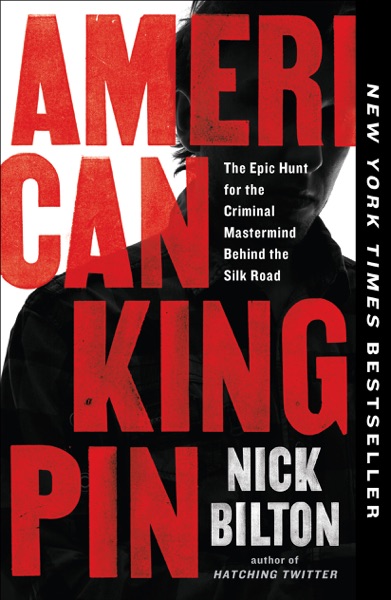
American Kingpin is Nick Bilton's account of the rise and fall of Silk Road, the dark-web drug marketplace run by Ross Ulbricht under the pseudonym "Dread Pirate Roberts." Bilton traces the story from its ideological origins — Ulbricht's libertarian belief that a free market for drugs would reduce violence, cut out cartels, and let individuals make their own choices — through its rapid growth into a billion-dollar operation, and finally to the multi-agency investigation that culminated in Ulbricht's arrest in a San Francisco public library in 2013.
Nick Bilton · 2017 · 6h 45m
Full summary and key takeaways →The 12 questions
- 1.
Ulbricht believed he was building a harm-reduction platform. At what point in the story, if any, does his original justification become untenable?
- 2.
The book portrays Ulbricht's drift from idealist to someone commissioning murder contracts as gradual. What were the incremental steps, and were there moments where a different decision might have changed the trajectory?
- 3.
Two of the federal investigators turned corrupt. Does that change your view of the moral framing the book applies to Ulbricht?
- 4.
Silk Road's harm-reduction argument — that a regulated marketplace for drugs is safer than unregulated street markets — has academic support. Does the argument stand separately from Ulbricht's conduct?
- 5.
The dark web was supposed to guarantee anonymity, but Ulbricht's downfall came partly from basic operational security mistakes. What does that say about the relationship between technical tools and human behavior?
- 6.
Bilton frames the story as a rise-and-fall narrative. Does Ulbricht's story fit the genre conventions of that form, or does it complicate them?
- 7.
Bitcoin's design made Silk Road possible but also, eventually, helped investigators trace transactions. Is there a general principle here about technologies intended to empower individuals?
- 8.
The multi-agency investigation was hampered by competition and information hoarding. Where else have you seen coordination failures produce worse outcomes than any individual actor would have chosen?
- 9.
Ulbricht's sentence — life without parole — was longer than many convicted murderers receive. Is that proportionate, and what principles should govern sentencing for crimes of this kind?
- 10.
The libertarian case for drug legalization didn't end with Silk Road. Does Ulbricht's story strengthen or weaken that case?
- 11.
Bilton is a journalist writing for a popular audience. What details or questions does the journalistic framing leave out that you'd want to explore further?
- 12.
What draws smart, principled people to build operations that require them to gradually abandon their principles?
How to run the discussion
- Pick six to eight, not all of them. An hour of real discussion covers fewer questions than anyone expects, and racing the list is what makes a book club feel like homework.
- Open with what people noticed, not what they concluded. Asking for a verdict first hardens opinions before anyone has heard each other.
- Let the disagreement run. The questions below that split a room are the ones worth the time; the ones everyone answers the same way can be skipped.
- Ask the quiet person a specific question. A direct, narrow question is far easier to answer than an open invitation to contribute.
Themes worth steering toward
If the conversation stalls, these are the threads that usually restart it.
Common questions
What are good book club questions for American Kingpin?
Here are 12 book club questions for American Kingpin by Nick Bilton, ordered to open easily and end somewhere worth arguing about. The strongest openers ask what each reader noticed rather than what they concluded, and the discussion usually turns on dark web, cybercrime, idealism and corruption.
How long should a book club discussion of American Kingpin last?
Most groups run 60 to 90 minutes of actual discussion. That is roughly six to eight questions, not all of them, so pick the ones that suit your group rather than working down the list in order.
What are the main themes in American Kingpin?
Dark web, Cybercrime, Idealism and corruption, Law enforcement, Libertarianism. Those are the threads most likely to divide a room, which makes them the useful places to steer a discussion that has gone quiet.
Picking the next one? See books like American Kingpin or questions for other book club picks.
