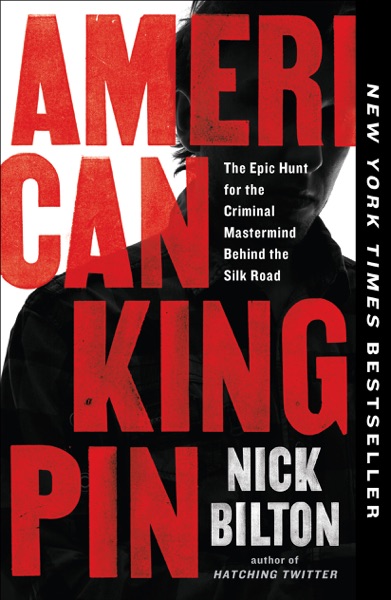
Talk to American Kingpin like its author wrote you back.
Get the ideas that fit your life — not generic summaries.
- Chat with the book
- Audiobook-style main ideas
- Adapts to your life and goals
- Helps you take action
What it argues
American Kingpin is Nick Bilton's account of the rise and fall of Silk Road, the dark-web drug marketplace run by Ross Ulbricht under the pseudonym "Dread Pirate Roberts." Bilton traces the story from its ideological origins — Ulbricht's libertarian belief that a free market for drugs would reduce violence, cut out cartels, and let individuals make their own choices — through its rapid growth into a billion-dollar operation, and finally to the multi-agency investigation that culminated in Ulbricht's arrest in a San Francisco public library in 2013.
The book's most striking quality is its portrait of ideological drift. Ulbricht starts as a graduate student in physics and a committed libertarian, genuinely believing he is building something beneficial: a platform where consenting adults can transact without government interference. As Silk Road grows, the complications multiply. He is soliciting contract killings — never carried out but paid for — by 2012. His belief that the market was morally self-regulating collided repeatedly with the reality that markets for illegal goods attract people who solve disputes through violence.
What it gets right
- 1.
Ross Ulbricht's libertarian conviction that a free drug market would reduce harm was not obviously wrong in theory, but the reality of running an illegal enterprise on that theory produced compromises he hadn't anticipated.
- 2.
The dark web is not technically impenetrable. Ulbricht's operational security failures — using personal email, logging into forums from home — were ultimately more decisive than any cryptographic breakthrough by investigators.
- 3.
Two of the federal agents investigating Silk Road stole money and extorted Ulbricht, illustrating that the corruption it attracted wasn't only on the criminal side.
What it covers
Who wrote it
Nick Bilton is a journalist and author who spent a decade at The New York Times, where he covered technology and wrote the Bits column. He is a special correspondent at Vanity Fair and has written about Silicon Valley culture, cybercrime, and the intersection of technology and society. American Kingpin, published in 2017, is his most widely read book. His earlier book I Live in the Future and Here's How It Works examined digital media habits and attention economics.
