Memoir · Book club
Angela's Ashes book club questions
Here are 11 book club questions for Angela's Ashes by Frank McCourt, ordered to open easily and end somewhere worth arguing about. Copy them, print them, or bring them up one at a time.
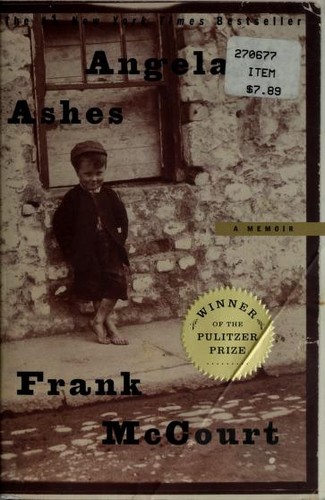
Angela's Ashes is Frank McCourt's memoir of a catastrophically impoverished Irish Catholic childhood, first in Brooklyn and then in Limerick, during the 1930s and 1940s.
Frank McCourt · 1996 · 7h 40m
Full summary and key takeaways →The 11 questions
- 1.
McCourt describes a childhood of profound deprivation with considerable humor. Does the humor seem appropriate, or does it sometimes feel like a way of managing the reader's discomfort?
- 2.
Malachy McCourt is portrayed with complexity — a loving, useless, charming failure. Do you find that complexity earned, or does the memoir let him off too easily?
- 3.
Angela, the mother, is the book's namesake but often seems passive. How does the book explain or excuse her passivity? Do you accept that explanation?
- 4.
The Catholic Church appears as both oppressor and sustainer. How does McCourt balance those two functions without collapsing into simple anti-clericalism?
- 5.
The memoir was written by a man in his sixties about a childhood that ended fifty years earlier. How does that temporal distance shape what gets remembered and what gets omitted?
- 6.
Is there a coherent argument in the book about what causes poverty, or does it simply document poverty? Does the distinction matter?
- 7.
The narrative voice is often that of the child experiencing events he doesn't fully understand. What are the advantages and the risks of that technique?
- 8.
The Pulitzer committee described the book as 'a luminous memoir of a miserable Irish Catholic childhood.' Is 'luminous' the right word for what McCourt achieves with the material?
- 9.
McCourt emigrated to America as a young man and made a successful life there. Does that outcome shape how he tells the story — does knowing the ending change the telling?
- 10.
How does the memoir handle the specific social world of Limerick — the class system, the sectarian tensions, the contempt for the rural poor?
- 11.
The book ends with Frank's arrival back in America. Does it feel like a conclusion or an escape? What has been resolved?
How to run the discussion
- Pick six to eight, not all of them. An hour of real discussion covers fewer questions than anyone expects, and racing the list is what makes a book club feel like homework.
- Open with what people noticed, not what they concluded. Asking for a verdict first hardens opinions before anyone has heard each other.
- Let the disagreement run. The questions below that split a room are the ones worth the time; the ones everyone answers the same way can be skipped.
- Ask the quiet person a specific question. A direct, narrow question is far easier to answer than an open invitation to contribute.
Themes worth steering toward
If the conversation stalls, these are the threads that usually restart it.
Common questions
What are good book club questions for Angela's Ashes?
Here are 11 book club questions for Angela's Ashes by Frank McCourt, ordered to open easily and end somewhere worth arguing about. The strongest openers ask what each reader noticed rather than what they concluded, and the discussion usually turns on poverty, ireland, resilience.
How long should a book club discussion of Angela's Ashes last?
Most groups run 60 to 90 minutes of actual discussion. That is roughly six to eight questions, not all of them, so pick the ones that suit your group rather than working down the list in order.
What are the main themes in Angela's Ashes?
Poverty, Ireland, Resilience, Family, Coming of age. Those are the threads most likely to divide a room, which makes them the useful places to steer a discussion that has gone quiet.
Picking the next one? See books like Angela's Ashes or questions for other book club picks.
