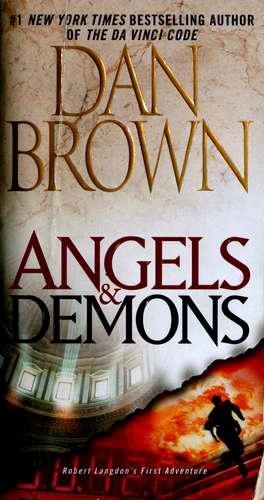
Talk to Angels & Demons like its author wrote you back.
Get the ideas that fit your life — not generic summaries.
- Chat with the book
- Audiobook-style main ideas
- Adapts to your life and goals
- Helps you take action
Angels & Demons, in detail
Physicist Leonardo Vetra is found dead at CERN with a symbol burned into his chest: the Illuminati ambigram. Simultaneously, a canister of antimatter — enough to destroy Vatican City — has gone missing. Harvard symbologist Robert Langdon is flown to Geneva and then Rome, where the College of Cardinals is assembled to elect a new pope. Four preferiti — the leading candidates — have been kidnapped and are being murdered one by one, each in a location tied to an element of ancient alchemy, as part of the Illuminati's revenge on the Catholic Church.
Angels & Demons was actually published before The Da Vinci Code, and it's in many ways a rougher but more kinetic book. The setpiece concept — Langdon racing through baroque Rome following a path of altars of science while the clock ticks — is excellent thriller architecture. The science-versus-religion framing gives the book more thematic ambition than its successor, even if the resolution fumbles it. Brown is genuinely interested in whether faith and reason can coexist, and the novel gives that question more than lip service before it pivots to spectacle.
The pacing is relentless to the point of exhaustion: this is a book in which important characters run everywhere, and Brown times nearly everything to seconds. The prose is functional. The physics is mostly wrong (CERN scientists have noted this with some amusement). The villain reveal is a genuine surprise that survives rereading better than The Da Vinci Code's because it carries more emotional logic. The epilogue, which attempts to tie together the science-faith themes, is better than it's usually given credit for.
If you've already read The Da Vinci Code, this feels like the slightly more earnest older sibling — less polished, more openly interested in its ideas, and longer than it needs to be. If you haven't read either, start here: it's a complete experience and the Rome setting is richer than The Da Vinci Code's international hopping.
The big ideas
- 1.
The Illuminati mythology Brown deploys is historical fiction — the actual Illuminati were an 18th-century Bavarian group, not an ancient science-church conspiracy.
- 2.
The science-versus-religion framing is the book's most interesting quality. Brown ultimately argues for reconciliation, which is a more nuanced position than the thriller setup suggests.
- 3.
Brown's Rome is a character in itself — the combination of Bernini's work, the Vatican archives, and the churches creates a genuinely atmospheric chase course.
