Angels & Demons by Dan Brown is a 2000 thriller book about science versus religion, secret societies, institutional power. The Illuminati mythology Brown deploys is historical fiction — the actual Illuminati were an 18th-century Bavarian group, not an ancient science-church conspiracy.
Summary
Physicist Leonardo Vetra is found dead at CERN with a symbol burned into his chest: the Illuminati ambigram. Simultaneously, a canister of antimatter — enough to destroy Vatican City — has gone missing. Harvard symbologist Robert Langdon is flown to Geneva and then Rome, where the College of Cardinals is assembled to elect a new pope. Four preferiti — the leading candidates — have been kidnapped and are being murdered one by one, each in a location tied to an element of ancient alchemy, as part of the Illuminati's revenge on the Catholic Church.
Angels & Demons was actually published before The Da Vinci Code, and it's in many ways a rougher but more kinetic book. The setpiece concept — Langdon racing through baroque Rome following a path of altars of science while the clock ticks — is excellent thriller architecture. The science-versus-religion framing gives the book more thematic ambition than its successor, even if the resolution fumbles it. Brown is genuinely interested in whether faith and reason can coexist, and the novel gives that question more than lip service before it pivots to spectacle.
The pacing is relentless to the point of exhaustion: this is a book in which important characters run everywhere, and Brown times nearly everything to seconds. The prose is functional. The physics is mostly wrong (CERN scientists have noted this with some amusement). The villain reveal is a genuine surprise that survives rereading better than The Da Vinci Code's because it carries more emotional logic. The epilogue, which attempts to tie together the science-faith themes, is better than it's usually given credit for.
If you've already read The Da Vinci Code, this feels like the slightly more earnest older sibling — less polished, more openly interested in its ideas, and longer than it needs to be. If you haven't read either, start here: it's a complete experience and the Rome setting is richer than The Da Vinci Code's international hopping.
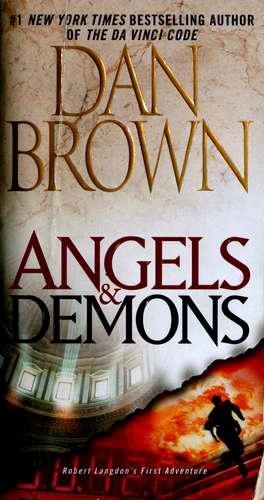
Talk to Angels & Demons like its author wrote you back.
Get the ideas that fit your life — not generic summaries.
- Chat with the book
- Audiobook-style main ideas
- Adapts to your life and goals
- Helps you take action
Key takeaways
- 1.
The Illuminati mythology Brown deploys is historical fiction — the actual Illuminati were an 18th-century Bavarian group, not an ancient science-church conspiracy.
- 2.
The science-versus-religion framing is the book's most interesting quality. Brown ultimately argues for reconciliation, which is a more nuanced position than the thriller setup suggests.
- 3.
Brown's Rome is a character in itself — the combination of Bernini's work, the Vatican archives, and the churches creates a genuinely atmospheric chase course.
- 4.
The villain works better than in The Da Vinci Code because the motivation has internal emotional logic rather than just strategic logic.
- 5.
The antimatter premise is scientifically absurd, but it functions perfectly as a thriller device: visible, ticking, stakes-defining.
- 6.
The Hassassin character is a problematic thriller convention — a Middle Eastern assassin defined entirely by his role — that dates the novel more than anything else.
- 7.
The ambigram concept — words that read the same right-side up and upside-down — is a clever visual hook that Brown uses to symbolize the faith-reason duality.
- 8.
The final sacrifice in the novel is meant as an answer to the faith-reason question. Whether it earns that reading or merely gestures at it is the book's central interpretive dispute.
Discussion questions
Use these on your own, with a book club, or as chat starters in Superbook. Book club version, ready to copy or print →
- 1.
Brown's central thesis seems to be that science and religion are compatible, possibly complementary. Did the novel convince you of that, or did it simply assert it?
- 2.
The villain's motivation, when revealed, involves a sincere religious crisis. Does that make the character more or less compelling than a purely motivated antagonist would have been?
- 3.
The Illuminati as Brown depicts them have no historical basis. Does that matter for a thriller, or does real-world historical grounding make conspiracy stories better?
- 4.
Rome is used as extensively as a character. Did the setting work for you as atmospheric backdrop, or did the constant Bernini-spotting feel like a tour guide interrupting the story?
- 5.
Langdon makes several decisions under extreme time pressure that turn out to be wrong. Is that a realistic portrayal of expert reasoning under stress, or a thriller convenience?
- 6.
The science is largely wrong — CERN's own staff have commented on the antimatter physics. Does it matter whether thriller physics is accurate?
- 7.
The book was published in 2000, before The Da Vinci Code made Brown famous. Does reading it after The Da Vinci Code change how you experience it?
- 8.
Compare the pace of Angels & Demons to The Da Vinci Code. This one is longer and arguably more frantic — is more always better in thriller pacing?
- 9.
The Hassassin is written as an exotic, sexualized Middle Eastern villain. How much does that characterization undermine the novel's more interesting ideas?
- 10.
The epilogue tries to explicitly address the faith-reason reconciliation theme. Did it work for you, or did it feel like Brown explaining the point the novel had already made?
- 11.
If you had to identify one genuine idea in the novel — something worth thinking about outside the thriller context — what would it be?
- 12.
Would Angels & Demons work as well set in a different city? What is it about Rome specifically that makes the conceit function?
Themes
Frequently asked questions
-
Should I read Angels & Demons before or after The Da Vinci Code?
Chronologically, Angels & Demons comes first and introduces Robert Langdon. Most readers encounter it after The Da Vinci Code made Brown famous. Either order works — the books are largely self-contained — but reading Angels & Demons first gives you Langdon's origin story.
-
Is Angels & Demons better than The Da Vinci Code?
It depends on what you value. Angels & Demons is longer, more ambitious thematically, and has a stronger villain reveal. The Da Vinci Code is tighter, more culturally resonant, and better paced. Most readers prefer The Da Vinci Code; some find Angels & Demons more satisfying.
-
Is the CERN physics in Angels & Demons accurate?
No. CERN scientists have noted multiple inaccuracies, including the antimatter storage concept. Brown has acknowledged taking significant liberties with the physics. Read it as thriller fiction with scientific window dressing, not as science communication.
-
Is there a film adaptation?
Yes — a 2009 film directed by Ron Howard, starring Tom Hanks. Released after The Da Vinci Code film, it was well-received compared to its predecessor. The film significantly compresses the novel and adds a few scenes.
-
Who shouldn't read Angels & Demons?
Readers who found The Da Vinci Code's formula exhausting will find more of the same here, amplified. Also readers who want accurate history or physics, or those who find relentless ticking-clock pacing more anxious-making than fun.
Similar books
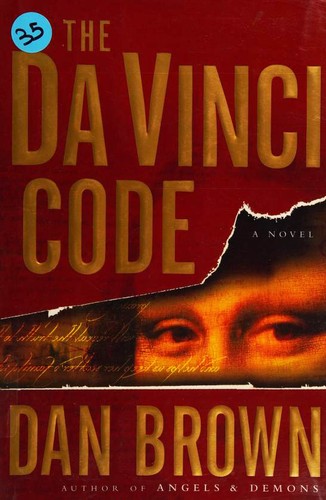
The Da Vinci Code
Dan Brown

In Cold Blood
Truman Capote

Operation Mincemeat: How a Dead Man and a Bizarre Plan Fooled the Nazis and Assured an Allied Victory
Ben Macintyre
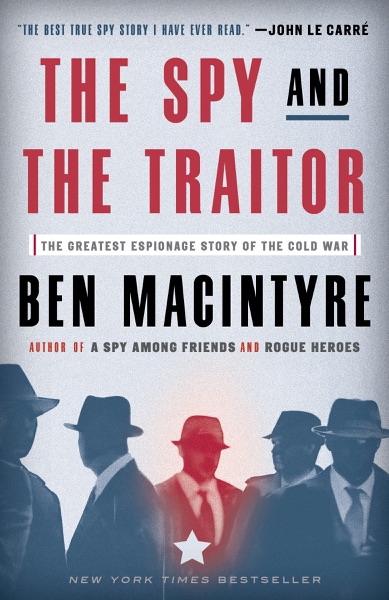
The Spy and the Traitor: The Greatest Espionage Story of the Cold War
Ben Macintyre
