Literary fiction · Book club
Anna Karenina book club questions
Here are 12 book club questions for Anna Karenina by Leo Tolstoy, ordered to open easily and end somewhere worth arguing about. Copy them, print them, or bring them up one at a time.
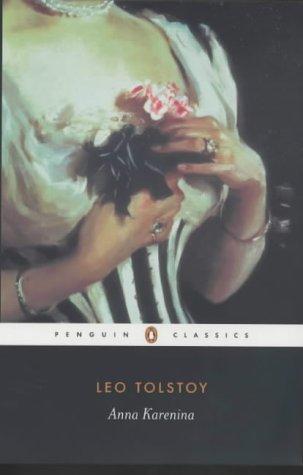
Anna Karenina opens with a famous line — all happy families are alike; each unhappy family is unhappy in its own way — and then proceeds to test that claim across two interlocking stories.
Leo Tolstoy · 1877 · 23h 20m
Full summary and key takeaways →The 12 questions
- 1.
Tolstoy puts his epigraph — 'Vengeance is mine; I will repay' — before page one. By the end, who or what is doing the avenging: God, society, or Anna herself?
- 2.
Anna is betrayed by almost every social institution in the novel. Is there a version of her story where she survives, or is her destruction overdetermined from the moment she leaves Karenin?
- 3.
Levin's sections have been called boring by many readers and the novel's soul by others. Where do you land, and what does that tell you about what you want from a novel?
- 4.
Vronsky is not a villain — he genuinely loves Anna and sacrifices real things for her. So why does the relationship collapse? Who bears more responsibility?
- 5.
The novel was serialized, and readers were obsessed with Anna while largely ignoring Levin. Tolstoy considered Levin's story more important. Who was right?
- 6.
Karenin's decision to forgive Anna during her illness is one of the most surprising and genuinely moving moments in the book. Does the novel treat his later reversal as moral failure, or as human limitation?
- 7.
Dolly is Anna's sister-in-law, trapped in a miserable marriage to a serial adulterer, and she stays. Anna leaves a less miserable marriage and is destroyed. Is Tolstoy endorsing Dolly's choice?
- 8.
The ending is narrated almost entirely from inside Anna's fragmented, paranoid consciousness. Is that final chapter brave writing or is Tolstoy distancing himself from sympathy for her?
- 9.
Kitty and Levin represent the alternative to Anna's story. By the end, is their happiness earned or is it simply the reward for not making Anna's choices?
- 10.
How does Anna Karenina compare to other novels about women ruined by passion — Madame Bovary, for instance? Where does Tolstoy's treatment differ?
- 11.
Stiva Oblonsky, Anna's brother, is forgiven by his wife for the same infidelity that gets Anna destroyed. Does the novel present this double standard with rage, acceptance, or something else?
- 12.
Levin's final spiritual experience — the peasant's comment that settles something for him — is deliberately vague and personal. Did it land for you, or did it feel like Tolstoy dodging the question?
How to run the discussion
- Pick six to eight, not all of them. An hour of real discussion covers fewer questions than anyone expects, and racing the list is what makes a book club feel like homework.
- Open with what people noticed, not what they concluded. Asking for a verdict first hardens opinions before anyone has heard each other.
- Let the disagreement run. The questions below that split a room are the ones worth the time; the ones everyone answers the same way can be skipped.
- Ask the quiet person a specific question. A direct, narrow question is far easier to answer than an open invitation to contribute.
Themes worth steering toward
If the conversation stalls, these are the threads that usually restart it.
Common questions
What are good book club questions for Anna Karenina?
Here are 12 book club questions for Anna Karenina by Leo Tolstoy, ordered to open easily and end somewhere worth arguing about. The strongest openers ask what each reader noticed rather than what they concluded, and the discussion usually turns on desire and consequence, marriage and hypocrisy, social judgment.
How long should a book club discussion of Anna Karenina last?
Most groups run 60 to 90 minutes of actual discussion. That is roughly six to eight questions, not all of them, so pick the ones that suit your group rather than working down the list in order.
What are the main themes in Anna Karenina?
Desire and consequence, Marriage and hypocrisy, Social judgment, Meaning and faith, Passion and self-destruction. Those are the threads most likely to divide a room, which makes them the useful places to steer a discussion that has gone quiet.
Picking the next one? See books like Anna Karenina or questions for other book club picks.
