Philosophy · Book club
Art as Experience book club questions
Here are 12 book club questions for Art as Experience by John Dewey, ordered to open easily and end somewhere worth arguing about. Copy them, print them, or bring them up one at a time.
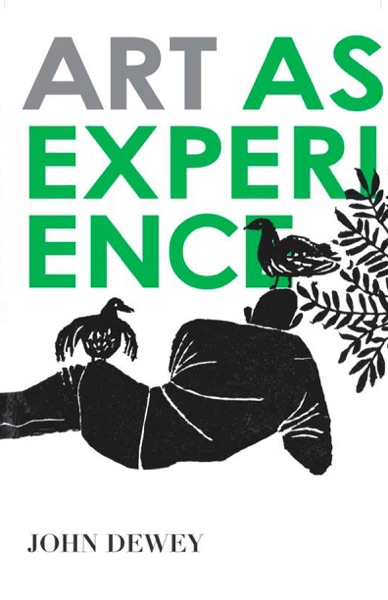
Art as Experience, published in 1934, is John Dewey's attempt to rescue aesthetics from the museum pedestal and return it to ordinary life.
John Dewey · 1934 · 8h 0m
Full summary and key takeaways →The 12 questions
- 1.
Dewey argues that the museum context distorts our experience of art. Can you think of a work you've encountered outside a formal setting that felt more alive as a result?
- 2.
What in your own daily life has come closest to what Dewey calls 'an experience' — something with a genuine beginning, development, and consummation?
- 3.
Dewey refuses to separate fine art from craft and design. Where do you draw that line, if at all, and on what grounds?
- 4.
He writes that expression transforms impulse through a medium rather than simply releasing it. How does that apply to a creative activity you practice?
- 5.
Is the heightened experience Dewey describes available to everyone, or does it require education and training? What's your honest view?
- 6.
Dewey links the isolation of art from ordinary life to economic and political forces. Does that argument seem convincing when you look at contemporary art institutions?
- 7.
He claims aesthetic experience in architecture is inseparable from how a building is actually used and inhabited. Think of a building that has moved you — what made it work?
- 8.
The book was written in 1934. What has changed in mass culture and media since then that Dewey could not have anticipated, and how does it affect his argument?
- 9.
Dewey insists that the spectator must actively recreate the work, not passively receive it. What does that ask of us as audiences of film, music, or literature?
- 10.
Which of the arts do you think is most fully explained by Dewey's framework? Which fits least well, and why?
- 11.
If Dewey is right that democratic culture needs art connected to common experience, what practical implications does that have for how arts institutions should operate?
- 12.
His prose is notoriously difficult. Did the difficulty itself affect your experience of the argument, and what does that suggest about form and content?
How to run the discussion
- Pick six to eight, not all of them. An hour of real discussion covers fewer questions than anyone expects, and racing the list is what makes a book club feel like homework.
- Open with what people noticed, not what they concluded. Asking for a verdict first hardens opinions before anyone has heard each other.
- Let the disagreement run. The questions below that split a room are the ones worth the time; the ones everyone answers the same way can be skipped.
- Ask the quiet person a specific question. A direct, narrow question is far easier to answer than an open invitation to contribute.
Themes worth steering toward
If the conversation stalls, these are the threads that usually restart it.
Common questions
What are good book club questions for Art as Experience?
Here are 12 book club questions for Art as Experience by John Dewey, ordered to open easily and end somewhere worth arguing about. The strongest openers ask what each reader noticed rather than what they concluded, and the discussion usually turns on aesthetics, experience, perception.
How long should a book club discussion of Art as Experience last?
Most groups run 60 to 90 minutes of actual discussion. That is roughly six to eight questions, not all of them, so pick the ones that suit your group rather than working down the list in order.
What are the main themes in Art as Experience?
Aesthetics, Experience, Perception, Creativity, Culture. Those are the threads most likely to divide a room, which makes them the useful places to steer a discussion that has gone quiet.
Picking the next one? See books like Art as Experience or questions for other book club picks.
