Self-help · Book club
Atomic Habits book club questions
Here are 13 book club questions for Atomic Habits by James Clear, ordered to open easily and end somewhere worth arguing about. Copy them, print them, or bring them up one at a time.
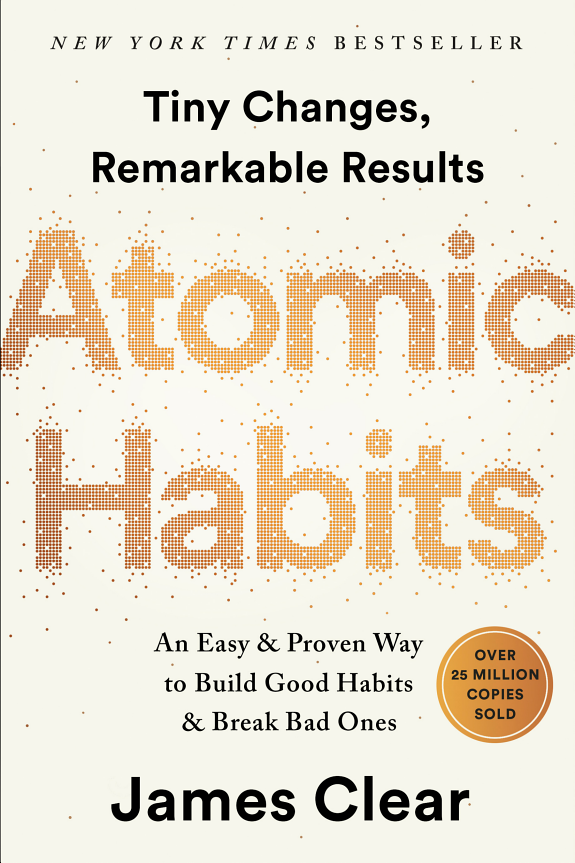
Atomic Habits is James Clear's framework for how very small changes — habits so minor they seem to make no difference on any given day — compound into remarkable results over months and years.
James Clear · 2018 · 5h 30m
Full summary and key takeaways →The 13 questions
- 1.
Clear says systems beat goals. Which goal in your life right now is being undermined by a missing system?
- 2.
What habit are you trying to build that would feel easier if you reframed it as an identity rather than a target?
- 3.
Pick one of your bad habits. Which of the four laws of behavior change makes it so sticky for you?
- 4.
Which environment in your daily life is quietly pulling you toward behavior you don't actually want?
- 5.
What habit are you currently trying to do for too long at a time? What would the two-minute version of it look like?
- 6.
Habit stacking needs an existing reliable trigger. List five things you do every day at roughly the same time. Could any of them anchor a new habit?
- 7.
Clear distinguishes motion from action: planning from doing. Where in your life are you in motion but not in action right now?
- 8.
What's a recent example in your own life where a 1% improvement compounded into something larger?
- 9.
Which of your habits is invisible to you now because you've done it so long? Is it still serving you?
- 10.
The book argues you should be the kind of person who shows up, not the kind who waits for motivation. What does showing up look like for the area of life you most want to improve?
- 11.
Who in your life models a habit you'd like to adopt? What environments do they seem to design around themselves?
- 12.
If you redesigned your phone, your kitchen, and your workspace to make one good habit easier, which habit would you pick and what specifically would you change?
- 13.
Clear warns about the plateau of latent potential, where you put in effort but don't see results yet. Have you quit something at that stage? What would you do differently now?
How to run the discussion
- Pick six to eight, not all of them. An hour of real discussion covers fewer questions than anyone expects, and racing the list is what makes a book club feel like homework.
- Open with what people noticed, not what they concluded. Asking for a verdict first hardens opinions before anyone has heard each other.
- Let the disagreement run. The questions below that split a room are the ones worth the time; the ones everyone answers the same way can be skipped.
- Ask the quiet person a specific question. A direct, narrow question is far easier to answer than an open invitation to contribute.
Themes worth steering toward
If the conversation stalls, these are the threads that usually restart it.
Common questions
What are good book club questions for Atomic Habits?
Here are 13 book club questions for Atomic Habits by James Clear, ordered to open easily and end somewhere worth arguing about. The strongest openers ask what each reader noticed rather than what they concluded, and the discussion usually turns on habits, behavior change, systems thinking.
How long should a book club discussion of Atomic Habits last?
Most groups run 60 to 90 minutes of actual discussion. That is roughly six to eight questions, not all of them, so pick the ones that suit your group rather than working down the list in order.
What are the main themes in Atomic Habits?
Habits, Behavior change, Systems thinking, Self-improvement, Identity. Those are the threads most likely to divide a room, which makes them the useful places to steer a discussion that has gone quiet.
Picking the next one? See books like Atomic Habits or questions for other book club picks.
