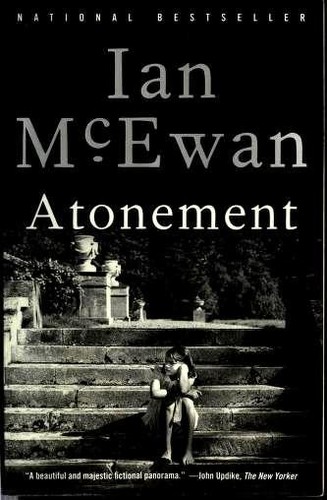
Atonement by Ian McEwan is a 2001 literary fiction book about guilt and atonement, memory and invention, class in britain. A single misreading by an imaginative child destroys two lives — the novel is relentless about how much damage perception and narrative can cause.
Summary
Atonement begins on a hot summer day in 1935 at a Surrey country estate. Thirteen-year-old Briony Tallis witnesses and half-understands events involving her older sister Cecilia and Robbie Turner, the housekeeper's son and Cambridge graduate who is in love with Cecilia. Briony misreads what she sees — a charged encounter at a fountain, an explicit letter — and when a real crime occurs that night, she identifies Robbie as the perpetrator. Her testimony sends him to prison and, later, to Dunkirk. The first section is a chamber drama of extraordinary precision; McEwan tracks adolescent interiority with almost surgical care.
The novel's second and third sections move through the Second World War — Robbie's retreat to Dunkirk among the British Expeditionary Force, Cecilia and Briony nursing in a London hospital. McEwan writes the Dunkirk sections with the same physical specificity he brings to the Surrey drawing rooms of Part One: exhaustion, confusion, the smell of gangrene, the randomness of who survives. The novel's structure suggests that the war is not only a historical backdrop but a kind of literalization of what Briony's lie has done — a massive, senseless rupture in lives that had a different trajectory.
The final section delivers a metafictional turn that reframes everything that came before. McEwan is interested in questions that most war and atonement novels don't ask: whether writing can actually repair what it describes, whether the comfort of narrative is a form of self-serving lie, and what it means to give characters a resolution the writer knows didn't happen. The turn either devastates you or feels like a trick, depending on your tolerance for fiction that foregrounds its own constructedness.
Atonement is one of the most technically accomplished British novels of its era. The prose is consistently controlled and the first section in particular is astonishing. Some readers find the metafictional ending a profound meditation on the ethics of fiction; others find it a neat structural trick that avoids the emotional consequences it seemed to be building toward. Both responses are defensible.
Talk to Atonement like its author wrote you back.
Get the ideas that fit your life — not generic summaries.
- Chat with the book
- Audiobook-style main ideas
- Adapts to your life and goals
- Helps you take action
Key takeaways
- 1.
A single misreading by an imaginative child destroys two lives — the novel is relentless about how much damage perception and narrative can cause.
- 2.
McEwan tracks Briony's adolescent imagination as both sympathetic (she is a child; she is artistic; she misunderstands) and inexcusable (she had enough information to doubt herself).
- 3.
The Dunkirk sections are among the most controlled literary accounts of that catastrophe — physical, disorienting, stripped of heroism without being anti-heroic.
- 4.
The metafictional ending raises a genuine ethical question: is writing a version of events in which people are redeemed a gift to them, or a further theft of their reality?
- 5.
Class runs through the novel without ever being its explicit subject — Robbie's position as someone technically educated but socially ambiguous makes him vulnerable in ways that the novel examines without sentimentalizing.
- 6.
Briony spends the novel trying to atone through writing, and the novel's final revelation questions whether any act of artistic making can constitute actual moral repair.
- 7.
The gap between what Cecilia and Robbie experience and what Briony writes — what she allows herself to imagine — is where the novel lives and where it asks its hardest questions.
- 8.
The 1935 Surrey section is a near-perfect demonstration of limited third-person narration: McEwan shows you exactly what each character perceives and why they can't see past it.
Discussion questions
Use these on your own, with a book club, or as chat starters in Superbook. Book club version, ready to copy or print →
- 1.
Is Briony's false testimony an act of deliberate malice, of limited understanding, or of something in between? Does the novel come down on one side?
- 2.
The metafictional ending reveals that the reunion Cecilia and Robbie have in the previous section didn't happen. Did that change your experience of reading those sections retroactively?
- 3.
McEwan is asking whether fiction can atone. What's your answer? Can writing about a wrong you caused constitute meaningful reparation?
- 4.
Briony becomes a novelist — uses the same imaginative faculty that caused the original harm to try to repair it. Is that ironic, or is it the only possible logic?
- 5.
The Dunkirk sections feel formally different from the rest of the novel — rawer, less controlled. Is that a flaw or is it doing something deliberate?
- 6.
Robbie and Cecilia are somewhat idealized — we see them largely through Briony's imagination. Does that limit your investment in them?
- 7.
The class dynamics of 1935 England are present throughout. How much does Robbie's social position — talented but socially ambiguous — contribute to how easily his accusation sticks?
- 8.
The final section is structured as an author's note from an elderly Briony. Does that framing feel earned, or like a way of avoiding the consequences the novel built up to?
- 9.
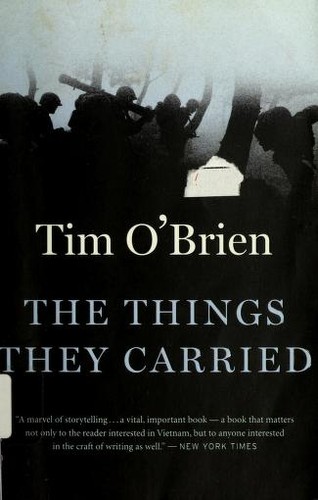
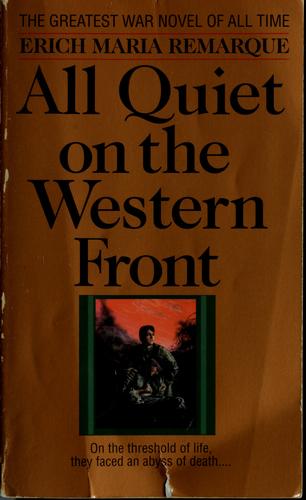
Compared to other novels about the Second World War — All Quiet on the Western Front, The Things They Carried — what does Atonement add to the tradition?
- 10.
The opening section is about a single day. What does the novel's attention to that day's small events say about how catastrophes happen?
- 11.
Briony never receives forgiveness from the people she wronged. Does the novel suggest she deserves it, or is it agnostic?
- 12.
The novel was a huge commercial success and a Booker Prize finalist. Does its popularity feel consistent with how demanding the final section is?
Themes
Frequently asked questions
-
Is Atonement worth reading?
Yes — the first section alone justifies it. McEwan's portrait of an imaginative adolescent misreading adult reality is one of the finest pieces of sustained close psychology in contemporary British fiction. The metafictional ending is genuinely provocative, even if it divides readers.
-
What is Atonement about, without spoilers?
A young girl's false accusation destroys two lives, and the novel follows the consequences across decades and through the Second World War. The late sections are also about whether writing can repair what it describes — which adds a layer to the whole structure.
-
Is the ending of Atonement a cheat?
Readers are genuinely divided. The reveal reframes the entire novel and raises real questions about fiction's relationship to truth. Some find it devastating and intellectually honest; others feel cheated of the emotional resolution they'd been given. It's worth reading the novel with that debate in mind.
-
Is the movie as good as the book?
The 2007 film, starring Keira Knightley and James McAvoy, is visually striking and the Dunkirk tracking shot is remarkable filmmaking. But the novel's power comes from interiority — Briony's misreading, the metafictional structure — which the film can only partly convey.
-
Who shouldn't read Atonement?
Readers who are allergic to metafiction — to novels that foreground their own constructedness — may find the final section an irritating deflection rather than a profound question. Also, the first section's slow, precise accumulation of a single summer afternoon tests patience before anything dramatic happens.