Literary fiction · Book club
Atonement book club questions
Here are 12 book club questions for Atonement by Ian McEwan, ordered to open easily and end somewhere worth arguing about. Copy them, print them, or bring them up one at a time.
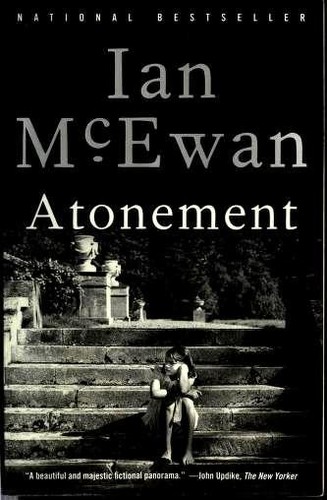
Atonement begins on a hot summer day in 1935 at a Surrey country estate.
Ian McEwan · 2001 · 8h 0m
Full summary and key takeaways →The 12 questions
- 1.
Is Briony's false testimony an act of deliberate malice, of limited understanding, or of something in between? Does the novel come down on one side?
- 2.
The metafictional ending reveals that the reunion Cecilia and Robbie have in the previous section didn't happen. Did that change your experience of reading those sections retroactively?
- 3.
McEwan is asking whether fiction can atone. What's your answer? Can writing about a wrong you caused constitute meaningful reparation?
- 4.
Briony becomes a novelist — uses the same imaginative faculty that caused the original harm to try to repair it. Is that ironic, or is it the only possible logic?
- 5.
The Dunkirk sections feel formally different from the rest of the novel — rawer, less controlled. Is that a flaw or is it doing something deliberate?
- 6.
Robbie and Cecilia are somewhat idealized — we see them largely through Briony's imagination. Does that limit your investment in them?
- 7.
The class dynamics of 1935 England are present throughout. How much does Robbie's social position — talented but socially ambiguous — contribute to how easily his accusation sticks?
- 8.
The final section is structured as an author's note from an elderly Briony. Does that framing feel earned, or like a way of avoiding the consequences the novel built up to?
- 9.
Compared to other novels about the Second World War — All Quiet on the Western Front, The Things They Carried — what does Atonement add to the tradition?
- 10.
The opening section is about a single day. What does the novel's attention to that day's small events say about how catastrophes happen?
- 11.
Briony never receives forgiveness from the people she wronged. Does the novel suggest she deserves it, or is it agnostic?
- 12.
The novel was a huge commercial success and a Booker Prize finalist. Does its popularity feel consistent with how demanding the final section is?
How to run the discussion
- Pick six to eight, not all of them. An hour of real discussion covers fewer questions than anyone expects, and racing the list is what makes a book club feel like homework.
- Open with what people noticed, not what they concluded. Asking for a verdict first hardens opinions before anyone has heard each other.
- Let the disagreement run. The questions below that split a room are the ones worth the time; the ones everyone answers the same way can be skipped.
- Ask the quiet person a specific question. A direct, narrow question is far easier to answer than an open invitation to contribute.
Themes worth steering toward
If the conversation stalls, these are the threads that usually restart it.
Common questions
What are good book club questions for Atonement?
Here are 12 book club questions for Atonement by Ian McEwan, ordered to open easily and end somewhere worth arguing about. The strongest openers ask what each reader noticed rather than what they concluded, and the discussion usually turns on guilt and atonement, memory and invention, class in britain.
How long should a book club discussion of Atonement last?
Most groups run 60 to 90 minutes of actual discussion. That is roughly six to eight questions, not all of them, so pick the ones that suit your group rather than working down the list in order.
What are the main themes in Atonement?
Guilt and atonement, Memory and invention, Class in Britain, The ethics of storytelling, War and its disruptions. Those are the threads most likely to divide a room, which makes them the useful places to steer a discussion that has gone quiet.
Picking the next one? See books like Atonement or questions for other book club picks.
