Psychology · Book club
Authentic Happiness book club questions
Here are 11 book club questions for Authentic Happiness by Martin E. P. Seligman, ordered to open easily and end somewhere worth arguing about. Copy them, print them, or bring them up one at a time.
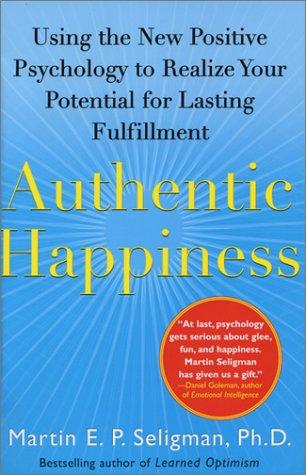
Authentic Happiness is Martin Seligman's founding statement of positive psychology — the scientific study of what makes life worth living.
Martin E. P. Seligman · 2002 · 6h 15m
Full summary and key takeaways →The 11 questions
- 1.
Seligman divides happiness into the pleasant life, the engaged life, and the meaningful life. Which of these three do you currently have the most of? The least?
- 2.
The book claims that 40 percent of happiness is within voluntary control. What specific activities or choices have most reliably raised your baseline mood over the past year?
- 3.
Seligman argues that using your signature strengths produces more lasting satisfaction than pursuing pleasure. What do you think your top two or three signature strengths are?
- 4.
The hedonic treadmill means we adapt quickly to positive changes. Where in your life have you experienced this — expecting a change to increase your happiness and then returning to baseline faster than expected?
- 5.
The gratitude letter exercise is one of Seligman's most tested interventions. Who would you write to, and what would you say? What do you imagine the effect would be on both of you?
- 6.
Optimism as explanatory style means explaining setbacks as temporary and specific rather than permanent and pervasive. Think of a recent setback. How did you explain it to yourself?
- 7.
The book argues that flow — deep engagement with a challenging activity — is a more reliable source of well-being than passive pleasure. What activities put you most consistently into flow?
- 8.
Seligman later updated the model in Flourish to include relationships and achievement. What does the addition of relationships suggest was missing from the original framework?
- 9.
The character strength taxonomy includes virtues like transcendence and justice alongside practical strengths like creativity and leadership. Do you believe virtues can be measured and cultivated systematically?
- 10.
The book distinguishes work that uses your strengths from work that does not. How much of your current professional life involves your signature strengths?
- 11.
Seligman is explicit that positive psychology is a science, not self-help. Does the scientific framing make the interventions more credible to you, or does it feel like the same content repackaged?
How to run the discussion
- Pick six to eight, not all of them. An hour of real discussion covers fewer questions than anyone expects, and racing the list is what makes a book club feel like homework.
- Open with what people noticed, not what they concluded. Asking for a verdict first hardens opinions before anyone has heard each other.
- Let the disagreement run. The questions below that split a room are the ones worth the time; the ones everyone answers the same way can be skipped.
- Ask the quiet person a specific question. A direct, narrow question is far easier to answer than an open invitation to contribute.
Themes worth steering toward
If the conversation stalls, these are the threads that usually restart it.
Common questions
What are good book club questions for Authentic Happiness?
Here are 11 book club questions for Authentic Happiness by Martin E. P. Seligman, ordered to open easily and end somewhere worth arguing about. The strongest openers ask what each reader noticed rather than what they concluded, and the discussion usually turns on positive psychology, happiness, strengths.
How long should a book club discussion of Authentic Happiness last?
Most groups run 60 to 90 minutes of actual discussion. That is roughly six to eight questions, not all of them, so pick the ones that suit your group rather than working down the list in order.
What are the main themes in Authentic Happiness?
Positive psychology, Happiness, Strengths, Meaning, Well-being. Those are the threads most likely to divide a room, which makes them the useful places to steer a discussion that has gone quiet.
Picking the next one? See books like Authentic Happiness or questions for other book club picks.
