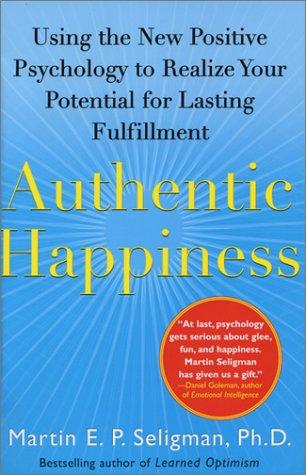
Authentic Happiness by Martin E. P. Seligman is a 2002 psychology book about positive psychology, happiness, strengths. Positive psychology is the scientific study of what makes life worth living, not just the absence of illness. It includes flourishing, virtue, and meaning as legitimate objects of inquiry.
Summary
Authentic Happiness is Martin Seligman's founding statement of positive psychology — the scientific study of what makes life worth living. Published in 2002, it represents a deliberate counterweight to a century of psychology focused primarily on mental illness and dysfunction. Seligman, a former president of the American Psychological Association, argues that psychology's mandate should include cultivating happiness, not merely treating suffering, and that this project can be grounded in rigorous science rather than self-help intuition.
The book's central framework divides happiness into three elements: positive emotion (pleasure and good feeling), engagement (absorption in activities that use one's strengths), and meaning (belonging to and serving something larger than oneself). Seligman draws on decades of research — including studies of twins, accident victims, lottery winners, and nuns — to argue that while roughly 50 percent of one's happiness set point is genetically determined and another 10 percent is circumstantial, the remaining 40 percent is within voluntary control. This is not a book that promises effortless happiness, but it does claim that specific activities and orientations reliably increase well-being for most people.
The strongest section of the book concerns character strengths. Seligman and his colleagues developed the Values in Action classification, a taxonomy of 24 human strengths organized into six virtues — wisdom, courage, humanity, justice, temperance, and transcendence. The argument is that lasting happiness comes not from pursuing pleasure but from identifying your signature strengths and using them in the main areas of life: work, love, and raising children. When work involves using one's strengths, it stops feeling like work; when relationships are organized around mutual strengths, they feel more vital and resilient.
Seligman later updated and partly revised this framework in Flourish, expanding the model to PERMA (Positive Emotion, Engagement, Relationships, Meaning, Achievement), and acknowledging that Authentic Happiness overemphasized subjective wellbeing. Readers should know this evolution exists, but Authentic Happiness remains the more accessible entry point to Seligman's project and the direct articulation of what positive psychology set out to do.
Talk to Authentic Happiness like its author wrote you back.
Get the ideas that fit your life — not generic summaries.
- Chat with the book
- Audiobook-style main ideas
- Adapts to your life and goals
- Helps you take action
Key takeaways
- 1.
Positive psychology is the scientific study of what makes life worth living, not just the absence of illness. It includes flourishing, virtue, and meaning as legitimate objects of inquiry.
- 2.
Happiness has three components: positive emotion (the pleasant life), engagement (the engaged life), and meaning (the meaningful life). Each can be pursued separately.
- 3.
Roughly half of individual happiness variation is determined by genetics. Circumstance — income, health, relationships — explains far less than people expect. The remaining 40 percent is within voluntary influence.
- 4.
Character strengths — the Values in Action taxonomy of 24 strengths in six virtue categories — provide a framework for identifying where your deepest engagement and flow are likely to occur.
- 5.
Using your signature strengths in daily work, love, and parenting produces more durable satisfaction than pursuing pleasure. Authentic happiness is engagement and meaning, not just feeling good.
- 6.
Gratitude exercises, including writing gratitude letters and visiting delivery, produce measurable increases in well-being that persist over time, not just in the moment of the exercise.
- 7.
The 'hedonic treadmill' means people rapidly adapt to positive life changes — raises, promotions, nicer homes — and return to their baseline. Engagement and meaning are more resistant to adaptation than pleasure.
- 8.
Optimism is learnable. Seligman's explanatory style research shows that how you explain bad events — as permanent, pervasive, and personal versus temporary, specific, and situational — predicts health, resilience, and achievement.
Discussion questions
Use these on your own, with a book club, or as chat starters in Superbook. Book club version, ready to copy or print →
- 1.
Seligman divides happiness into the pleasant life, the engaged life, and the meaningful life. Which of these three do you currently have the most of? The least?
- 2.
The book claims that 40 percent of happiness is within voluntary control. What specific activities or choices have most reliably raised your baseline mood over the past year?
- 3.
Seligman argues that using your signature strengths produces more lasting satisfaction than pursuing pleasure. What do you think your top two or three signature strengths are?
- 4.
The hedonic treadmill means we adapt quickly to positive changes. Where in your life have you experienced this — expecting a change to increase your happiness and then returning to baseline faster than expected?
- 5.
The gratitude letter exercise is one of Seligman's most tested interventions. Who would you write to, and what would you say? What do you imagine the effect would be on both of you?
- 6.
Optimism as explanatory style means explaining setbacks as temporary and specific rather than permanent and pervasive. Think of a recent setback. How did you explain it to yourself?
- 7.
The book argues that flow — deep engagement with a challenging activity — is a more reliable source of well-being than passive pleasure. What activities put you most consistently into flow?
- 8.
Seligman later updated the model in Flourish to include relationships and achievement. What does the addition of relationships suggest was missing from the original framework?
- 9.
The character strength taxonomy includes virtues like transcendence and justice alongside practical strengths like creativity and leadership. Do you believe virtues can be measured and cultivated systematically?
- 10.
The book distinguishes work that uses your strengths from work that does not. How much of your current professional life involves your signature strengths?
- 11.
Seligman is explicit that positive psychology is a science, not self-help. Does the scientific framing make the interventions more credible to you, or does it feel like the same content repackaged?
Themes
Frequently asked questions
-
What is positive psychology?
Positive psychology is the scientific study of the conditions that enable individuals and communities to flourish. It complements clinical psychology's focus on mental illness by studying strengths, virtues, positive emotions, and meaning. Seligman launched it formally in 1998 as a research program, not just a philosophy or attitude.
-
Is Authentic Happiness still the best book to read on this topic?
It is the founding text and still accessible. Seligman's later book Flourish updates and partly revises the framework, adding relationships and achievement to the model and acknowledging limitations in the original. Readers who want the full picture should eventually read both, but Authentic Happiness is the clearer starting point.
-
What are signature strengths and how do I find mine?
Signature strengths are the character traits from Seligman's Values in Action taxonomy that you use most naturally and energetically. The VIA Survey, which Seligman's group developed and made freely available online, takes about fifteen minutes and ranks your 24 strengths. Seligman argues that using your top five strengths deliberately is one of the most reliable routes to engagement and satisfaction.
-
Does research actually support the happiness interventions in the book?
Some interventions — particularly gratitude exercises, using strengths, and optimism retraining — have reasonably strong empirical support from randomized trials. Others are more speculative or based on correlational research. Positive psychology has been subject to replication scrutiny, and effect sizes are often modest. The interventions are real but not magic.
-
Who should read Authentic Happiness?
Anyone interested in the science of well-being, particularly if they want a framework grounded in research rather than anecdote. It is most useful for people in mid-career or mid-life reassessing what they want from work and relationships. Readers already familiar with positive psychology may find Flourish more updated.
Similar books
Flourish: A Visionary New Understanding of Happiness and Well-being
Martin E. P. Seligman
Flow: The Psychology of Optimal Experience
Mihaly Csikszentmihalyi
The Happiness Hypothesis
Jonathan Haidt
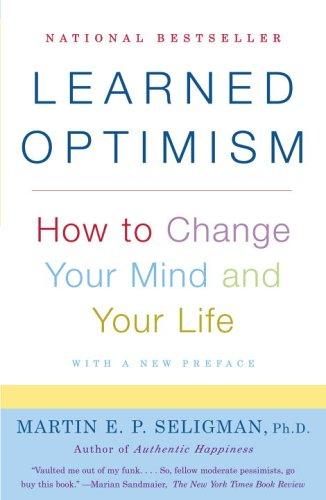
Learned Optimism: How to Change Your Mind and Your Life
Martin E. P. Seligman
