Science · Book club
Bad Science book club questions
Here are 12 book club questions for Bad Science by Ben Goldacre, ordered to open easily and end somewhere worth arguing about. Copy them, print them, or bring them up one at a time.
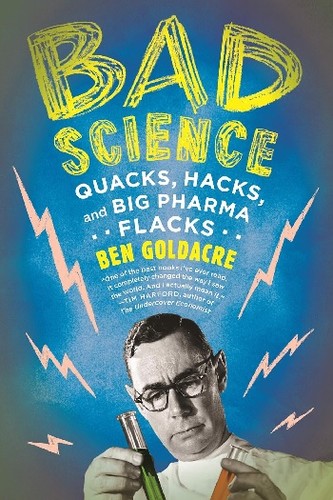
Bad Science is Ben Goldacre's dissection of how scientific evidence gets misrepresented, distorted, and invented in the service of selling health products, generating media coverage, and protecting bad actors from accountability.
Ben Goldacre · 2008 · 5h 30m
Full summary and key takeaways →The 12 questions
- 1.
Goldacre argues that statistical literacy is a democratic necessity. What would it take to teach it effectively at a population level?
- 2.
The MMR chapter shows how a single fraudulent study caused measles deaths years later. What went wrong at each stage — from Wakefield to the Lancet to the media to parents?
- 3.
Has reading this book changed how you'll evaluate health claims in the news? What's one heuristic you'll carry forward?
- 4.
Goldacre is openly contemptuous of the people he criticizes. Does that tone help or hurt his argument?
- 5.
He draws a distinction between alternative medicine when it's used as a complement to conventional care versus when it's used instead of it. Is that a defensible line?
- 6.
The publication bias problem means the medical literature systematically overstates treatment benefits. What institutional changes would fix that, and why haven't they been made?
- 7.
How do you evaluate health claims for yourself in practice? What's your actual process, and does Goldacre's framework change it?
- 8.
Some of Goldacre's targets — nutritionists, homeopaths — provide comfort and a sense of control to patients who feel dismissed by conventional medicine. Is that value real even if the treatment isn't?
- 9.
He argues that regulatory frameworks treat pharmaceutical companies differently from supplement and alternative medicine providers. Is that differential treatment justified?
- 10.
Which case study in the book was most surprising? Did any of his targets turn out to be more defensible than you expected?
- 11.
Goldacre wrote this in 2008. Has the information environment improved or worsened since then for evaluating health claims?
- 12.
What's the most important thing you learned about how clinical trials work from reading this book?
How to run the discussion
- Pick six to eight, not all of them. An hour of real discussion covers fewer questions than anyone expects, and racing the list is what makes a book club feel like homework.
- Open with what people noticed, not what they concluded. Asking for a verdict first hardens opinions before anyone has heard each other.
- Let the disagreement run. The questions below that split a room are the ones worth the time; the ones everyone answers the same way can be skipped.
- Ask the quiet person a specific question. A direct, narrow question is far easier to answer than an open invitation to contribute.
Themes worth steering toward
If the conversation stalls, these are the threads that usually restart it.
Common questions
What are good book club questions for Bad Science?
Here are 12 book club questions for Bad Science by Ben Goldacre, ordered to open easily and end somewhere worth arguing about. The strongest openers ask what each reader noticed rather than what they concluded, and the discussion usually turns on scientific literacy, evidence-based medicine, media criticism.
How long should a book club discussion of Bad Science last?
Most groups run 60 to 90 minutes of actual discussion. That is roughly six to eight questions, not all of them, so pick the ones that suit your group rather than working down the list in order.
What are the main themes in Bad Science?
Scientific literacy, Evidence-based medicine, Media criticism, Statistics, Public health. Those are the threads most likely to divide a room, which makes them the useful places to steer a discussion that has gone quiet.
Picking the next one? See books like Bad Science or questions for other book club picks.
