Economics · Book club
Basic Economics: A Common Sense Guide to the Economy book club questions
Here are 12 book club questions for Basic Economics: A Common Sense Guide to the Economy by Thomas Sowell, ordered to open easily and end somewhere worth arguing about. Copy them, print them, or bring them up one at a time.
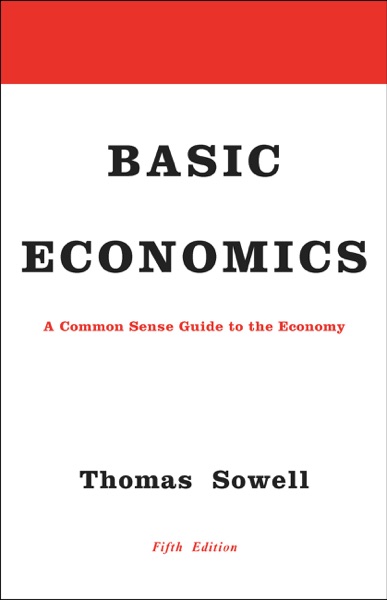
Thomas Sowell published the first edition of Basic Economics in 2000 and has since revised and expanded it through five editions.
Thomas Sowell · 2000 · 8h 0m
Full summary and key takeaways →The 12 questions
- 1.
Sowell's core move is asking 'compared to what?' Apply that question to a policy debate you care about. What is the realistic alternative you are comparing the policy to?
- 2.
The rent control analysis is one of the clearest in the book. Are there cases where the long-run supply reduction is an acceptable tradeoff for short-run affordability?
- 3.
Sowell is skeptical of minimum wage increases. What does the empirical evidence on minimum wages over the past twenty years suggest about his analysis?
- 4.
The book argues prices carry more information than administrators can. Where do you think that argument is strongest, and where does it break down?
- 5.
How does Sowell treat externalities — costs or benefits that fall on parties outside a transaction? Does that treatment feel adequate?
- 6.
The book largely avoids graphs and equations. Does that make it more accessible, or does it also make it harder to challenge the arguments with data?
- 7.
Sowell draws on historical examples from across the world. Which examples did you find most compelling, and which felt most like cherry-picking?
- 8.
The book's framework handles scarcity and allocation well. How does it handle questions of distribution — not just efficiency but fairness in who gets what?
- 9.
Comparative advantage is the core argument for free trade. What does it assume about workers' ability to move between industries, and how realistic is that assumption?
- 10.
Sowell argues political incentives systematically distort economic policy. Is there a version of political economy that could align those incentives better?
- 11.
Which of the book's applications to specific policy areas — healthcare, housing, education, trade — did you find most persuasive or least persuasive?
- 12.
Does knowing Sowell's broader political views affect how you read the book? Should it?
How to run the discussion
- Pick six to eight, not all of them. An hour of real discussion covers fewer questions than anyone expects, and racing the list is what makes a book club feel like homework.
- Open with what people noticed, not what they concluded. Asking for a verdict first hardens opinions before anyone has heard each other.
- Let the disagreement run. The questions below that split a room are the ones worth the time; the ones everyone answers the same way can be skipped.
- Ask the quiet person a specific question. A direct, narrow question is far easier to answer than an open invitation to contribute.
Themes worth steering toward
If the conversation stalls, these are the threads that usually restart it.
Common questions
What are good book club questions for Basic Economics: A Common Sense Guide to the Economy?
Here are 12 book club questions for Basic Economics: A Common Sense Guide to the Economy by Thomas Sowell, ordered to open easily and end somewhere worth arguing about. The strongest openers ask what each reader noticed rather than what they concluded, and the discussion usually turns on price mechanisms, unintended consequences, market incentives.
How long should a book club discussion of Basic Economics: A Common Sense Guide to the Economy last?
Most groups run 60 to 90 minutes of actual discussion. That is roughly six to eight questions, not all of them, so pick the ones that suit your group rather than working down the list in order.
What are the main themes in Basic Economics: A Common Sense Guide to the Economy?
Price mechanisms, Unintended consequences, Market incentives, Economic reasoning, Government intervention. Those are the threads most likely to divide a room, which makes them the useful places to steer a discussion that has gone quiet.
Picking the next one? See books like Basic Economics: A Common Sense Guide to the Economy or questions for other book club picks.
