History · Book club
Bass Culture: When Reggae Was King book club questions
Here are 11 book club questions for Bass Culture: When Reggae Was King by Lloyd Bradley, ordered to open easily and end somewhere worth arguing about. Copy them, print them, or bring them up one at a time.
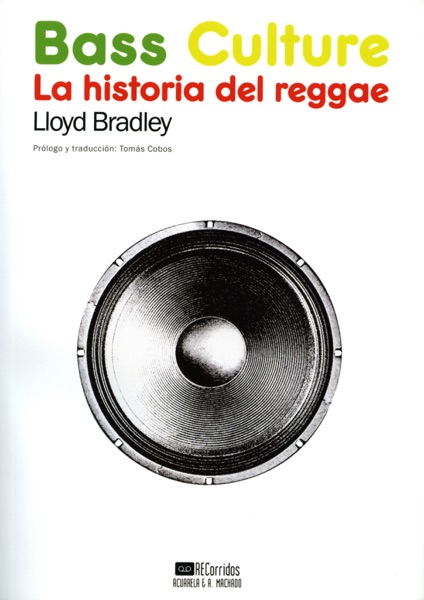
Lloyd Bradley's Bass Culture is the definitive popular history of Jamaican music from the late 1940s through the 1990s, tracing the full arc from mento and ska through rocksteady, reggae, dancehall, and ragga.
Lloyd Bradley · 1999 · 13h 15m
Full summary and key takeaways →The 11 questions
- 1.
Bradley argues that sound system culture was both entertainment and social institution. What institutions in your own community serve a comparable function — communal entertainment as social infrastructure?
- 2.
Dub music created a genre out of absence and manipulation. Where else do you see creative innovation that comes from removing or subtracting rather than adding?
- 3.
Marley's international success required translating specific cultural content for a different audience. Is that translation always a betrayal, or can it be a genuine act of cultural exchange?
- 4.
Rastafarian theology gave reggae a coherent politics. What other musical movements have had an equivalent ideological framework, and what happens to the music when the movement loses momentum?
- 5.
Bradley documents systematic exploitation of Jamaican artists. How much has changed in the music industry's treatment of artists from economically marginalized backgrounds?
- 6.
The shift to dancehall was partly about Jamaican youth rejecting the previous generation's politics. Do you see an equivalent generational rejection happening in a music genre you follow?
- 7.
The book gives substantial attention to producers and engineers alongside performers. Who are the equivalent invisible creators in a creative field you know?
- 8.
Bass Culture covers fifty years of music. What gets lost in a history this comprehensive, and what is only visible at this scale?
- 9.
The book was published in 1999. What has happened to Jamaican music since then that the book couldn't have anticipated?
- 10.
Bradley writes about music that comes from specific economic and social conditions — poverty, colonial history, migration. How does that context change how you listen to it?
- 11.
Which figure in the book, other than Marley, do you think deserves more international recognition, and why?
How to run the discussion
- Pick six to eight, not all of them. An hour of real discussion covers fewer questions than anyone expects, and racing the list is what makes a book club feel like homework.
- Open with what people noticed, not what they concluded. Asking for a verdict first hardens opinions before anyone has heard each other.
- Let the disagreement run. The questions below that split a room are the ones worth the time; the ones everyone answers the same way can be skipped.
- Ask the quiet person a specific question. A direct, narrow question is far easier to answer than an open invitation to contribute.
Themes worth steering toward
If the conversation stalls, these are the threads that usually restart it.
Common questions
What are good book club questions for Bass Culture: When Reggae Was King?
Here are 11 book club questions for Bass Culture: When Reggae Was King by Lloyd Bradley, ordered to open easily and end somewhere worth arguing about. The strongest openers ask what each reader noticed rather than what they concluded, and the discussion usually turns on music history, jamaica, rastafari.
How long should a book club discussion of Bass Culture: When Reggae Was King last?
Most groups run 60 to 90 minutes of actual discussion. That is roughly six to eight questions, not all of them, so pick the ones that suit your group rather than working down the list in order.
What are the main themes in Bass Culture: When Reggae Was King?
Music history, Jamaica, Rastafari, Cultural identity, Resistance. Those are the threads most likely to divide a room, which makes them the useful places to steer a discussion that has gone quiet.
Picking the next one? See books like Bass Culture: When Reggae Was King or questions for other book club picks.
