History · Book club
Battle Cry of Freedom: The Civil War Era book club questions
Here are 12 book club questions for Battle Cry of Freedom: The Civil War Era by James M. McPherson, ordered to open easily and end somewhere worth arguing about. Copy them, print them, or bring them up one at a time.
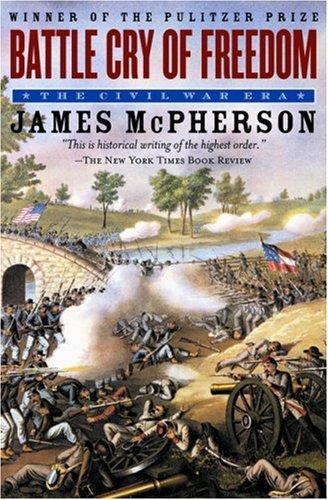
James McPherson's Battle Cry of Freedom, published in 1988, is the standard one-volume history of the Civil War era and won the Pulitzer Prize in the year of its publication.
James M. McPherson · 1988 · 33h 15m
Full summary and key takeaways →The 12 questions
- 1.
McPherson argues that slavery, not tariffs or states' rights abstractly conceived, caused the war. How does that framing change what the war's outcome means?
- 2.
The book emphasizes contingency — the war could have gone differently at several points. Which moment in your reading felt most genuinely uncertain?
- 3.
Lincoln's handling of the border states — keeping them in the Union while deferring emancipation — is presented as political genius. Was it also a moral compromise, and does that distinction matter?
- 4.
McPherson gives significant attention to the antebellum period before the war begins. Did understanding that context change how you read the war itself?
- 5.
The 1864 election nearly ended the war on terms that would have preserved Confederate independence. How does that near-outcome change how you think about the war's resolution?
- 6.
Both sides claimed they were fighting for liberty. How does McPherson handle that paradox, and do you find his resolution satisfying?
- 7.
The Confederate leadership knew they were outgunned in industry and manpower. What was their theory for how they could win, and why did it ultimately fail?
- 8.
How does McPherson's treatment of slavery's centrality compare to other Civil War histories or popular accounts you've encountered?
- 9.
Black soldiers fought for a country that still denied them citizenship. What does McPherson say about how they understood that contradiction?
- 10.
The book ends at Appomattox without addressing Reconstruction. Does that feel like an appropriate stopping point, or an evasion?
- 11.
McPherson writes as a Princeton historian with strong scholarly standards. How does his approach differ in texture and argument from Shelby Foote's narrative trilogy?
- 12.
What does the Civil War era explain about American political institutions — the electoral college, the Senate, federalism — that is still relevant?
How to run the discussion
- Pick six to eight, not all of them. An hour of real discussion covers fewer questions than anyone expects, and racing the list is what makes a book club feel like homework.
- Open with what people noticed, not what they concluded. Asking for a verdict first hardens opinions before anyone has heard each other.
- Let the disagreement run. The questions below that split a room are the ones worth the time; the ones everyone answers the same way can be skipped.
- Ask the quiet person a specific question. A direct, narrow question is far easier to answer than an open invitation to contribute.
Themes worth steering toward
If the conversation stalls, these are the threads that usually restart it.
Common questions
What are good book club questions for Battle Cry of Freedom: The Civil War Era?
Here are 12 book club questions for Battle Cry of Freedom: The Civil War Era by James M. McPherson, ordered to open easily and end somewhere worth arguing about. The strongest openers ask what each reader noticed rather than what they concluded, and the discussion usually turns on american civil war, slavery, political history.
How long should a book club discussion of Battle Cry of Freedom: The Civil War Era last?
Most groups run 60 to 90 minutes of actual discussion. That is roughly six to eight questions, not all of them, so pick the ones that suit your group rather than working down the list in order.
What are the main themes in Battle Cry of Freedom: The Civil War Era?
American Civil War, Slavery, Political history, Military strategy, National identity. Those are the threads most likely to divide a room, which makes them the useful places to steer a discussion that has gone quiet.
Picking the next one? See books like Battle Cry of Freedom: The Civil War Era or questions for other book club picks.
