Economics · Book club
Beating the Street book club questions
Here are 12 book club questions for Beating the Street by Peter Lynch, ordered to open easily and end somewhere worth arguing about. Copy them, print them, or bring them up one at a time.
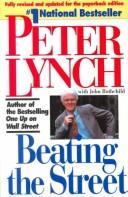
Beating the Street is Peter Lynch's second book, written after he retired from the Fidelity Magellan Fund in 1990.
Peter Lynch · 1993 · 4h 45m
Full summary and key takeaways →The 12 questions
- 1.
Lynch describes why he retired at 46 despite running one of the world's most successful funds. What would you give up to do work you find this meaningful, and what threshold would prompt you to stop?
- 2.
The book was written during a period when savings and loan stocks were deeply unpopular. Lynch saw this as an opportunity. What asset class or sector is deeply unloved today that might present similar opportunity?
- 3.
Lynch is explicit about his losers as well as his winners. How does your own record of investment decisions look when you include the failures alongside the successes?
- 4.
The financial stock analysis section is detailed and somewhat dated. Does the analytical framework — looking for asset quality problems, reserve levels, spread dynamics — translate to evaluating financial institutions today?
- 5.
Lynch's Barron's portfolio exercise lets you see his research process in real time. What is your own research process before a major investment, and does it have similar depth?
- 6.
The book argues that individual investors can beat professionals by acting without institutional constraints. In what specific situations do you think that advantage actually applies to your own investing?
- 7.
Lynch discusses fund evaluation criteria: long-term performance, low turnover, consistent strategy. How do the funds in your portfolio actually measure against those criteria?
- 8.
Lynch retired from active management at peak performance. Most investors, by contrast, tend to double down when things are going well. What drives the difference in behavior?
- 9.
The stock-picking process Lynch describes requires sustained attention — reading annual reports, tracking news, monitoring financial metrics. How much time per week do you realistically devote to your investments?
- 10.
Lynch's approach is concentrated and conviction-driven. Does your current portfolio reflect genuine conviction in your holdings, or do you hold positions you no longer feel confident about?
- 11.
The book focuses heavily on the early 1990s recession and thrift crisis. Does the historical context make it harder to extract general principles, or does the crisis context illuminate principles that only become clear under stress?
- 12.
Lynch says the best time to buy stocks is when people are most afraid. When was the last time you bought into broad market fear rather than selling or staying on the sidelines?
How to run the discussion
- Pick six to eight, not all of them. An hour of real discussion covers fewer questions than anyone expects, and racing the list is what makes a book club feel like homework.
- Open with what people noticed, not what they concluded. Asking for a verdict first hardens opinions before anyone has heard each other.
- Let the disagreement run. The questions below that split a room are the ones worth the time; the ones everyone answers the same way can be skipped.
- Ask the quiet person a specific question. A direct, narrow question is far easier to answer than an open invitation to contribute.
Themes worth steering toward
If the conversation stalls, these are the threads that usually restart it.
Common questions
What are good book club questions for Beating the Street?
Here are 12 book club questions for Beating the Street by Peter Lynch, ordered to open easily and end somewhere worth arguing about. The strongest openers ask what each reader noticed rather than what they concluded, and the discussion usually turns on stock picking, mutual fund management, research process.
How long should a book club discussion of Beating the Street last?
Most groups run 60 to 90 minutes of actual discussion. That is roughly six to eight questions, not all of them, so pick the ones that suit your group rather than working down the list in order.
What are the main themes in Beating the Street?
Stock picking, Mutual fund management, Research process, Consumer investing, Portfolio analysis. Those are the threads most likely to divide a room, which makes them the useful places to steer a discussion that has gone quiet.
Picking the next one? See books like Beating the Street or questions for other book club picks.
