Philosophy · Book club
Becoming Wise: An Inquiry into the Mystery and Art of Living book club questions
Here are 12 book club questions for Becoming Wise: An Inquiry into the Mystery and Art of Living by Krista Tippett, ordered to open easily and end somewhere worth arguing about. Copy them, print them, or bring them up one at a time.
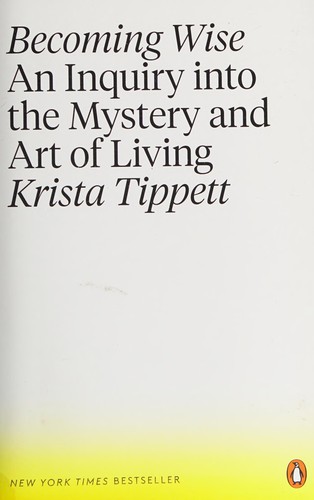
Becoming Wise draws on Krista Tippett's decades of conversation with scientists, poets, theologians, activists, and philosophers through her radio program On Being.
Krista Tippett · 2016 · 5h 20m
Full summary and key takeaways →The 12 questions
- 1.
Tippett says better questions are more valuable than answers. What is the most useful question you are currently living with — one you don't yet have an answer to?
- 2.
She draws on people from many religious and secular traditions. What did you notice about the differences and convergences between them?
- 3.
The book distinguishes hope from optimism. In your own life, is there something you are hoping for without being optimistic about? What is the difference in how that feels?
- 4.
Tippett writes about the quality of listening as a practice. When was the last time you felt genuinely listened to? What made it feel that way?
- 5.
Which of the thinkers she quotes had the most impact on you? Why that person in particular?
- 6.
Her method is cumulative — building a picture through many voices rather than a single argument. Did that approach work for you, or did you want more structure?
- 7.
The book treats faith as a stance within uncertainty, not a resolution of it. Does that definition of faith match or contradict how you've understood it?
- 8.
What does 'becoming wise' mean to you, and how does Tippett's conception match or diverge from yours?
- 9.
The section on love treats it as a practice rather than a feeling. What would it mean for you to practice love more deliberately in your closest relationships?
- 10.
Tippett describes encountering people who have been through significant suffering and emerged with more openness rather than less. What do you think makes that possible?
- 11.
If the book does not take hard positions on contested questions, is that a virtue or a form of avoidance? Where do you come down on that?
- 12.
Which theme — words, bodies, love, faith, hope — felt most alive for you in the book, and why?
How to run the discussion
- Pick six to eight, not all of them. An hour of real discussion covers fewer questions than anyone expects, and racing the list is what makes a book club feel like homework.
- Open with what people noticed, not what they concluded. Asking for a verdict first hardens opinions before anyone has heard each other.
- Let the disagreement run. The questions below that split a room are the ones worth the time; the ones everyone answers the same way can be skipped.
- Ask the quiet person a specific question. A direct, narrow question is far easier to answer than an open invitation to contribute.
Themes worth steering toward
If the conversation stalls, these are the threads that usually restart it.
Common questions
What are good book club questions for Becoming Wise: An Inquiry into the Mystery and Art of Living?
Here are 12 book club questions for Becoming Wise: An Inquiry into the Mystery and Art of Living by Krista Tippett, ordered to open easily and end somewhere worth arguing about. The strongest openers ask what each reader noticed rather than what they concluded, and the discussion usually turns on wisdom, meaning, faith.
How long should a book club discussion of Becoming Wise: An Inquiry into the Mystery and Art of Living last?
Most groups run 60 to 90 minutes of actual discussion. That is roughly six to eight questions, not all of them, so pick the ones that suit your group rather than working down the list in order.
What are the main themes in Becoming Wise: An Inquiry into the Mystery and Art of Living?
Wisdom, Meaning, Faith, Conversation, Human flourishing. Those are the threads most likely to divide a room, which makes them the useful places to steer a discussion that has gone quiet.
Picking the next one? See books like Becoming Wise: An Inquiry into the Mystery and Art of Living or questions for other book club picks.
