Health · Book club
Being Mortal: Medicine and What Matters in the End book club questions
Here are 12 book club questions for Being Mortal: Medicine and What Matters in the End by Atul Gawande, ordered to open easily and end somewhere worth arguing about. Copy them, print them, or bring them up one at a time.
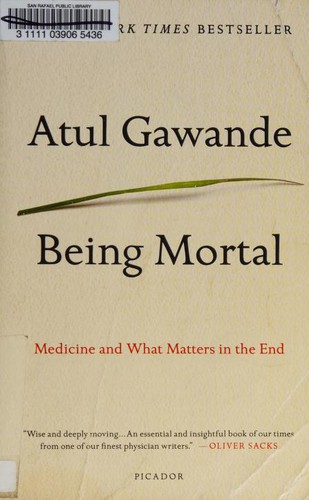
Being Mortal is Atul Gawande's investigation into why modern medicine is so bad at helping people die well.
Atul Gawande · 2014 · 6h 0m
Full summary and key takeaways →The 12 questions
- 1.
Gawande argues that medicine's core mission — fighting disease — makes it structurally bad at helping people die well. Do you think that conflict is fixable, or is it built into how doctors are trained and hospitals are run?
- 2.
Have you ever watched someone close to you navigate a serious illness or end-of-life care? What worked, and what would you change in hindsight?
- 3.
Gawande's five questions for the seriously ill are remarkably specific. If you were told you had a terminal diagnosis, what would your honest answers be?
- 4.
The book argues that patients often choose aggressive treatment not because they want to live longer at any cost, but because they don't realize there's another option. Is that a failure of patients, families, doctors, or the system?
- 5.
What would it take for you to tell a doctor 'no more treatment, let's focus on comfort'? What fears would you need to overcome?
- 6.
Gawande describes nursing homes that are designed around institutional needs — staff schedules, liability, clinical safety — rather than residents' lives. What would you want your own environment to look like if you could no longer live independently?
- 7.
Bill Thomas brought animals and children into a nursing home and found measurable improvements in health outcomes. What does that experiment suggest about what humans need to stay alive and engaged?
- 8.
The hospice research Gawande cites shows that patients who chose comfort over aggressive chemotherapy lived longer on average. Why do you think that finding hasn't changed how oncologists typically present treatment options?
- 9.
Gawande admits his own failures in this area, including how he handled conversations with his dying father. What makes those conversations so hard to have even for people who know exactly what they should say?
- 10.
The book distinguishes between a 'safe death' and a 'good death.' What's the difference in your mind, and which would you want for yourself?
- 11.
Gawande writes about people who chose to forgo treatment to attend a grandchild's wedding or spend one last summer at home. What would your equivalent be — the thing that would make the time worth protecting?
- 12.
If you had a parent or close friend in declining health, how would you start a conversation about what they actually want? What would stop you from having it?
How to run the discussion
- Pick six to eight, not all of them. An hour of real discussion covers fewer questions than anyone expects, and racing the list is what makes a book club feel like homework.
- Open with what people noticed, not what they concluded. Asking for a verdict first hardens opinions before anyone has heard each other.
- Let the disagreement run. The questions below that split a room are the ones worth the time; the ones everyone answers the same way can be skipped.
- Ask the quiet person a specific question. A direct, narrow question is far easier to answer than an open invitation to contribute.
Themes worth steering toward
If the conversation stalls, these are the threads that usually restart it.
Common questions
What are good book club questions for Being Mortal: Medicine and What Matters in the End?
Here are 12 book club questions for Being Mortal: Medicine and What Matters in the End by Atul Gawande, ordered to open easily and end somewhere worth arguing about. The strongest openers ask what each reader noticed rather than what they concluded, and the discussion usually turns on aging, end-of-life care, medicine.
How long should a book club discussion of Being Mortal: Medicine and What Matters in the End last?
Most groups run 60 to 90 minutes of actual discussion. That is roughly six to eight questions, not all of them, so pick the ones that suit your group rather than working down the list in order.
What are the main themes in Being Mortal: Medicine and What Matters in the End?
Aging, End-of-life care, Medicine, Mortality, Autonomy. Those are the threads most likely to divide a room, which makes them the useful places to steer a discussion that has gone quiet.
Picking the next one? See books like Being Mortal: Medicine and What Matters in the End or questions for other book club picks.
