Philosophy · Book club
Beyond Good and Evil book club questions
Here are 12 book club questions for Beyond Good and Evil by Friedrich Nietzsche, ordered to open easily and end somewhere worth arguing about. Copy them, print them, or bring them up one at a time.
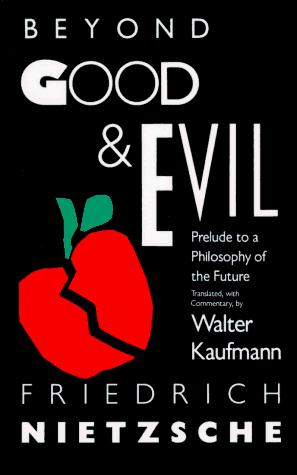
Beyond Good and Evil is Nietzsche's assault on the philosophical tradition he had been trained in and had grown to distrust.
Friedrich Nietzsche · 1886 · 5h 0m
Full summary and key takeaways →The 12 questions
- 1.
Nietzsche claims philosophers have smuggled their own prejudices into their 'objective' arguments. Can you identify a moral belief you hold that might be a prejudice rather than a reasoned conclusion?
- 2.
The distinction between master and slave morality is one of the most influential and most disputed ideas in ethics. Does it describe anything you recognize in contemporary moral culture?
- 3.
Nietzsche says the will to truth is itself a value that needs justification. Do you think the pursuit of truth — in your own work or life — is always valuable? Are there things you'd rather not know?
- 4.
What would 'self-overcoming' mean in your own life, as distinct from self-improvement in the conventional sense?
- 5.
Nietzsche associates pity with weakness and calls it a problem. Is there a meaningful distinction between genuine compassion and the pity he criticizes?
- 6.
The book implies that modern democracy is an expression of slave morality. Is that a fair diagnosis of any aspect of democratic politics you see around you?
- 7.
Nietzsche thinks the 'free spirit' must become suspicious of all inherited values. Is that kind of radical skepticism liberating or destabilizing — or both?
- 8.
Beyond Good and Evil doesn't clearly specify what values should replace the ones it demolishes. Is that a flaw in the argument, or is the diagnosis the point?
- 9.
How would you describe the difference between Nietzsche's critique of morality and simple moral relativism — the view that all values are equally valid?
- 10.
Nietzsche is one of the most misappropriated thinkers in history, used to justify things he clearly didn't endorse. What in the text makes it so susceptible to misreading?
- 11.
The book argues that equality as a value is a form of leveling that suppresses excellence. Where in your own field do you see tension between equality and the cultivation of exceptional performance?
- 12.
What would it mean to create your own values rather than inherit them? Is that even possible, or does value-creation always depend on a tradition you're reacting against?
How to run the discussion
- Pick six to eight, not all of them. An hour of real discussion covers fewer questions than anyone expects, and racing the list is what makes a book club feel like homework.
- Open with what people noticed, not what they concluded. Asking for a verdict first hardens opinions before anyone has heard each other.
- Let the disagreement run. The questions below that split a room are the ones worth the time; the ones everyone answers the same way can be skipped.
- Ask the quiet person a specific question. A direct, narrow question is far easier to answer than an open invitation to contribute.
Themes worth steering toward
If the conversation stalls, these are the threads that usually restart it.
Common questions
What are good book club questions for Beyond Good and Evil?
Here are 12 book club questions for Beyond Good and Evil by Friedrich Nietzsche, ordered to open easily and end somewhere worth arguing about. The strongest openers ask what each reader noticed rather than what they concluded, and the discussion usually turns on morality, power, truth.
How long should a book club discussion of Beyond Good and Evil last?
Most groups run 60 to 90 minutes of actual discussion. That is roughly six to eight questions, not all of them, so pick the ones that suit your group rather than working down the list in order.
What are the main themes in Beyond Good and Evil?
Morality, Power, Truth, Nihilism, Self-overcoming. Those are the threads most likely to divide a room, which makes them the useful places to steer a discussion that has gone quiet.
Picking the next one? See books like Beyond Good and Evil or questions for other book club picks.
