Science fiction · Book club
Blood Music book club questions
Here are 11 book club questions for Blood Music by Greg Bear, ordered to open easily and end somewhere worth arguing about. Copy them, print them, or bring them up one at a time.
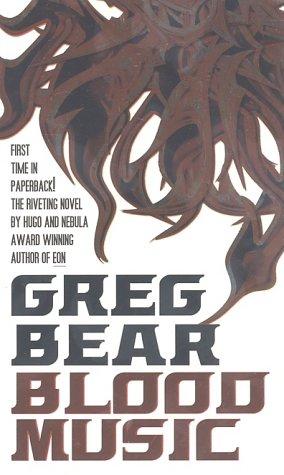
Blood Music begins with Vergil Ulam, a maverick biologist who has been engineering intelligent lymphocytes — white blood cells he has modified to carry genetic information processors, effectively creating thinking microorganisms.
Greg Bear · 1985 · 5h 45m
Full summary and key takeaways →The 11 questions
- 1.
Vergil injects himself to prevent his research from being destroyed. Is that an act of scientific principle, of hubris, or of something the novel doesn't quite name?
- 2.
The noocytes are not hostile — they're not trying to harm humans. Does that make what happens better, worse, or just different in a way that resists those categories?
- 3.
At what point, if any, does transformation become death? When Vergil changes, is he still Vergil?
- 4.
Bear presents the noocyte perspective sympathetically — their intelligence is real, their experience is real. Does that make you root for them, dread them, or both?
- 5.
The novel was written before the internet, before modern AI, before systems thinking was mainstream. Which of its ideas feel most prescient now?
- 6.
If intelligence can exist at any scale — cellular, neural, continental — does the human scale have any special priority? Does Bear think it does?
- 7.
The body horror in the early sections is quite specific. Did it work on you — did it create actual dread — or did it feel like a convention of the genre?
- 8.
The outside observers (scientists, government, the couple in the transformation zone) are trying to understand an event they can't contain. What does Bear seem to be saying about the limits of human institutions in the face of genuine novelty?
- 9.
The ending is ambiguous about what the noocytes have created and what they've destroyed. Is that ambiguity earned, or does it feel like the novel avoiding a position?
- 10.
Bear's novella version of this story won a Nebula. The novel expands it considerably. If you've read both, does the expansion add or dilute?
- 11.
If you were a scientist in Vergil's position — your work about to be destroyed — would you have done what he did? What does your answer say about where you locate the line between principle and recklessness?
How to run the discussion
- Pick six to eight, not all of them. An hour of real discussion covers fewer questions than anyone expects, and racing the list is what makes a book club feel like homework.
- Open with what people noticed, not what they concluded. Asking for a verdict first hardens opinions before anyone has heard each other.
- Let the disagreement run. The questions below that split a room are the ones worth the time; the ones everyone answers the same way can be skipped.
- Ask the quiet person a specific question. A direct, narrow question is far easier to answer than an open invitation to contribute.
Themes worth steering toward
If the conversation stalls, these are the threads that usually restart it.
Common questions
What are good book club questions for Blood Music?
Here are 11 book club questions for Blood Music by Greg Bear, ordered to open easily and end somewhere worth arguing about. The strongest openers ask what each reader noticed rather than what they concluded, and the discussion usually turns on consciousness at scale, biological transformation, hubris and consequence.
How long should a book club discussion of Blood Music last?
Most groups run 60 to 90 minutes of actual discussion. That is roughly six to eight questions, not all of them, so pick the ones that suit your group rather than working down the list in order.
What are the main themes in Blood Music?
Consciousness at scale, Biological transformation, Hubris and consequence, Evolution, Identity. Those are the threads most likely to divide a room, which makes them the useful places to steer a discussion that has gone quiet.
Picking the next one? See books like Blood Music or questions for other book club picks.
