Science · Book club
Bonk: The Curious Coupling of Science and Sex book club questions
Here are 11 book club questions for Bonk: The Curious Coupling of Science and Sex by Mary Roach, ordered to open easily and end somewhere worth arguing about. Copy them, print them, or bring them up one at a time.
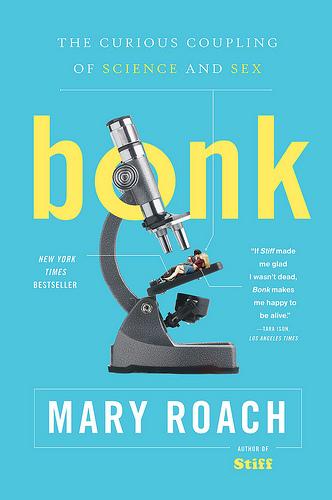
Bonk is Mary Roach's investigation into the science of human sexuality — not the pop psychology of relationships, but the actual research: what scientists have done inside laboratory settings to understand how sex works, what they've discovered, and why the field has been so difficult to pursue given institutional and cultural resistance.
Mary Roach · 2008 · 4h 45m
Full summary and key takeaways →The 11 questions
- 1.
Roach documents how difficult it has been to fund and publish sex research. What does that difficulty tell us about which scientific questions get answered and which don't?
- 2.
The book covers Masters and Johnson's research methods, which included practices that wouldn't pass ethics review today. How do you weigh scientific contribution against ethical standards of the time?
- 3.
Were there findings in the book that contradicted something you'd previously believed about human sexuality?
- 4.
Roach participates as a research subject alongside her husband. Did that choice affect how you read those sections?
- 5.
The book argues that female anatomy was poorly understood partly because male researchers controlled the field. How much do you think researcher demographics shape scientific priorities?
- 6.
Several chapters cover treatments for sexual dysfunction. How does the medicalization of sexual experience sit with you — is it appropriate, overreaching, or somewhere in between?
- 7.
The history of vibrator mythology suggests that popular culture regularly rewrites scientific history. What other areas of science do you think are similarly distorted in public understanding?
- 8.
Roach's humor is a signature of her work. Did it help you engage with material you might otherwise have skipped, or did it sometimes feel like it deflected from the seriousness of the research?
- 9.
The book covers animal research on sexuality. Where do you draw the line on what's ethically permissible in animal research for human benefit?
- 10.
What surprised you most about the history of sex research?
- 11.
Roach ends with a reflection on what science has and hasn't resolved about human sexuality. What questions does she leave you wanting answered?
How to run the discussion
- Pick six to eight, not all of them. An hour of real discussion covers fewer questions than anyone expects, and racing the list is what makes a book club feel like homework.
- Open with what people noticed, not what they concluded. Asking for a verdict first hardens opinions before anyone has heard each other.
- Let the disagreement run. The questions below that split a room are the ones worth the time; the ones everyone answers the same way can be skipped.
- Ask the quiet person a specific question. A direct, narrow question is far easier to answer than an open invitation to contribute.
Themes worth steering toward
If the conversation stalls, these are the threads that usually restart it.
Common questions
What are good book club questions for Bonk: The Curious Coupling of Science and Sex?
Here are 11 book club questions for Bonk: The Curious Coupling of Science and Sex by Mary Roach, ordered to open easily and end somewhere worth arguing about. The strongest openers ask what each reader noticed rather than what they concluded, and the discussion usually turns on human sexuality, medical research, history of science.
How long should a book club discussion of Bonk: The Curious Coupling of Science and Sex last?
Most groups run 60 to 90 minutes of actual discussion. That is roughly six to eight questions, not all of them, so pick the ones that suit your group rather than working down the list in order.
What are the main themes in Bonk: The Curious Coupling of Science and Sex?
Human sexuality, Medical research, History of science, Biology, Psychology. Those are the threads most likely to divide a room, which makes them the useful places to steer a discussion that has gone quiet.
Picking the next one? See books like Bonk: The Curious Coupling of Science and Sex or questions for other book club picks.
