Memoir · Book club
Born a Crime: Stories from a South African Childhood book club questions
Here are 12 book club questions for Born a Crime: Stories from a South African Childhood by Trevor Noah, ordered to open easily and end somewhere worth arguing about. Copy them, print them, or bring them up one at a time.
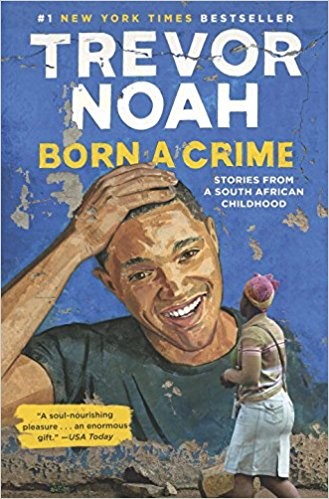
Born a Crime is Trevor Noah's memoir about growing up mixed-race in South Africa during the final years of apartheid and its chaotic aftermath.
Trevor Noah · 2016 · 5h 0m
Full summary and key takeaways →The 12 questions
- 1.
Noah argues that his inability to fit a racial category gave him a kind of freedom, but also a kind of loneliness. Have you ever been in a position where belonging nowhere allowed you to move everywhere?
- 2.
Language functions as a social passport in the book. What languages — literal or metaphorical — do you code-switch between in your own life, and what does each one cost you?
- 3.
Patricia Noah is presented as both the person who saved her son and someone whose religious intensity made her genuinely difficult to live with. How do you weigh those two readings of her?
- 4.
Noah describes apartheid's bureaucratic machinery with dark humor. What does using humor to describe systemic oppression accomplish — and what might it obscure?
- 5.
The book argues that poverty is not a character flaw but a system of constraints. What specific constraints in Noah's childhood shaped decisions that might look like bad choices from outside?
- 6.
Noah got his first break partly through language skills, partly through luck, and partly through a willingness to hustle in spaces where he had no obvious right to be. How much of that feels like agency, and how much like circumstance?
- 7.
The post-apartheid sections of the book suggest the end of legal racism didn't end structural racism. What examples from the book illustrate that gap most clearly?
- 8.
Noah's relationship with his absent father is handled briefly and without bitterness. Does the restraint in those passages read as wisdom, as unprocessed grief, or something else?
- 9.
The book is dedicated to his mother, and she is clearly its emotional subject. What did Patricia Noah want for her son that she couldn't want for herself?
- 10.
Noah describes the township as a place with its own internal logic, hierarchies, and rules. What assumptions did you bring to reading about it, and which ones got challenged?
- 11.
Many of the book's funniest episodes involve someone being in serious danger. What does it mean to laugh at the same moment you recognize the stakes?
- 12.
If Noah had grown up in a country without apartheid's racial classification system, which parts of his personality — as he describes it — might never have developed?
How to run the discussion
- Pick six to eight, not all of them. An hour of real discussion covers fewer questions than anyone expects, and racing the list is what makes a book club feel like homework.
- Open with what people noticed, not what they concluded. Asking for a verdict first hardens opinions before anyone has heard each other.
- Let the disagreement run. The questions below that split a room are the ones worth the time; the ones everyone answers the same way can be skipped.
- Ask the quiet person a specific question. A direct, narrow question is far easier to answer than an open invitation to contribute.
Themes worth steering toward
If the conversation stalls, these are the threads that usually restart it.
Common questions
What are good book club questions for Born a Crime: Stories from a South African Childhood?
Here are 12 book club questions for Born a Crime: Stories from a South African Childhood by Trevor Noah, ordered to open easily and end somewhere worth arguing about. The strongest openers ask what each reader noticed rather than what they concluded, and the discussion usually turns on race and identity, apartheid, survival.
How long should a book club discussion of Born a Crime: Stories from a South African Childhood last?
Most groups run 60 to 90 minutes of actual discussion. That is roughly six to eight questions, not all of them, so pick the ones that suit your group rather than working down the list in order.
What are the main themes in Born a Crime: Stories from a South African Childhood?
Race and identity, Apartheid, Survival, Mother-son relationships, Belonging. Those are the threads most likely to divide a room, which makes them the useful places to steer a discussion that has gone quiet.
Picking the next one? See books like Born a Crime: Stories from a South African Childhood or questions for other book club picks.
