Historical fiction · Book club
Bring Up the Bodies book club questions
Here are 12 book club questions for Bring Up the Bodies by Hilary Mantel, ordered to open easily and end somewhere worth arguing about. Copy them, print them, or bring them up one at a time.
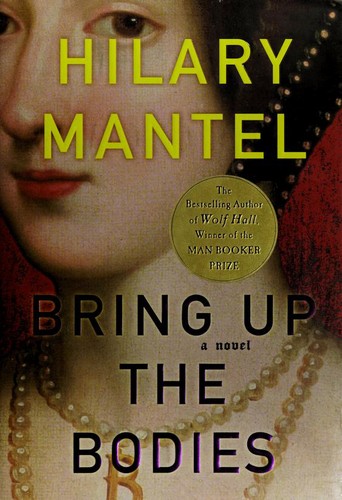
Bring Up the Bodies is the second novel in Hilary Mantel's Wolf Hall trilogy, picking up where Wolf Hall ended: Anne Boleyn is Queen, Henry VIII is restless, and Thomas Cromwell is the indispensable minister who keeps the machinery of the court running.
Hilary Mantel · 2012 · 9h 0m
Full summary and key takeaways →The 12 questions
- 1.
Cromwell constructs a case against Anne that he knows, at some level, is not straightforwardly true. How much does Mantel seem to hold him responsible for what happens? How much do you?
- 2.
Several of the men condemned alongside Anne may have been innocent. Cromwell knows this and proceeds. Is there a point in the novel where you felt you could no longer extend him sympathy?
- 3.
Anne Boleyn is more fully realized in this novel than in Wolf Hall — we see her fear, her wit, her political calculation. Does that fuller portrait make her destruction feel more tragic, or more inevitable?
- 4.
Henry VIII barely participates in the machinery of Anne's downfall — he largely outsources it to Cromwell. What does this say about how absolute power actually operates?
- 5.
The title 'Bring Up the Bodies' is the command to bring the accused from the Tower to face charges. What does Mantel do with that bureaucratic language to create dread in the novel?
- 6.
Mark Smeaton confesses under torture. The novel implies the confession was coerced. How does Mantel handle the question of whether the legal process was legitimate in its own terms?
- 7.
Cromwell's loyalty to Henry is depicted as genuine but also as a professional calculation. By the end of this novel, which do you think it is more?
- 8.
Jane Seymour is a surprisingly opaque figure in this novel — we see her through Cromwell's eyes and she is almost unknowable. Is that a flaw, or is it part of what Mantel is saying about how power uses women?
- 9.
The novel is shorter and more concentrated than Wolf Hall. Did the tighter form change how you experienced Cromwell's character, or did you find yourself needing the slower pacing of the first book?
- 10.
The book ends with Cromwell apparently triumphant. Knowing what the third novel holds, does the ending feel ominous or settled?
- 11.
Mantel uses the condemned men's last hours sparingly — we see brief glimpses of their fear. Was that the right choice, or do you wish she had given them more space?
- 12.
The novel depicts a political system in which truth is irrelevant to outcomes. Does that feel like a historical observation or a contemporary one?
How to run the discussion
- Pick six to eight, not all of them. An hour of real discussion covers fewer questions than anyone expects, and racing the list is what makes a book club feel like homework.
- Open with what people noticed, not what they concluded. Asking for a verdict first hardens opinions before anyone has heard each other.
- Let the disagreement run. The questions below that split a room are the ones worth the time; the ones everyone answers the same way can be skipped.
- Ask the quiet person a specific question. A direct, narrow question is far easier to answer than an open invitation to contribute.
Themes worth steering toward
If the conversation stalls, these are the threads that usually restart it.
Common questions
What are good book club questions for Bring Up the Bodies?
Here are 12 book club questions for Bring Up the Bodies by Hilary Mantel, ordered to open easily and end somewhere worth arguing about. The strongest openers ask what each reader noticed rather than what they concluded, and the discussion usually turns on power and betrayal, justice and revenge, survival at court.
How long should a book club discussion of Bring Up the Bodies last?
Most groups run 60 to 90 minutes of actual discussion. That is roughly six to eight questions, not all of them, so pick the ones that suit your group rather than working down the list in order.
What are the main themes in Bring Up the Bodies?
Power and betrayal, Justice and revenge, Survival at court, The machinery of accusation, Conscience and violence. Those are the threads most likely to divide a room, which makes them the useful places to steer a discussion that has gone quiet.
Picking the next one? See books like Bring Up the Bodies or questions for other book club picks.
