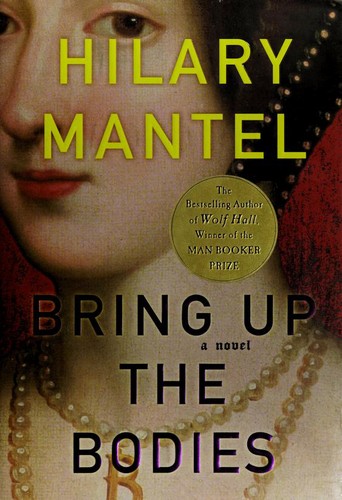
Bring Up the Bodies by Hilary Mantel is a 2012 historical fiction book about power and betrayal, justice and revenge, survival at court. The novel shows how judicial systems can be weaponized — how the apparatus of justice becomes an instrument of political necessity when the right person controls the process.
Summary
Bring Up the Bodies is the second novel in Hilary Mantel's Wolf Hall trilogy, picking up where Wolf Hall ended: Anne Boleyn is Queen, Henry VIII is restless, and Thomas Cromwell is the indispensable minister who keeps the machinery of the court running. The novel covers approximately nine months — from Henry's first meeting with Jane Seymour at Wolf Hall to the beheading of Anne Boleyn and four accused men in the spring of 1536. It is tighter, faster, and darker than its predecessor.
Where Wolf Hall is a novel of patient ascent, Bring Up the Bodies is a novel of ruthless demolition. Cromwell constructs the case against Anne — the charges of adultery, incest, and witchcraft — not necessarily because he believes them but because the king needs them, and because some of the accused men were involved in the earlier destruction of his patron Wolsey. Mantel is careful about how much she shows us of Cromwell's inner motivations: the reader understands what he is doing before he quite admits it to himself, and the effect is genuinely unsettling. You watch a person you have come to understand — perhaps even like — deploy judicial murder with the precision of an accountant.
The prose is more compressed here than in Wolf Hall, and the pacing sharper. Mantel won her second Man Booker Prize for this novel, making her the first author to win the prize twice for sequential novels in the same series. The book functions as a standalone read — the historical events are fully staged within it — but its moral weight is heavier if you've spent Wolf Hall coming to know Cromwell as something more than a villain.
This is the best entry point of the trilogy for readers who want to start in the middle and judge for themselves, but it is also the most morally demanding. The machinery of Anne's destruction is depicted with such procedural clarity that the reader must decide how much Cromwell deserves sympathy, how much the accused deserved their fate, and whether the distinctions matter. Readers looking for a hero will not find a comfortable one here.
Talk to Bring Up the Bodies like its author wrote you back.
Get the ideas that fit your life — not generic summaries.
- Chat with the book
- Audiobook-style main ideas
- Adapts to your life and goals
- Helps you take action
Key takeaways
- 1.
The novel shows how judicial systems can be weaponized — how the apparatus of justice becomes an instrument of political necessity when the right person controls the process.
- 2.
Cromwell's revenge on those who destroyed Wolsey is woven into Anne's downfall. Mantel shows how personal grudge and political necessity become indistinguishable at court.
- 3.
Anne Boleyn's downfall is precipitated not by guilt but by her failure to produce a male heir and Henry's boredom. The charges against her are constructed, not discovered.
- 4.
The novel asks whether there is a meaningful moral distinction between condemning the guilty and constructing the evidence against the convenient. Cromwell's answer is pragmatic; the novel's is not.
- 5.
Mantel gives the accused men — Norris, Smeaton, Weston, Brereton — enough specificity to make their destruction feel like individual tragedy rather than historical abstraction.
- 6.
The question of what Cromwell actually believes about Anne's guilt is left deliberately open. His certainty, where it appears, is about what the king needs, not about what happened in any bedroom.
- 7.
The book is a study in the social performance of loyalty: everyone at court is performing allegiance, and the shift from Anne's camp to Jane Seymour's happens with breathtaking speed.
- 8.
Mantel frames the trial and execution as a kind of theatre — and notes the Tudor court's awareness of itself as spectacle.
Discussion questions
Use these on your own, with a book club, or as chat starters in Superbook. Book club version, ready to copy or print →
- 1.
Cromwell constructs a case against Anne that he knows, at some level, is not straightforwardly true. How much does Mantel seem to hold him responsible for what happens? How much do you?
- 2.
Several of the men condemned alongside Anne may have been innocent. Cromwell knows this and proceeds. Is there a point in the novel where you felt you could no longer extend him sympathy?
- 3.
Anne Boleyn is more fully realized in this novel than in Wolf Hall — we see her fear, her wit, her political calculation. Does that fuller portrait make her destruction feel more tragic, or more inevitable?
- 4.
Henry VIII barely participates in the machinery of Anne's downfall — he largely outsources it to Cromwell. What does this say about how absolute power actually operates?
- 5.
The title 'Bring Up the Bodies' is the command to bring the accused from the Tower to face charges. What does Mantel do with that bureaucratic language to create dread in the novel?
- 6.
Mark Smeaton confesses under torture. The novel implies the confession was coerced. How does Mantel handle the question of whether the legal process was legitimate in its own terms?
- 7.
Cromwell's loyalty to Henry is depicted as genuine but also as a professional calculation. By the end of this novel, which do you think it is more?
- 8.
Jane Seymour is a surprisingly opaque figure in this novel — we see her through Cromwell's eyes and she is almost unknowable. Is that a flaw, or is it part of what Mantel is saying about how power uses women?
- 9.
The novel is shorter and more concentrated than Wolf Hall. Did the tighter form change how you experienced Cromwell's character, or did you find yourself needing the slower pacing of the first book?
- 10.
The book ends with Cromwell apparently triumphant. Knowing what the third novel holds, does the ending feel ominous or settled?
- 11.
Mantel uses the condemned men's last hours sparingly — we see brief glimpses of their fear. Was that the right choice, or do you wish she had given them more space?
- 12.
The novel depicts a political system in which truth is irrelevant to outcomes. Does that feel like a historical observation or a contemporary one?
Themes
Frequently asked questions
-
Can I read Bring Up the Bodies without reading Wolf Hall first?
Technically yes — the historical events are fully staged within this novel. But much of its moral weight depends on the sympathy you have built for Cromwell over 650 pages of Wolf Hall. Reading it cold, you get the plot but miss the tragic dimension.
-
Is Bring Up the Bodies better than Wolf Hall?
Many readers prefer it: it is tighter, faster, and more dramatically concentrated. Others feel Wolf Hall is the greater achievement because of its sustained characterization. They are different experiences. Wolf Hall is about ascent; this one is about what power requires you to do once you have it.
-
How historically accurate is the portrayal of Anne Boleyn's downfall?
Historians continue to debate whether Anne and the accused men were actually guilty of the charges. Most modern historians believe the charges were fabricated or at least constructed with selective evidence. Mantel's novel is consistent with that scholarly consensus, though she makes dramatic choices throughout.
-
Is Bring Up the Bodies hard to read?
Less so than Wolf Hall. The cast is more concentrated and the timeline compressed. Mantel's 'he means Cromwell' convention is still in play, but by this point most readers have internalized it. The prose is slightly more driven and less atmospheric than the first book.
-
Who shouldn't read this book?
Anyone who requires a protagonist with clean hands. Cromwell in this novel is doing something morally indefensible, and the novel refuses to make that indefensibility comfortable. If you need your heroes to behave well, this will be an unhappy read.