Biography · Book club
Buffett: The Making of an American Capitalist book club questions
Here are 12 book club questions for Buffett: The Making of an American Capitalist by Roger Lowenstein, ordered to open easily and end somewhere worth arguing about. Copy them, print them, or bring them up one at a time.
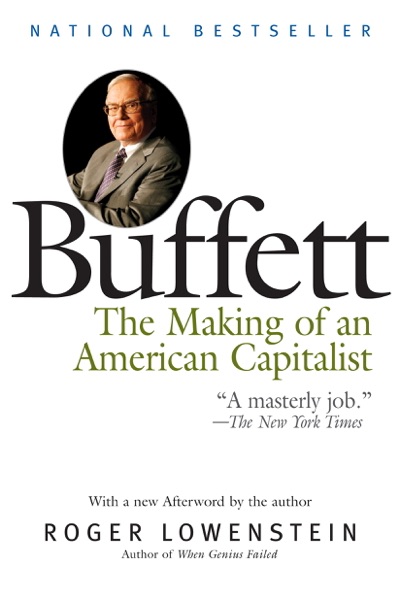
Roger Lowenstein's Buffett is the definitive account of Warren Buffett's life up to the mid-1990s, when his investment record had already made him one of the wealthiest people on earth.
Roger Lowenstein · 1995 · 8h 40m
Full summary and key takeaways →The 12 questions
- 1.
Lowenstein shows that Buffett's investing philosophy is simple but his execution is extraordinary. What makes a simple principle so hard to execute consistently over decades?
- 2.
Buffett's circle of competence kept him out of technology stocks during the dot-com boom and cost him short-term performance. How do you decide what belongs inside your own circle of competence?
- 3.
The book portrays Buffett as emotionally distant from his family while intensely engaged with business. What does that trade-off look like in the lives of people you know?
- 4.
Buffett held Berkshire's stake in The Washington Post for over two decades. What would it mean practically to have that kind of patience in your own work or investments?
- 5.
Charlie Munger broadened Buffett's thinking from buying cheap companies to buying great ones. Who has changed the model of how you think about your field?
- 6.
Lowenstein shows that Buffett's public reputation during the Salomon crisis was both his most valuable asset and his most useful lever. How do you think about your own professional reputation as a long-term asset?
- 7.
Buffett avoided technology stocks not because he thought they were bad businesses but because he couldn't confidently model their future. Where in your own life do you invest in things you don't understand?
- 8.
Lowenstein describes Buffett as essentially the same person at 60 as at 16 — obsessed with numbers, frugal, and intensely competitive. How much of your own professional personality formed early?
- 9.
The partnership letters Buffett wrote to investors in the 1960s are remarkably honest about what he didn't know. Where in your own work are you not being honest enough about uncertainty?
- 10.
Berkshire's model of buying and holding businesses rather than flipping them was unusual in the 1980s LBO era. When have you seen patience outperform activity in your own field?
- 11.
Buffett's long partnership with Munger is central to the story. What is the intellectual partnership in your life that has most changed how you think?
- 12.
The book ends in the mid-1990s. What parts of Buffett's approach, knowing what happened afterward, look even stronger in retrospect, and what looks more limited?
How to run the discussion
- Pick six to eight, not all of them. An hour of real discussion covers fewer questions than anyone expects, and racing the list is what makes a book club feel like homework.
- Open with what people noticed, not what they concluded. Asking for a verdict first hardens opinions before anyone has heard each other.
- Let the disagreement run. The questions below that split a room are the ones worth the time; the ones everyone answers the same way can be skipped.
- Ask the quiet person a specific question. A direct, narrow question is far easier to answer than an open invitation to contribute.
Themes worth steering toward
If the conversation stalls, these are the threads that usually restart it.
Common questions
What are good book club questions for Buffett: The Making of an American Capitalist?
Here are 12 book club questions for Buffett: The Making of an American Capitalist by Roger Lowenstein, ordered to open easily and end somewhere worth arguing about. The strongest openers ask what each reader noticed rather than what they concluded, and the discussion usually turns on value investing, compounding, character.
How long should a book club discussion of Buffett: The Making of an American Capitalist last?
Most groups run 60 to 90 minutes of actual discussion. That is roughly six to eight questions, not all of them, so pick the ones that suit your group rather than working down the list in order.
What are the main themes in Buffett: The Making of an American Capitalist?
Value investing, Compounding, Character, Long-term thinking, American capitalism. Those are the threads most likely to divide a room, which makes them the useful places to steer a discussion that has gone quiet.
Picking the next one? See books like Buffett: The Making of an American Capitalist or questions for other book club picks.
