Economics · Book club
Buffettology book club questions
Here are 12 book club questions for Buffettology by Mary Buffett, ordered to open easily and end somewhere worth arguing about. Copy them, print them, or bring them up one at a time.
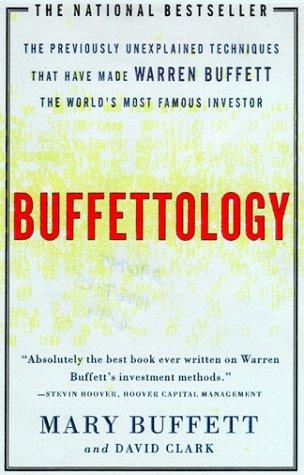
Buffettology is Mary Buffett and David Clark's attempt to systematize Warren Buffett's investment approach by working backward from decisions he made over several decades.
Mary Buffett · 1997 · 5h 0m
Full summary and key takeaways →The 12 questions
- 1.
The consumer monopoly concept describes businesses with pricing power and repeat purchase behavior. Can you identify three or four businesses in your daily life that meet this description?
- 2.
Buffett holds positions for decades. What would have to be true about your analysis and temperament to justify that kind of patience?
- 3.
The equity bond concept ties purchase price to long-term return. At what price-to-earnings ratio would a business with 10% annual earnings growth represent a good expected return for you?
- 4.
High return on equity with low debt is a key screen. Which businesses in your portfolio, if you have one, pass that test consistently?
- 5.
Buffett says he avoids businesses that require heavy capital reinvestment. Why does capital intensity erode investor returns even when the business is growing?
- 6.
Mary Buffett had access to Buffett's thinking through family proximity. How do you think about the reliability of second-hand accounts of famous investors' methods?
- 7.
The book claims Buffett's approach is learnable and systematic. Do you buy that? Or does the track record depend on capabilities that can't be replicated?
- 8.
Buffettology was written in 1997. Which of its examples still hold up as consumer monopolies, and which have been disrupted since?
- 9.
Buffett famously doesn't invest in businesses he doesn't understand. How do you draw the boundary of what you understand well enough to value?
- 10.
The book argues management quality matters less than business quality. Do you agree? Where in your own career have you seen strong structure compensate for weak leadership?
- 11.
Compounding requires not touching the investment. What behavioral tendencies in yourself most threaten your ability to hold a position for five or ten years?
- 12.
If you applied Buffett's consumer monopoly criteria to private businesses you know — local or regional — which ones would qualify?
How to run the discussion
- Pick six to eight, not all of them. An hour of real discussion covers fewer questions than anyone expects, and racing the list is what makes a book club feel like homework.
- Open with what people noticed, not what they concluded. Asking for a verdict first hardens opinions before anyone has heard each other.
- Let the disagreement run. The questions below that split a room are the ones worth the time; the ones everyone answers the same way can be skipped.
- Ask the quiet person a specific question. A direct, narrow question is far easier to answer than an open invitation to contribute.
Themes worth steering toward
If the conversation stalls, these are the threads that usually restart it.
Common questions
What are good book club questions for Buffettology?
Here are 12 book club questions for Buffettology by Mary Buffett, ordered to open easily and end somewhere worth arguing about. The strongest openers ask what each reader noticed rather than what they concluded, and the discussion usually turns on value investing, business analysis, long-term holding.
How long should a book club discussion of Buffettology last?
Most groups run 60 to 90 minutes of actual discussion. That is roughly six to eight questions, not all of them, so pick the ones that suit your group rather than working down the list in order.
What are the main themes in Buffettology?
Value investing, Business analysis, Long-term holding, Competitive advantage, Compounding. Those are the threads most likely to divide a room, which makes them the useful places to steer a discussion that has gone quiet.
Picking the next one? See books like Buffettology or questions for other book club picks.
